AI Attacks Target Mining: 64,000 BTC Mining Machines Hijacked for 20 Hours


- Core Viewpoint: Approximately 64,000 BTC mining machines (totaling 13 EH/s of hashrate) were hijacked in an AI-assisted attack and redirected to the OCEAN mining pool, exposing the significant risk of mining fleet management software as a new security gap in the mining industry.
- Key Elements:
- Attackers exploited a vulnerability in Luxor's Commander management software to direct hashrate to designated mining pools and BTC addresses. The attackers only profited 0.162 BTC, but the mining revenue losses during the incident are irreversible.
- OCEAN mining pool's total hashrate briefly surged from approximately 40 EH/s to nearly 50 EH/s, and the attack was identified and remediated after lasting nearly 24 hours.
- Luxor's CEO described it as a "sophisticated AI-assisted vector attack" and committed to fully compensating more than ten affected customers based on normal mining revenue, with estimated amounts ranging from $34,000 to $340,000.
- Management software can push mining pool settings to thousands of mining machines in bulk. Once credentials or API endpoints are leaked, attackers can rapidly achieve large-scale hashrate redirection.
- Attackers do not need to steal hashrate resources—merely changing the stratum endpoint and worker name is enough to monetize the proceeds, with the target being the Coinbase rewards paid directly by the mining pool to miners' addresses.
- Luxor had just completed a $16 million funding round at the end of October. The incident may push the industry to clarify security responsibilities and compensation standards for management software.
Original | Odaily@OdailyChina)
Author | Wenser (@wenser 2010)
Just as BTC dropped to $62,000 and market sentiment slumped, a rarely noticed "on-chain heist" had quietly unfolded and concluded—involving approximately 64,000 BTC mining machines and a combined hashrate of about 13 EH/s.
At 10 a.m. Beijing time on November 15, this hashrate was quietly redirected to the OCEAN mining pool, with mining rewards designated to be paid to a BTC address controlled by the attacker. OCEAN's total hashrate briefly approached 50 EH/s before falling back to around 40 EH/s. Fortunately, a mining hosting service provider detected and warned of the issue in time, and mining service provider Luxor subsequently traced the problem to the Commander software. Ultimately, the attacker only obtained 0.162 BTC; however, the mining revenue losses during that period are unrecoverable, and Luxor stated it will fully compensate the dozen or so affected customers.
It is worth noting that Luxor had just completed a $16 million funding round at the end of October. Its CEO Nick Hansen described the attack as involving "sophisticated AI-assisted attacks." With mining pools, mining management software, and AI attacks intertwined, this "on-chain heist" has also revealed the high-risk side of the BTC mining industry.
64,000 BTC Mining Machines' 24 Hours of Terror: When Mining Hashrate Is Hijacked and Redirected for Profit
Let us first review the sequence of events.
On November 15, mining hosting service provider CoreX Hosting posted, "Heads up, there is currently a large-scale hack targeting mining machines. Mining machines are being directed to the Ocean mining pool, with the corresponding BTC address being bc1qphukp9rjfc4rcej7erpm9ae20xmtspw8pcddrr."
After the warning was issued, Bitcoin News quickly followed up, emphasizing that the attack affected 64,000 BTC mining machines, corresponding to a total hashrate of approximately 13 EH/s. As a result, OCEAN's controlled hashrate briefly grew to 50 EH/s before falling back to 40 EH/s.
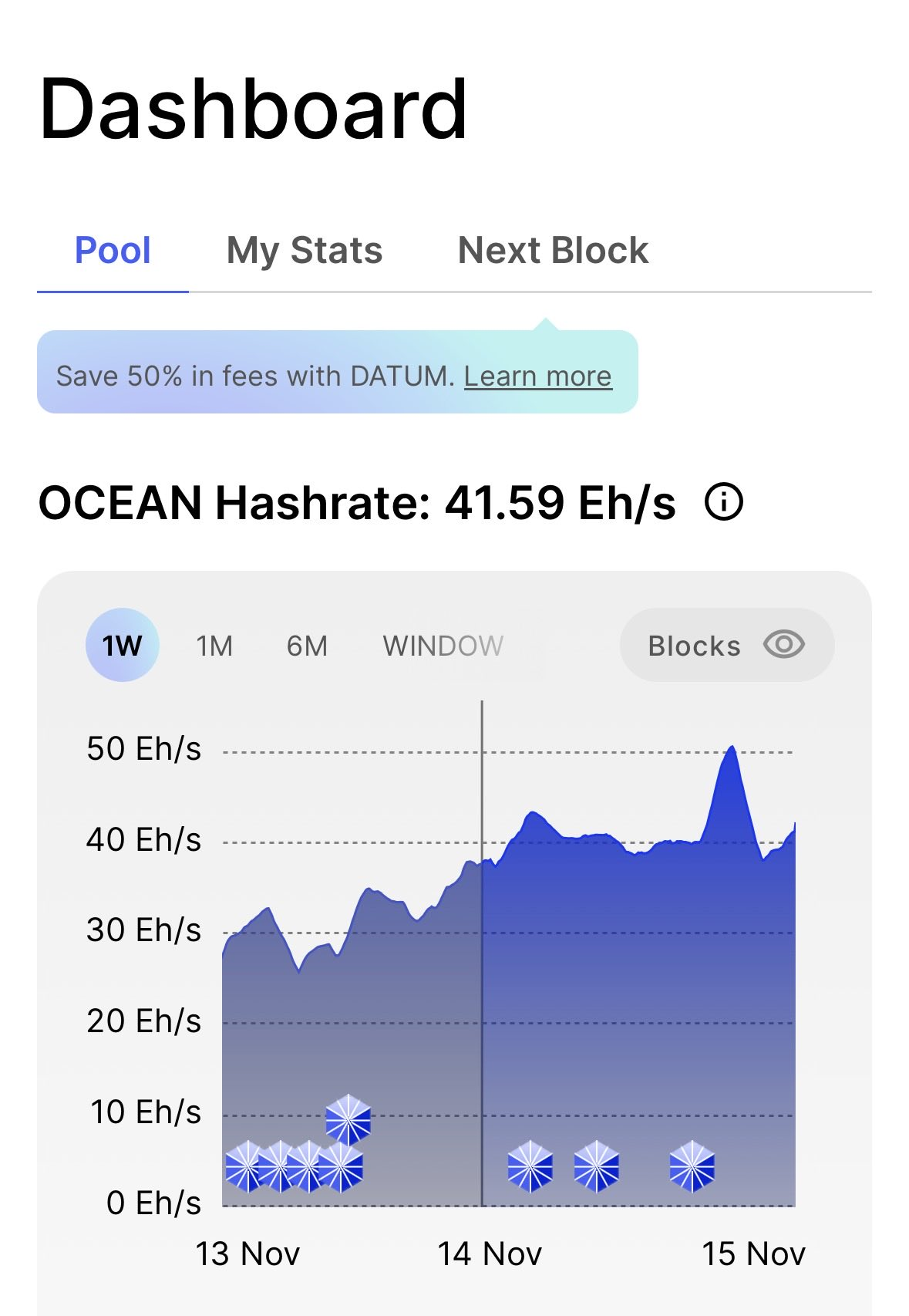
At 2:40 p.m. on November 15, CoreX updated its monitoring report, stating that the redirected hashrate had dropped from 13 EH/s to approximately 100 PH/s, and the attack appeared to be over.
In the early hours of November 16, Luxor Technology officially responded for the first time, stating that internal monitoring had detected unauthorized hashrate redirection through Commander, affecting more than ten customers; Commander completed a patch within two hours and began restoring affected mining machines to their original pool settings; all affected customers would be fully compensated at "normal mining revenue" rates; no system data was leaked; and the affected scope was limited to Commander only, with neither Luxor's mining pool nor the LuxOS system affected.
At 1 a.m. on November 16, Luxor CEO Nick Hansen posted a response, saying the attack was a "sophisticated, AI-assisted vector attack"; he reiterated that customers would be fully compensated for their losses; subsequently, he re-emphasized that AI attacks will become increasingly common, and stated that the company had "paused most new feature development to focus on hardening all types of security infrastructure."
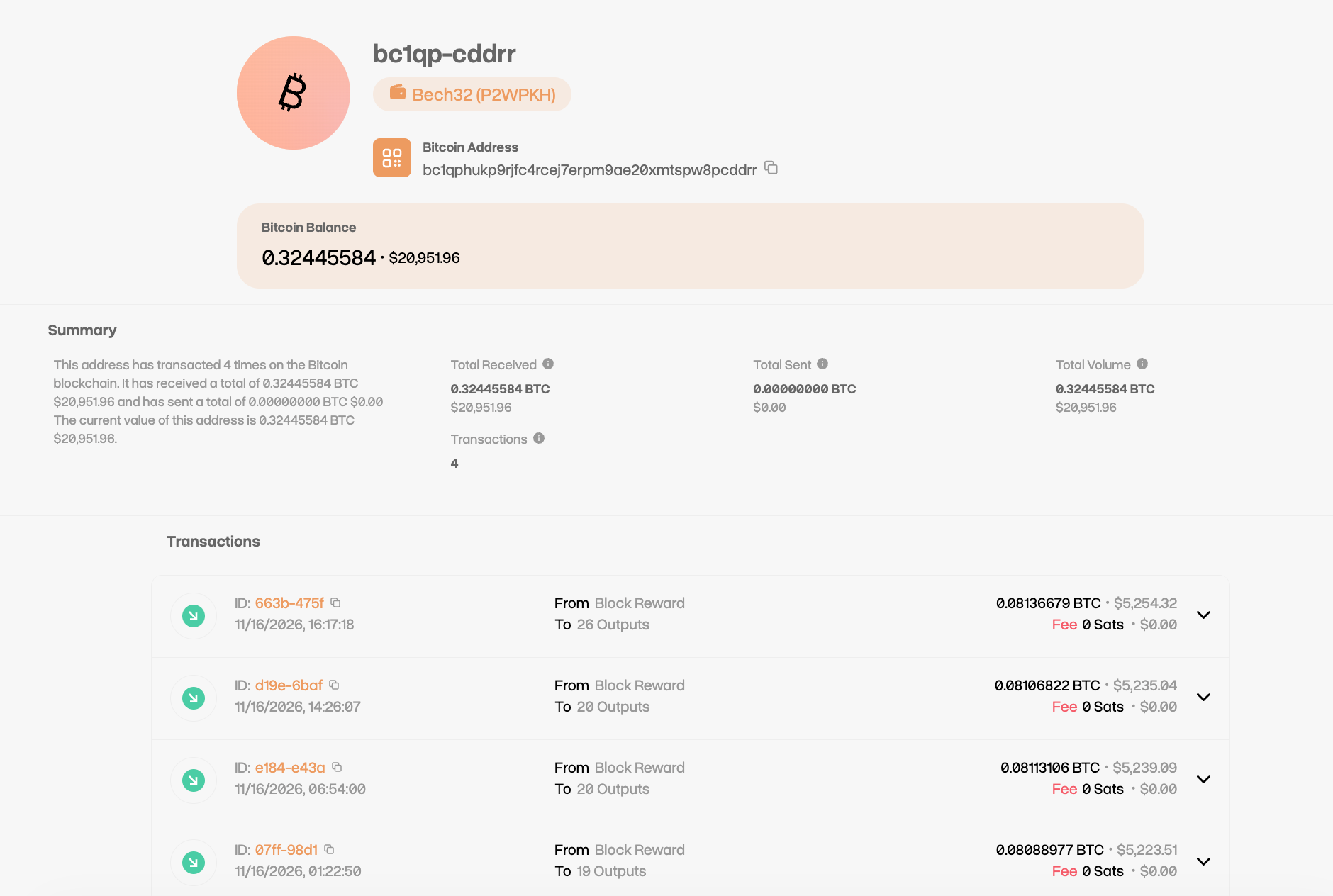
It is worth noting that according to on-chain data, the receiving address previously flagged by CoreX has cumulatively received 4 payment rewards totaling 0.3244 BTC, worth approximately $20,900. However, the timestamps correspond to November 16—specifically different times in the early morning and afternoon of today—which conflicts with the patch timeline officially provided by Luxor. The detailed explanation of the attack and the security report still require further clarification from the latter.
When Control Software Becomes the New Attack Vector: Luxor Commander Software Emerges as the Key to the Hijacking Incident
In this mining machine hijacking incident that lasted nearly a full day, no consensus rules at the BTC network level were violated, and blocks were produced as usual; there was no double-spend attack, and the impact on the BTC network was close to zero. However, it exposed another layer of risk in the BTC mining chain—mining fleet management software.
Convenience and risk are often two sides of the same coin when it comes to such control software.
Mining fleet management software like Luxor Commander can push mining pool settings to thousands of mining machines at once, but this often also means that once the software is compromised, the impact is no longer limited to one or two BTC mining machines but can spread to tens of thousands.
In extreme cases, an attacker only needs a single credential, a single API endpoint, or a single session to quickly gain the same ability as the mining fleet operator to redirect hashrate in bulk. The various internal control reviews and certifications that Luxor has conducted cannot guarantee that "the credential channel from the customer side into the mining machines" will never have problems.
But regarding the attacker's methods in this incident, the non-custodial mining pool OCEAN functions like a relay station that pays out based on hashrate. What the attacker targeted was not the 13 EH/s hashrate resources owned by these 64,000 mining machines, but the revenue that Coinbase behind the mining pool pays directly to the miner-specified address.
Simply put, the attacker does not need to steal the hashrate resources of BTC mining machines; they only need to direct them to a mining pool with a "bonus," complete the hashrate redirection, and monetize the attack by simply changing the stratum endpoint and worker name. This incident also tells us that the security of BTC mining pool architecture and the security of BTC mining fleet management software are two different levels of things—and what failed this time was the latter.
Finally, let us roughly estimate the potential losses involved: based on current mining difficulty and BTC price, 13 EH/s of hashrate can produce approximately 2 blocks per day on average, corresponding to 1.3918% of the network's daily output of 450 BTC. At a price of approximately $65,000, that translates to about $17,000 per hour, or $410,000 in daily revenue. A preliminary estimate of the "full compensation at normal mining revenue" promised by Luxor corresponds to an amount ranging from approximately $34,000 to $340,000 (calculated based on 2 hours and 20 hours of no revenue, respectively).
This figure is certainly not a devastating loss for a company that just completed a $16 million strategic funding round, but it has set a precedent for all mining operation service providers in the industry—companies are responsible for covering losses caused by attacks on mining fleet management software. Moreover, as mining fleet management dashboards upgrade from "monitoring panels" to unified entry points for hashrate, energy contracts, and even AI computing scheduling, their security and management permissions will become increasingly important.
The Road Ahead: Mining Pool Settings Will Become a Sustained Offensive and Defensive Battle
The aftermath of this "64,000 mining machines hijacked" incident continues. On the one hand, Luxor needs to provide a detailed explanation of the entire security incident, especially the number of mining machines involved versus the actual redirected hashrate, the start and end times of the attack, and the compensation amount—the previous "more than ten affected customers" was only a rough description. On the other hand, hashrate hijacking is no longer a novelty; mining pool operators have previously reported unauthorized changes to relevant settings, which fully demonstrates that various roles in the industry—mining pool operators, hosting providers, and service providers—need to jointly confront security offensive and defensive risks, and this is destined to be a protracted battle.
How to prevent similar risk events from occurring in the future—perhaps beyond the operational management at the mining pool hardware level, the security of related software is equally worthy of vigilance.