After Trump and the Republicans' midterm election defeat, Justin Sun revives the WLFI frozen-token case with a sanctions motion


- Core viewpoint: Justin Sun has filed a sanctions motion with a U.S. federal court over the WLFI frozen-token case, seeking to apply pressure amid the political upheaval following the midterm elections in which Democrats retook both chambers of Congress; WLFI is dragging out the litigation over jurisdictional disputes, and its token price has fallen more than 90% from its all-time high, leaving the project effectively defunct at this stage.
- Key elements:
- Justin Sun invested $45 million to hold approximately 3 billion tokens and 1 billion advisor tokens; in September 2025, about 595 million unlocked tokens were frozen, worth roughly $107 million at the time.
- WLFI is accused of responding to the suit through a Florida entity before expanding to entities in Delaware, Puerto Rico, the UAE, and other jurisdictions, using the federal court's lack of diversity jurisdiction to delay the litigation.
- WLFI pledged approximately 5 billion tokens into the affiliated DeFi protocol Dolomite to borrow about $75 million in stablecoins, and deposited $40 million with Coinbase Prime, which is alleged to signal an intent to dump.
- After Democrats retook both chambers, incoming House Oversight Committee Chairman Robert Garcia named Trump family crypto businesses as a target for investigation, with investigative methods upgraded from letters to direct subpoenas.
- WLFI is currently priced at about $0.048, down more than 90% from its all-time high; the next hearing between the two parties is scheduled for December 10.
Original | Odaily@OdailyChina)
Author | Wenser (@wenser 2010) 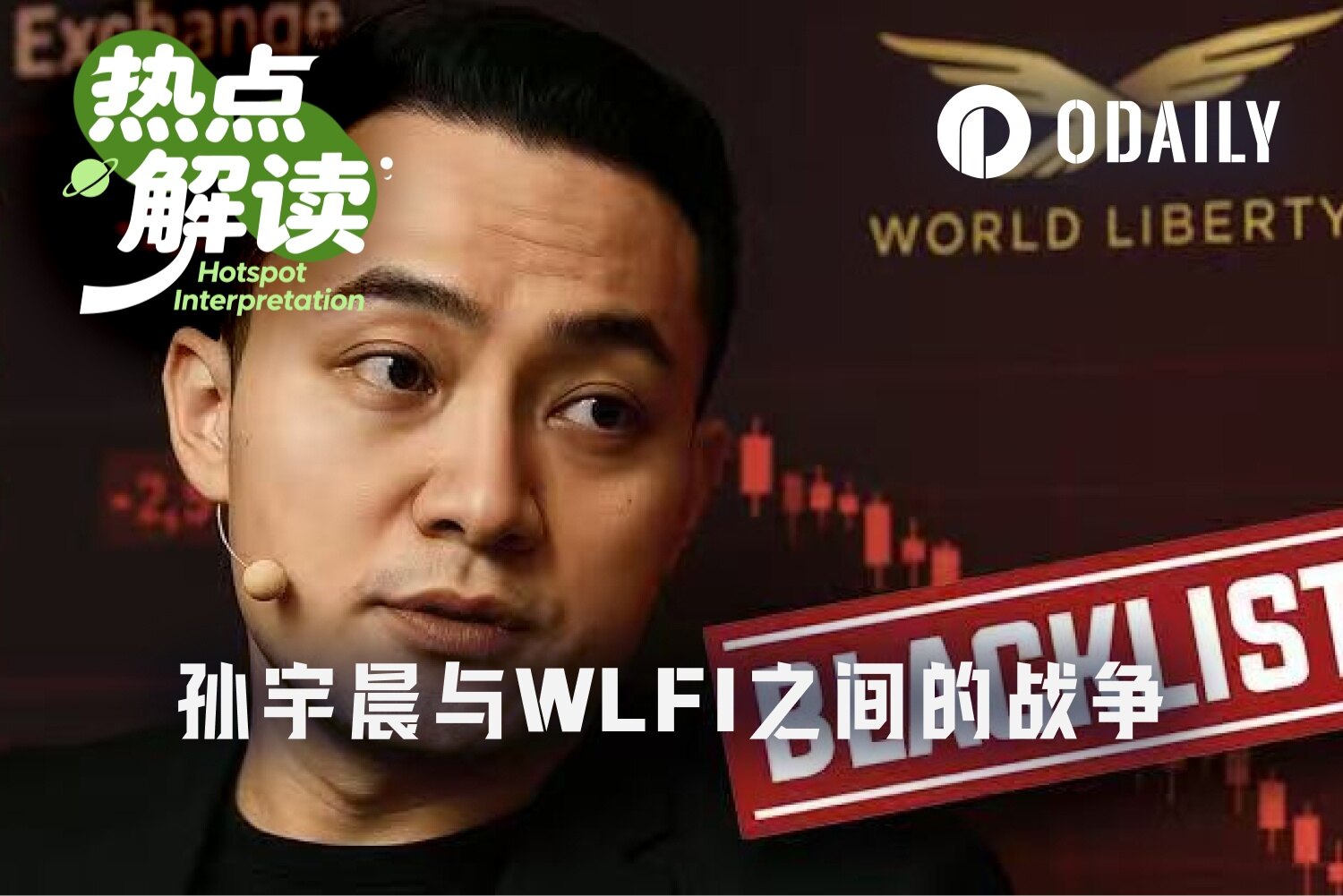
Last night, on the eve of the US midterm elections, TRON founder Justin Sun once again published a lengthy post revisiting the "WLFI token freeze" cold case. In the post, he emphasized that his lawyers have filed a sanctions motion with the US District Court for the Northern District of California, alleging that the Trump family's crypto project WLFI only disclosed foreign entities such as those in the UAE months after the lawsuit was filed, and has been delaying the proceedings on the grounds that "the federal court lacks diversity jurisdiction."
Today, after Democrats reclaimed majority seats in both chambers of the US Congress and the Republican Party and Trump lost important political leverage, Justin Sun posted again calling for: "Token holders deserve transparency, fairness, and accountability. These principles should apply to everyone, without exception."
Looking back at this crypto cold case involving a $45 million investment, the situation itself may well be far more complex than it appears on the surface.
Justin Sun and WLFI: From Crypto Allies to Bitter Enemies
As a star project bearing the title of "Trump family crypto project," WLFI experienced a cold fundraising reception at first, but quickly became a hotly sought-after darling in the crypto market after Trump was elected US President. Justin Sun also recognized WLFI's political influence early on, which is why he invested $45 million in the token fundraising. But soon, WLFI gradually became a "wealth-creation machine" for the Trump family. We detailed the specifics in our January article "A Year of the Trump Family Crypto Project WLFI: When the Referee Steps onto the Track".
But soon, as WLFI officially conducted its TGE and as Trump pushed forward a series of crypto-friendly regulatory policies after taking office, the cooperative relationship between the WLFI side, which held the initiative, and Justin Sun, who merely held tokens, gradually became unbalanced, and completely fell apart after the token price became transparent.
According to Justin Sun himself, he held approximately 3 billion tokens through his investment, plus about 1 billion advisor tokens. In September 2025, shortly after WLFI tokens became tradable, the WLFI project officially blacklisted wallets associated with Justin Sun in the name of "protecting users," freezing approximately 595 million unlocked tokens at the time, worth about $107 million at then-current prices.
In April 2026, Justin Sun formally filed a lawsuit against the WLFI project in the Northern District of California federal court, with core allegations of fraudulent inducement of investment and unlawful token freezing.
Apart from the midterm election upheaval, another trigger for Justin Sun to revisit the old matter this time was the issue of the court's jurisdictional objection.
It is understood that US federal courts typically hear such cases only when the parties belong to different judicial jurisdictions. Foreign plaintiffs can generally sue US defendants, but when both sides involve foreign parties, federal courts are usually somewhat at a loss. The WLFI project seized precisely on this point, initially responding to the suit only as a Florida entity, and subsequently expanding the involved parties' identities to citizens of Florida, Delaware, Puerto Rico, the UAE, and other jurisdictions.
As Justin Sun put it: "When selling tokens, they proudly claimed to be an American company; when it came time to escape the jurisdiction of the federal court, it turned out they were fundamentally a UAE entity."
At present, this dispute remains at the legal procedural level, and the court has not yet issued a clear ruling.
The Market Behind the WLFI Cold Case: Dumping, Borrowing, Token Freezing
Justin Sun's token cold case is merely one of the many controversies facing WLFI; what the market is more concerned about is the collapse of trust and political risk surrounding the project.
In April 2026, WLFI officially pledged approximately 5 billion tokens into the highly affiliated DeFi lending protocol Dolomite, then borrowed about $75 million in stablecoins, draining the platform's liquidity in one stroke, leaving many depositors in the predicament of wanting to withdraw but having no funds available. WLFI then deposited $40 million of it into Coinbase Prime, a platform commonly used by institutions for selling tokens, clearly signaling an intent to dump and run.
Justin Sun publicly accused them of treating users as a personal ATM.
As for the token freezing, it directly runs counter to the "world financial liberalization" vision and decentralized finance narrative that the WLFI project touted at its inception.
As for the earlier high-priced token buybacks, they were merely to restore market confidence at high positions, followed by directly selling tokens to dump the price and cash out. Fortunately, with the conclusion of the midterm elections and Democrats reclaiming majority seats in both chambers of Congress, many Democrats have made investigating the Trump family's corruption—especially crypto business income—a key breakthrough point, hoping to gain more political leverage in exchange for compromise from Trump and the Republican Party.
Currently, Robert Garcia, who is expected to take over as chairman of the House Oversight Committee in January next year, has explicitly called for a thorough investigation into the Trump family's crypto business, which has brought Trump over $1 billion in income. Garcia also stated that the committee will closely monitor the Trump family's business dealings, as well as the positions of political brokers and intermediaries like Jared Kushner on the boards and in business contracts of Trump family enterprises or partners, with WLFI at the forefront.
In February of this year, Congressman Ro Khanna questioned the $500 million agreement signed between UAE-linked parties and Eric Trump, with an initial payment of approximately $250 million, of which about $187 million was alleged to have flowed to Trump family entities. Previously, Democrats could only send letters requesting the Treasury Department to cooperate with investigations; now, after the two chambers changed hands, they can directly issue subpoenas requiring Trump family entities to cooperate with investigations, greatly strengthening the investigative force.
Of course, these changes are still hard to call a "complete turnaround" for Justin Sun. The sanctions motion he filed can at most recover a legal fee; it cannot change the reality that the tokens remain frozen, the entity claims remain opposed, and the Florida WLFI counterclaim is still ongoing.
The next hearing between the two sides will be held on December 10. How things develop afterward will depend on the handling approach and attitude of the US federal court. If the court refuses to hear the case on grounds of insufficient jurisdiction, he will have to go through the legal process again in a state-level court.
But it is foreseeable that WLFI officials will face more than one hearing in the next two years, and the regulatory green-light privileges obtained in the past under the banner of "Trump family crypto project" will likely come due.
The Trump Family Crypto Project Pauses: WLFI Phase-Wise in Name Only
As of writing, the WLFI price is temporarily at $0.048, down more than 90% from its all-time high; USD1, once a project focus, also only made a brief appearance when Binance accepted MGX's $2 billion investment. After Trump and the Republican Party's midterm election defeat, if there are no other major positive developments or turnarounds, the project can be said to have entered a phase of existing in name only.
As for Justin Sun's WLFI token cold case, a real turnaround still depends on multiple conditions: first, whether the frozen wallets are unfrozen; second, whether the California state court or any court with effective jurisdiction enters substantive review and issues an enforceable result; third, whether there is a settlement between the two sides or an official buyback arrangement.
What the midterm elections changed, for now, is only the political leverage of the Trump family's crypto business, not a direct declaration of death.
Justin Sun's public-opinion leverage has grown heavier, and legal obstacles may have eased, but that does not mean this card game involving tens of millions or even hundreds of millions of dollars is truly over.