US Midterm Elections Preview: Democrats' Probability of Sweeping Congress Rises to 72%—Can Trump Still Hold the Senate?


- Key Takeaways: Crypto prediction market data shows Democrats' odds in the 2026 US midterm elections have risen significantly, with a 72% probability of winning both chambers of Congress, while Republicans have only a 6% chance of retaining both. Senate control is the key variable.
- Key Factors:
- Democrats have a 95% probability of winning the House and a 73% probability of winning the Senate, up 2.5% and 8% respectively over the past seven days.
- In predictions for Republican Senate seats, the probability of holding 47 seats or fewer is 51% (up about 10 percentage points in seven days), and outcomes below 50 seats total about 79%.
- Republicans currently hold 53 Senate seats; falling to 47 or fewer would mean a net loss of at least 6 seats. Democrats need a net gain of 4 seats to secure a stable majority.
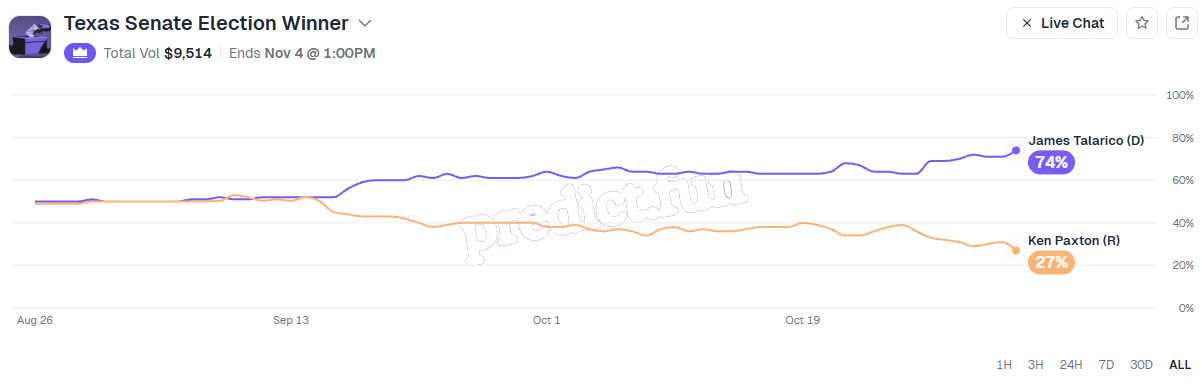
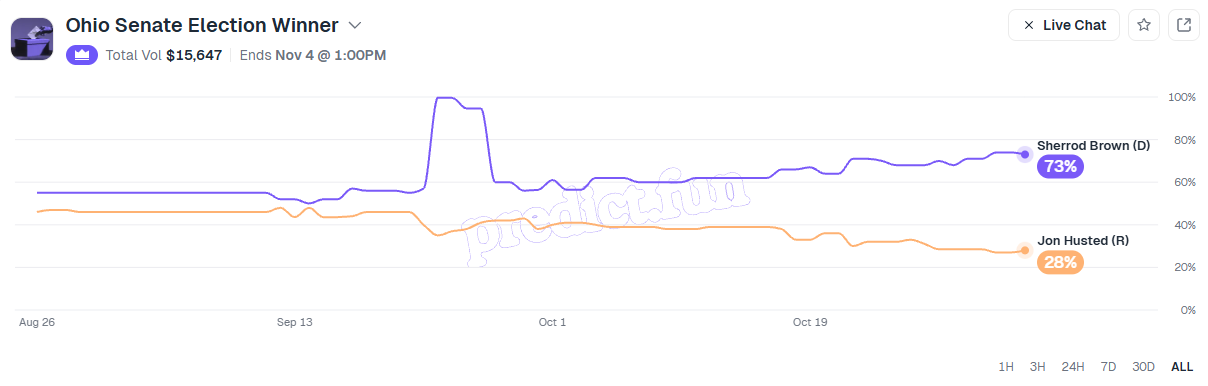
- In key states, the Democratic candidate's win probability is 74% in Texas and 73% in Ohio, while Maine and Alaska are also important targets for Democrats seeking additional seats.
- The midterms will decide all 435 House seats and 35 Senate seats. The results will not change Trump's term, but will directly affect his governing room over the next two years.
- For the crypto industry, regulatory legislation such as the market structure bill still requires congressional action, and the new Congress's power balance may affect the pace of reviewing related bills.
Original | Odaily (@OdailyChina)
Author | Asher (@Asher_0210)
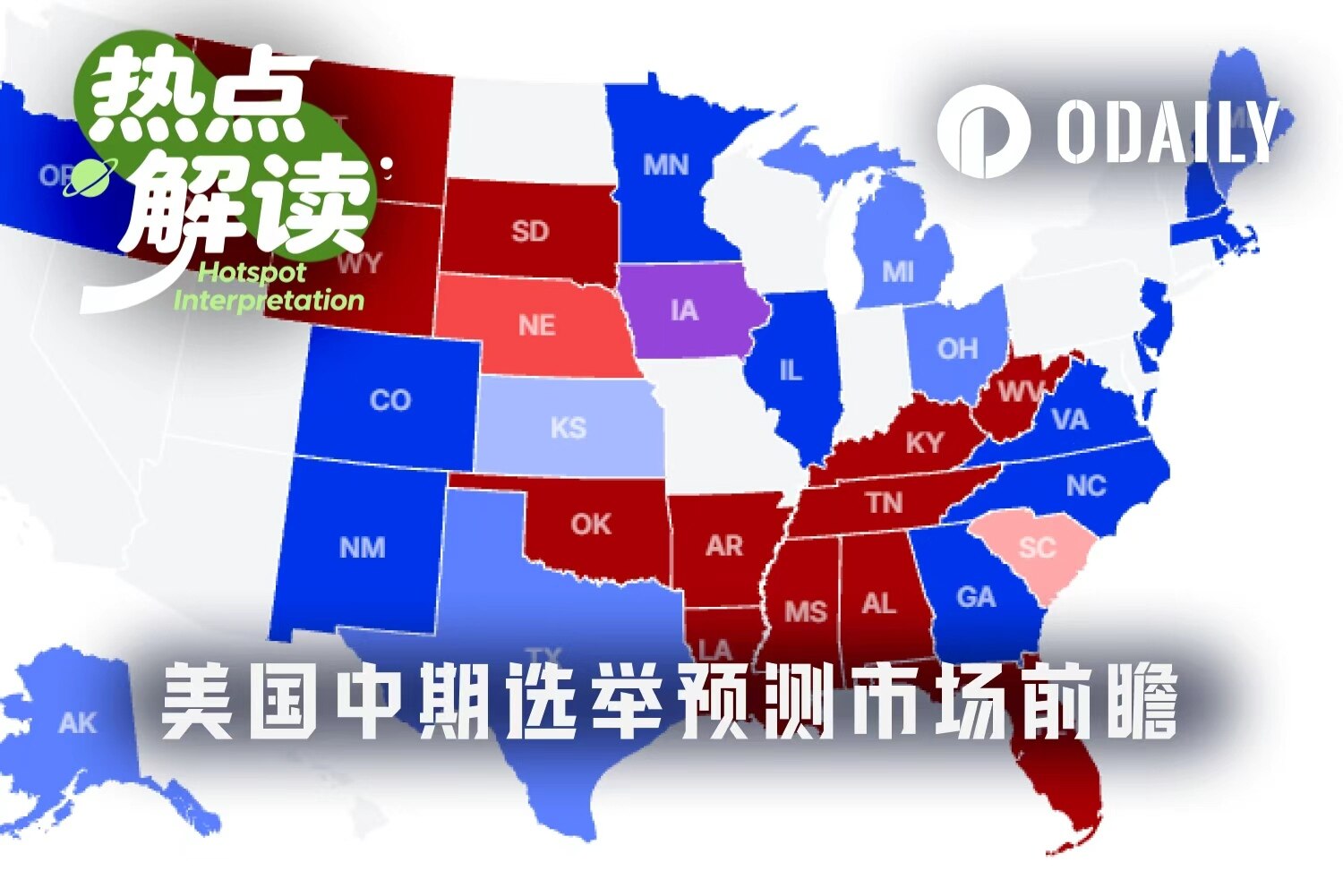
The U.S. midterm elections will be held on November 3 local time. As voting day approaches, whether Republicans can retain control of Congress and what Trump's governing prospects will look like over the next two years are becoming the focus of outside attention.
Beyond traditional polls and forecasts from political analysis institutions, crypto prediction markets are also providing their own set of answers. Currently, multiple election events on prediction markets clearly lean toward the Democrats, and Republicans not only face the risk of losing the House but also see their Senate control hanging in the balance. So, in the eyes of prediction market participants, how much of a chance does Trump have to hold the Senate? Which key states might determine the final outcome?
Next, Odaily will combine the latest data from prediction markets to sort through the probability changes in congressional control, Senate seats, and key state races, to see what "real money" is actually predicting for the midterm election results.
Democrats' probability of sweeping Congress reaches 72%, Republicans' chance of holding both chambers only 6%
In the prediction market for control of Congress in the 2026 U.S. midterm elections (link: https://predict.fun/market/balance-of-power-2026-midterm-elections), the probability of Democrats winning both chambers of Congress has risen to 72%, up 7% over the past seven days; the probability of Republicans retaining the Senate while Democrats win the House is 23%, while the probability of Republicans holding both chambers is only 6%.
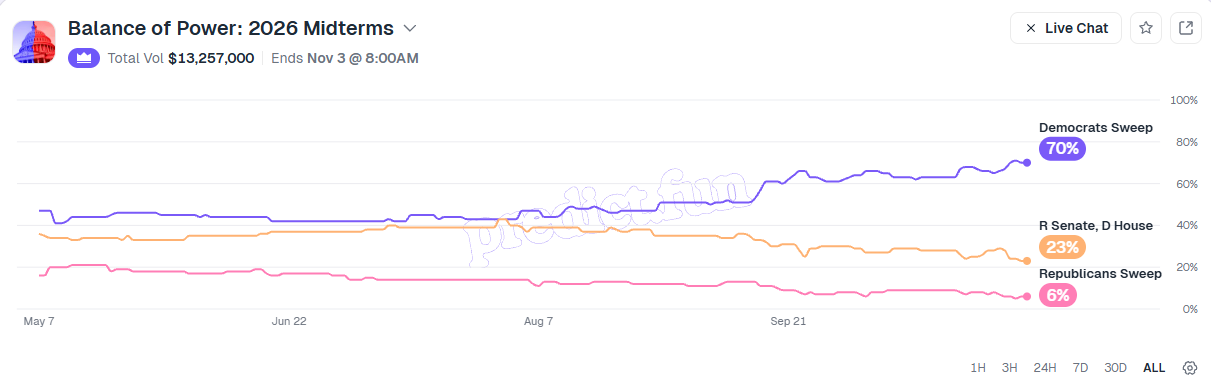
This midterm election will see all 435 House seats and 35 Senate seats up for election. All House seats are up for election every two years, while about one-third of Senate seats are up every two years. Currently, Republicans control both chambers of Congress. If Democrats win the House, they will be able to constrain Trump on legislation, budgets, and government oversight; if they further win the Senate, they will also influence key personnel appointments such as senior officials and federal judges. The election will not change Trump's presidential term, but it may directly affect his governing room over the next two years.
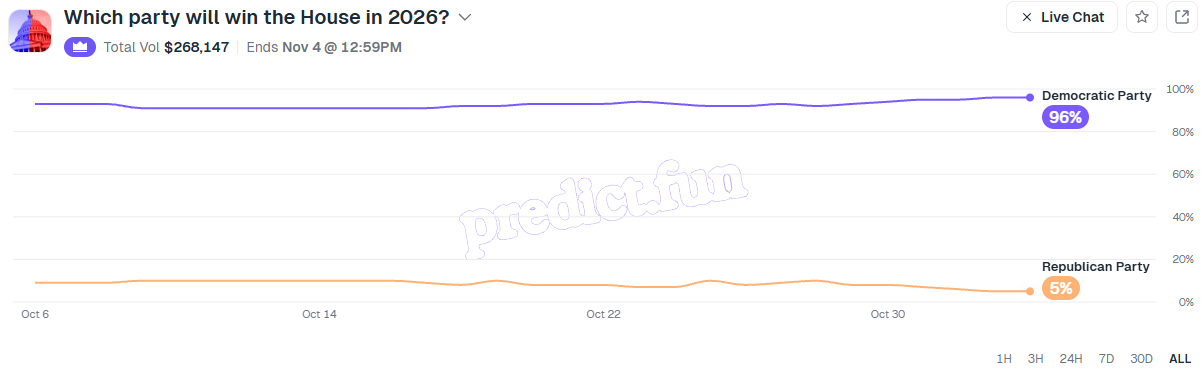
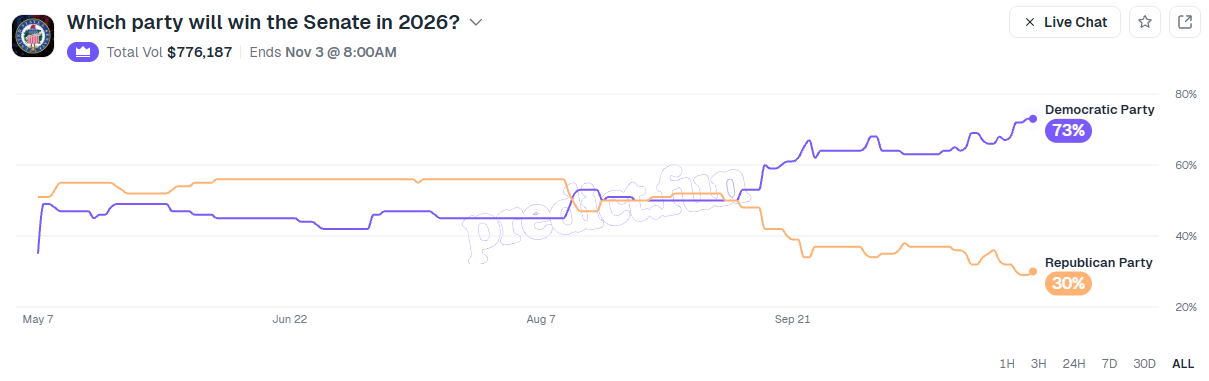
In addition to the combined forecast for control of both chambers, prediction markets also have separate forecasts for House control (link: https://predict.fun/market/which-party-will-win-the-house-in-2026) and Senate control (link: https://predict.fun/market/which-party-will-win-the-senate-in-2026). Among them, the probability of Democrats winning the House reaches 95%, up 2.5% over the past seven days; the probability of winning the Senate is 73%, up 8% over the same period. Based on current predictions, House control has clearly tilted toward the Democrats, while the Senate has become the key to whether Republicans can avoid losing control of both chambers at the same time.
Senate seat forecast: Republicans may suffer a net loss of at least 6 seats
In addition to the question of who controls Congress, prediction markets have also given their judgment on how many Senate seats Republicans can ultimately retain.
In the prediction market for the number of Republican Senate seats (https://predict.fun/market/republican-senate-seats-after-the-2026-midterm-elections-927), the probability that Republicans ultimately hold only 47 seats or fewer has reached 51%, up about 10 percentage points over the past seven days; the probability of winning 48 seats is 16%, 49 seats is 12%, and 50 seats is 9%. The three outcomes below 50 seats total about 79%, showing a clear market expectation that Republicans will lose their Senate majority.
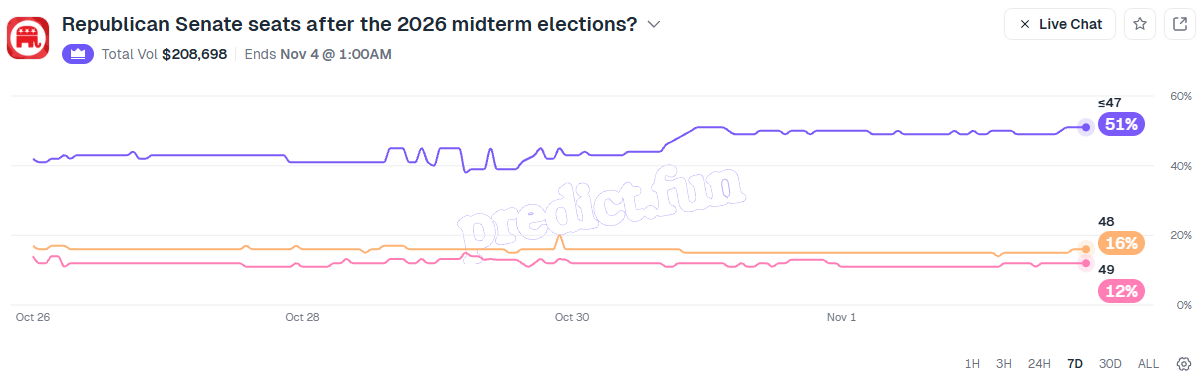
Republicans currently hold 53 Senate seats, while the Democratic caucus holds 47. If Republicans ultimately fall to 47 seats or fewer, that would mean a net loss of at least 6 seats. By contrast, Democrats only need a net gain of 4 seats to secure a stable Senate majority.
This means the outcome currently favored by the market is not just Democrats narrowly taking Senate control, but also the possibility that Republicans lose multiple incumbent seats, allowing Democrats to further expand their advantage.
So where might Democrats gain additional seats?
Key state races: Texas, Ohio, and others become Republican defense priorities
The Senate seats Republicans may lose are mainly concentrated in key races such as Texas, Ohio, Maine, and Alaska. According to the latest prediction market data, Democratic candidates hold certain advantages in contests for these Republican-held seats.
Among them, the Texas Senate election (link: https://predict.fun/market/texas-senate-election-winner) is particularly noteworthy. Democratic candidate James Talarico has a 74% probability of winning, clearly leading Republican candidate Ken Paxton at 27%. Texas has long been an important Republican stronghold; if Democrats ultimately win here, they would directly take a Senate seat from Republicans.
The situation in Ohio (link: https://predict.fun/market/ohio-senate-election-winner) is similar. Democratic candidate Sherrod Brown has a 73% probability of winning, while Republican candidate Jon Husted is at 28%.
In addition to Texas and Ohio, Maine and Alaska are also important targets for Democrats seeking additional Senate seats. All four states currently have Republican-held Senate seats; if Democrats can win them all and hold their other existing seats, they can achieve a net gain of 4 seats and seize Senate control. In addition, Kansas and Iowa are also potential breakthroughs, but Democrats also need to hold existing seats such as Michigan.
However, there is still uncertainty about whether Democrats can win simultaneously in multiple competitive states. As long as Republicans hold some of these key seats, they have a chance to prevent Democrats from obtaining a Senate majority. Therefore, although prediction markets currently clearly favor Democrats, the final outcome of Senate control still depends on the election results in these key states.
Can Trump still hold the Senate?
Although prediction markets currently clearly favor Democrats, there are still variables in the election results in multiple key states. If Republicans can hold some of the fiercely contested seats, they still have a chance to retain a Senate majority and avoid both chambers of Congress changing hands at the same time.
For the crypto industry, the midterm election results are also worth watching. Regulatory legislation such as the U.S. crypto market structure bill still needs to be pushed by Congress, and the power structure of the new Congress may affect the review progress of related bills. However, a Democratic victory does not necessarily mean crypto policy will turn tougher; the specific direction will still depend on the positions and cooperation of both parties on regulatory issues.
Whether Trump can hold the Senate remains unresolved, but what is certain is that regardless of the election outcome, over the next two years he may face a Congress that is harder to win support from than before.