From Gold to Silver: Matrixdock's RWA Layout Goes Far Beyond This


- Core Viewpoint: Competition in RWA tokenization is shifting from asset issuance toward the comprehensive construction of underlying asset credibility, holding cost mechanisms, and on-chain application capabilities. Through its silver token XAGm, Matrixdock demonstrates a path of designing tailored mechanisms for different asset characteristics.
- Key Elements:
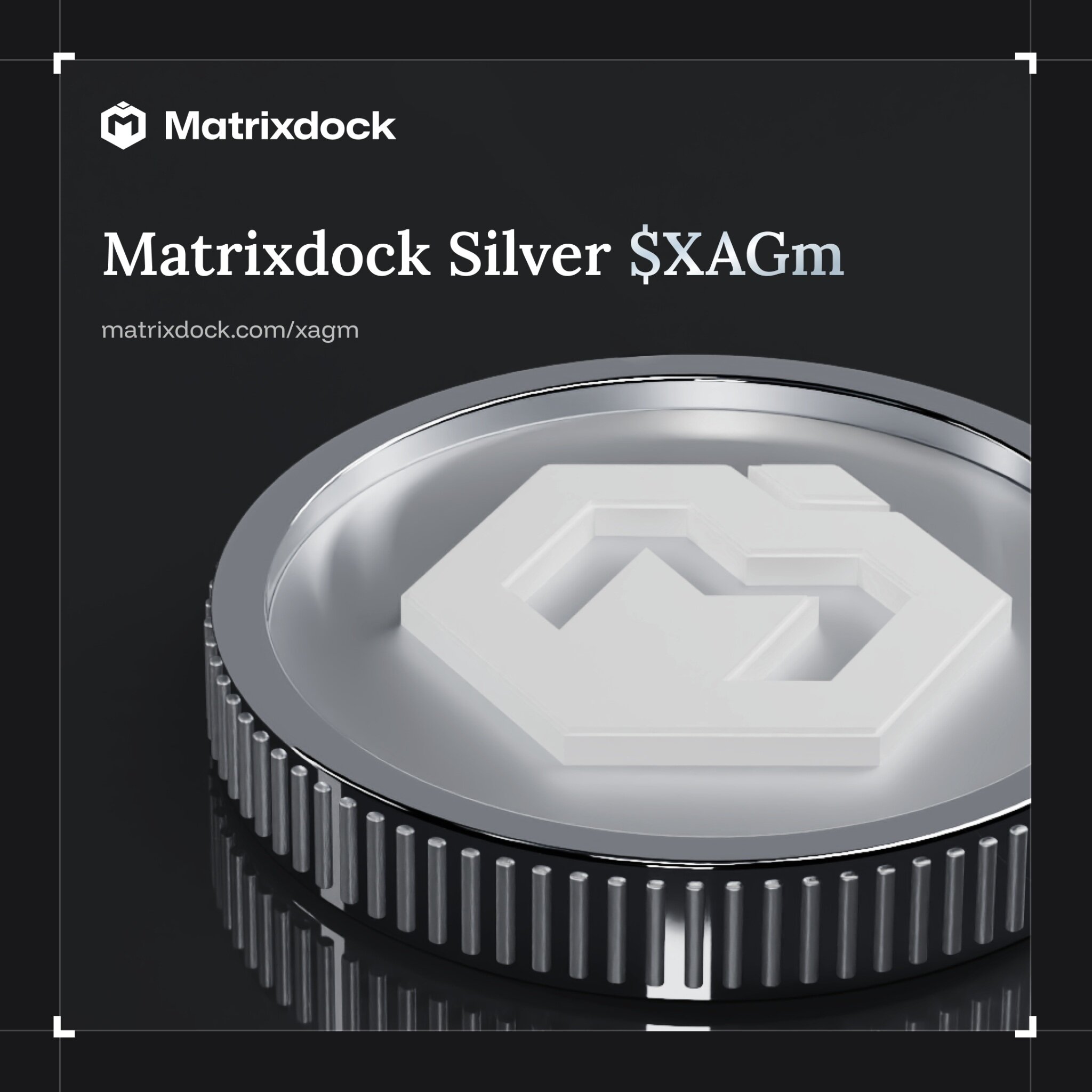
- Matrixdock has launched the silver token XAGm, backed by LBMA-standard physical silver, with each token initially corresponding to one troy ounce of silver.
- The FRS framework uses the ozPerToken parameter to decrease daily at an annualized 0.3% custody fee rate, transforming physical holding costs into programmable on-chain rules while preserving token fungibility and DeFi composability.
- Bureau Veritas completed its fourth semi-annual independent audit, covering XAGm for the first time, confirming that 65,934 troy ounces of silver reserves match the circulating tokens.
- XAGm has expanded from Ethereum to the Sui network, exploring DeFi use cases such as trading and collateralization.
- Matrixdock's product line covers STBT (short-term U.S. Treasuries), XAUm (gold), and XAGm (silver), positioning itself as building the Reserve Layer for on-chain finance.
As traditional assets such as gold and U.S. Treasuries gradually enter the blockchain, the tokenization of real-world assets (RWA) is entering a new phase of development. Compared with the early focus on which assets can be brought on-chain, the more pertinent question today is: once an asset has been tokenized, how can its underlying value be ensured to be authentic and trustworthy, and how can it continue to operate within the on-chain financial system?
For physical assets such as gold and silver, tokenization does not eliminate the real-world costs of storage, custody, and auditing. How to reflect these holding costs in the token mechanism while maintaining the credibility of the underlying asset has become a key issue in product design.
The silver token XAGm, launched by Matrixdock, the RWA tokenization platform under BIT (formerly Matrixport), offers a noteworthy case study. By introducing the Fungible Reserve Standard (FRS) framework, XAGm incorporates the holding costs of physical silver into a programmable token mechanism. And from the short-term U.S. Treasury product STBT and the gold token XAUm to the silver token XAGm, Matrixdock is also exploring pathways for different real-world assets to enter on-chain finance.
After Silver Goes On-Chain, How to Handle the Ongoing Holding Costs of Physical Assets?
In traditional financial markets, although gold and silver are both precious metals, they have different economic attributes. Gold has long been widely used for value storage and asset allocation, while silver, in addition to its investment attributes, is also widely used in electronics manufacturing, renewable energy, and industrial production, and is affected by both investment demand and industrial consumption.
In March 2026, Matrixdock officially launched the silver token XAGm, with physical silver meeting the London Bullion Market Association (LBMA) Good Delivery standards as the underlying reserve, custodied through professional institutional-grade vaults. At its initial issuance, each XAGm corresponded to one troy ounce of physical silver, providing the on-chain market with another precious metal asset backed by physical reserves.
However, the challenge facing silver tokenization is not only asset reserves. Because the unit value of silver is relatively low, an equivalent value typically requires storing more physical assets in weight and volume, and ongoing holding costs such as storage and custody have also become factors that product design must consider.
The FRS proposed by Matrixdock is an issuance framework designed precisely to address this issue. The FRS framework uses the ozPerToken parameter to record the quantity of physical silver corresponding to each XAGm token, and adjusts this parameter according to preset rules, incorporating the ongoing holding costs of the underlying asset into the token's operating mechanism.
Taking XAGm as an example, its ozPerToken initial value is 1 and decreases daily at an annualized custody fee rate of 0.3%. This means that the number of XAGm in holders' wallets will not directly decrease due to fee accrual, but the quantity of silver corresponding to each token will gradually adjust over time. At the same time, through the calculation relationship between the ozPerToken parameter and the token supply, FRS enables the total amount of silver represented by on-chain tokens to remain consistent with the underlying physical reserves.
This design transforms the holding costs of real assets into predefined, calculable on-chain rules, while preserving the token's fungibility and DeFi composability in the mechanism design. For RWA, its significance is not only in incorporating the ongoing holding costs of silver into the token mechanism, but also in demonstrating how to design product mechanisms suitable for on-chain operation according to the economic attributes of different underlying assets.
From Physical Reserves to Independent Verification: How Does XAGm Build Asset Credibility?
For tokens backed by physical assets, on-chain records can reflect token issuance and circulation, but whether the underlying assets actually exist and whether reserves are sufficient still requires professional custody and independent verification to establish a credible foundation.
In July 2026, Matrixdock completed its fourth consecutive semiannual independent reserve audit and for the first time included XAGm in the audit scope. The audit was conducted by Bureau Veritas and covered 574 gold and silver bars, including 66 silver bars totaling 65,934 troy ounces of silver. The audit confirmed that, calculated according to the applicable ozPerToken value, XAGm's underlying silver reserves matched the number of tokens in circulation.
In addition to semiannual independent audits, Matrixdock also improves the transparency of physical asset-backed tokens through reserve information disclosure and related verification mechanisms. Together, these mechanisms form the transparency foundation required for physical assets to enter on-chain finance.
From this perspective, trust in RWA does not come solely from bringing assets on-chain, but must be jointly established through professional custody, ongoing disclosure, and independent verification.
Beyond Precious Metals: Matrixdock's RWA Footprint Continues to Expand
In addition to issuance mechanisms and reserve transparency, whether assets can enter more on-chain financial applications is also an important direction for RWA development.
In May 2026, Matrixdock announced the expansion of XAGm to the Sui network, further expanding the on-chain application environment for tokenized silver on top of its Ethereum deployment and exploring its application potential in trading, collateral, and other DeFi scenarios.
Observing XAGm within Matrixdock's broader product lineup, its significance is not limited to silver itself. From the tokenized short-term U.S. Treasury product STBT to the physically gold-backed XAUm and then to the FRS-based silver token XAGm, Matrixdock has gradually brought real-world assets with different economic attributes on-chain. These assets differ in risk-return characteristics, reserve arrangements, and operating mechanisms, which also means that tokenization platforms need to design corresponding product structures for different underlying assets.
Matrixdock positions this long-term development direction as building the Reserve Layer of on-chain finance, providing underlying asset support for on-chain trading, collateral, and other financial applications by introducing real-world assets with transparent reserves and verifiable mechanisms.
From this perspective, XAGm is not merely another precious metal product that Matrixdock has added beyond gold, but also reflects its approach of exploring tokenization mechanisms according to different asset characteristics. As the RWA market further develops, the asset classes required by on-chain finance will become more diverse, and the introduction of different assets will further test platforms' capabilities in asset screening, product structure design, risk management, and on-chain application integration.
The Next Phase of RWA: Competition Goes Beyond Asset Issuance
As more and more real-world assets enter the blockchain, the focus of the RWA market is gradually extending from asset issuance to underlying asset quality, reserve transparency, operating mechanisms, and practical application capabilities. For tokenization platforms, future competition may no longer be limited to how many types of tokens are issued, but whether they can establish corresponding product structures, verification mechanisms, and on-chain application capabilities for different assets.
From gold to silver, Matrixdock's RWA footprint goes far beyond this. As different types of real-world assets gradually enter on-chain finance, Matrixdock is also gradually building a more diversified Reserve Layer ecosystem by continuously enriching asset categories, improving product mechanisms, and expanding on-chain applications.