After making $530 million in two years, why did Abraxas exit Hyperliquid?


- Core Viewpoint: Abraxas Capital, a hedge fund that accumulated approximately $530 million in profits on Hyperliquid, suddenly liquidated and exited. The trigger may have been security concerns arising from a Lighter API key leak, while the reserve pressure on Tether behind it constitutes another extreme hypothesis.
- Key Elements:
- Abraxas accumulated a trading volume of $13.4 billion on Hyperliquid over nearly two years, with profits of approximately $530 million on the platform alone, at least $67 million of which came from funding rate income.
- The exit actions included closing approximately $200 million in positions, transferring $109 million USDC to Binance, unstaking 219,000 HYPE and apparently selling it all.
- On November 16, an API key leak occurred at Lighter, with approximately $15.5 million in affected accounts suspected to be linked to Abraxas, and the timeline closely matches the withdrawal.
- Tether had invested $800 million in the Elysium fund managed by Abraxas, accounting for approximately 75% of the fund's total assets.
- Tether's excess reserves stand at approximately $7.95 billion, with gold and Bitcoin accounting for 14.4% of total assets, and the reserve safety buffer under pressure amid market crashes.
- There is currently no evidence indicating that the withdrawal was actively requested by Tether or that the funds have flowed back to Tether, and the extreme hypothesis remains to be observed.
Original | Odaily (@OdailyChina)
Author | Azuma (@azuma_eth)
A whale that once contributed over $10 billion in trading volume on Hyperliquid has chosen to exit.
On November 25, on-chain data analytics firm MLM monitoring indicated that hedge fund Abraxas Capital has closed all positions on Hyperliquid, withdrawn its remaining funds, and ended nearly two years of trading activity on the platform.

Abraxas's determination to exit this time even included all of its HYPE tokens. On-chain analyst Ember monitoring indicated that the 219,000 HYPE (approximately $13.25 million) that Abraxas had previously applied to unstake has also arrived today, and was subsequently transferred to Binance. Notably, Abraxas then withdrew 4,230 ETH from Binance, worth approximately $7.09 million. Based on this, Ember speculated that Abraxas has likely sold all of its HYPE.
Interestingly, this was not a forced retreat after losses. MLM monitoring data shows that over the past nearly two years of trading, Abraxas's cumulative trading volume on Hyperliquid reached $13.4 billion, generating approximately $530 million in profit on the single platform (excluding hedging performance on other platforms), of which at least $67 million came from funding rate income.
Why would an institution that steadily earned $500 million on Hyperliquid suddenly decide to liquidate and exit? Peeling back the on-chain data and recent market undercurrents, the direct trigger for this撤离 may be security concerns surrounding Perp DEXs, while there is also another extreme hypothesis that must be guarded against.
Behind Abraxas Stands Tether
According to its official website, Abraxas was founded in 2002 and is an investment management company headquartered in London. The institution was initially active in traditional markets, entered the cryptocurrency market in 2017, and is now one of the most active institutional-grade arbitrage traders in the industry.
One of the core funds managed by Abraxas is the "Elysium Global Arbitrage Fund" (its trading activity on Hyperliquid is part of this fund's strategy). The fund was established in 2018 and primarily employs market-neutral strategies, aiming to generate returns through spread arbitrage across different trading platforms, thereby minimizing the risk brought by cryptocurrency price volatility.
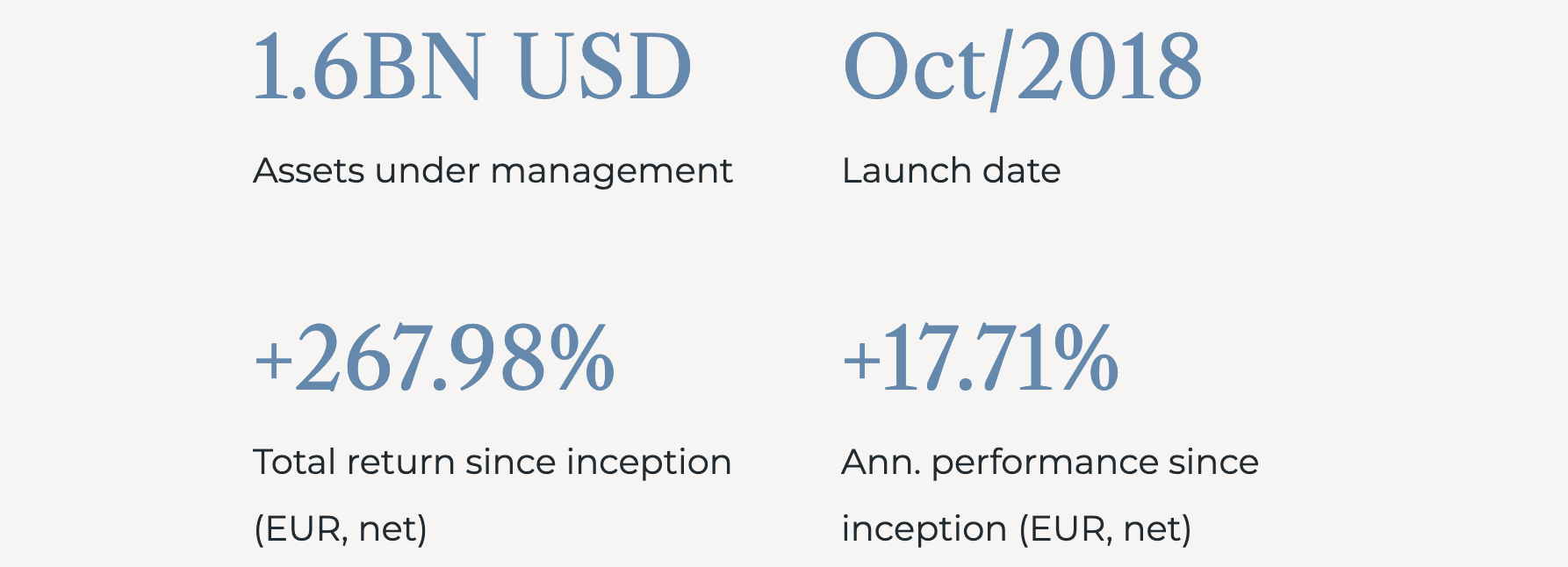
According to disclosures on the fund's official website, the Elysium Fund currently manages approximately $1.6 billion in assets, with total returns of 267.98% since inception and annualized performance of 17.71%.
What truly deserves attention about Abraxas is the institution's relationship with Tether.
In July of this year, The Block, citing arbitration materials between Circle and Heka Funds (identified in documents as the Investment Manager of the Elysium Fund), disclosed that Tether had invested up to $800 million in the Elysium Fund, accounting for approximately 75% of the fund's total assets. This means Tether was not only an important capital provider to the fund but at one point its largest contributor. The arbitration materials also showed that Tether had provided Heka with an exemption from USDT minting fees.
It should be clarified that Abraxas is not a subsidiary of Tether, nor can it simply be regarded as Tether's proprietary trading department. However, given Tether's massive investment in Elysium, Abraxas's capital allocation and trading strategies are clearly worth observing from the perspective of Tether's capital deployment.
$530 Million in Profit Is Not the Fund's Net Return
Before its exit, Abraxas was one of the most representative institutional-grade "money printers" on Hyperliquid.
According to statistics from MLM and other on-chain data institutions, over the past nearly two years, Abraxas's associated wallet addresses (core addresses include 0x5b5d51203a0f9079f8aeb098a6523a13f298c060 and 0xb83de012dba672c76a7dbbbf3e459cb59d7d6e36) collectively generated up to $13.4 billion in trading volume on Hyperliquid, with fee expenditures alone exceeding $2 million.
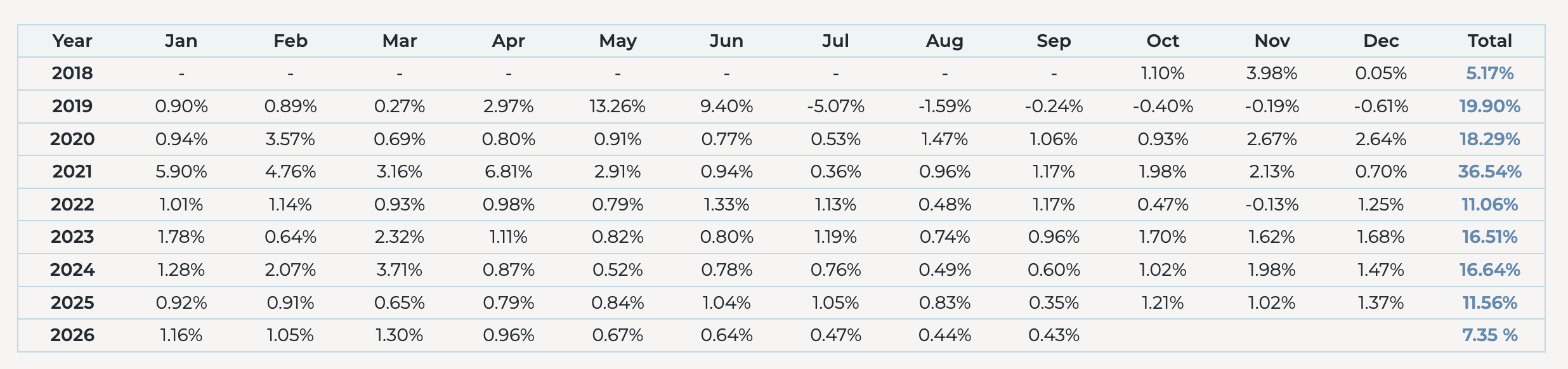
As for the $530 million in total single-platform profit, considering that the Elysium Fund generally employs neutral strategies—typically establishing large-scale short positions on Hyperliquid to hedge spot or other platform exposures while steadily earning funding rates—it cannot be regarded as actual returns. However, according to the monthly performance disclosures on the Elysium Fund's official website, the fund's net return during the same period when it was active on Hyperliquid was approximately 20%.
For Hyperliquid, Abraxas was also a highly valuable client. In addition to millions of dollars in trading fee income, its USDC retained on the platform also generated approximately $3.2 million in revenue for Hyperliquid through the AQAv2 reserve yield mechanism. Furthermore, Abraxas's trading activity on the platform was itself a liquidity benefit for Hyperliquid.
From the results, this appears to be a win-win situation, but precisely because of this, Abraxas's resolute exit seems all the more abrupt.
Was the Trigger Lighter?
From a timeline perspective, Lighter's recent API key leak incident was very likely the direct trigger for this large-scale withdrawal.
On November 16, Lighter suffered a security incident in which an attacker exploited an API key leak from a trading account to transfer funds through abnormal public pool share operations. Afterward, external on-chain tracing estimated that two market-making accounts were affected by approximately $15.5 million in total, and the affected accounts were linked to Abraxas (not officially confirmed).
Lighter subsequently explained in its post-incident report that the issue originated from the external signing software used by the account reusing a nonce, leading to the API key leak, and that the official SDK, protocol, or smart contracts were not compromised. The platform stated that approximately $5 million in USDC had been recovered and that deposits and withdrawals had returned to normal.
But for Abraxas, this incident may have already affected the institution's risk assessment system.
Around November 18, Abraxas began closing approximately $200 million in positions on Hyperliquid, transferred approximately $109 million in USDC margin to Binance, and applied to unstake all HYPE. From the Lighter security incident to the large-scale position closure on Hyperliquid to today's formal withdrawal of all remaining funds, the timeline is quite coherent.
However, the problem with this hypothesis is that Lighter and Hyperliquid are two independent platforms, and the former's API key incident does not mean the latter has the same security vulnerability. Therefore, this withdrawal may also mean that Abraxas is undergoing a broader risk contraction—reevaluating counterparty risk of on-chain trading platforms, custody risk, and the necessity of holding large amounts of on-chain collateral amid heightened market volatility.
Extreme Hypothesis: Is Tether Facing Capital Pressure?
Compared to mere on-chain security concerns, what deserves more attention is Tether, which stands behind Abraxas.
On Monday, we published an article titled "If Gold Falls Another 17%, USDT Could Really Blow Up," noting that Tether's reserve safety buffer is currently facing considerable pressure. The reserve report as of September 30 showed that Tether's total assets were approximately $191.45 billion, liabilities approximately $183.5 billion, and excess reserves approximately $7.95 billion.
From the reserve structure, as of September 30, Tether held approximately $139.6 billion in cash and short-term deposit assets, accounting for 72.9% of total reserve assets. The remainder included gold, Bitcoin, secured loans, stocks, and other investments, with gold and Bitcoin alone accounting for 14.4% of total assets. Price fluctuations could directly affect its excess reserve buffer. Affected by the recent synchronous market crash, Tether's excess reserve portion has already shrunk significantly—if the market (especially gold) continues to decline sharply, there is an extreme possibility that assets may not fully cover liabilities.
Against this backdrop, does Tether have the incentive to re-examine its fund's capital allocation, or even reduce some on-chain risk exposure? This is clearly a question worth watching.
However, this speculation remains a hypothesis about extreme conditions. Currently, there is no evidence proving that Abraxas's withdrawal was actively requested by Tether, nor is there evidence that its funds have flowed back to Tether. Abraxas's on-chain trading accounts and the fund's investors cannot be directly equated either.
But one fact is that Tether once provided massive capital support to the Elysium Fund, and that fund's portfolio is managed by Abraxas. Now Abraxas is withdrawing from its most important on-chain trading platform. Whether there are deeper motives behind this is worth continuing to observe from various angles of possible connection.