After Anthropic rings the bell, which listed companies will be reshaped by AI large models?


- Core Viewpoint: Anthropic completed the "largest IPO in history," with its fully diluted market capitalization during trading once reaching $1.8 trillion, entering the global top 10 by market value; behind its listing, it not only outlines the macro vision of AI but also produces differentiated impacts on multiple sectors including cybersecurity, software, healthcare, defense, and computing power chips.
- Key Elements:
- Before the IPO, it had already raised funding through Series H, and rising computing power expenditures along with cybersecurity offense and defense were the direct motivations driving the listing.
- Cybersecurity stocks benefit: Palo Alto Networks used frontier models to scan more than 130 products in one month, discovering 75 valid vulnerabilities, far higher than the usual 5 to 10 per month.
- Software stocks under pressure: Although Salesforce used Claude to increase per-capita output by 151%, its stock price still fell 24.39% over the past month.
- Healthcare implementation diverges: Eli Lilly opened Claude Enterprise to more than 50,000 employees, with activity exceeding 85%; BMS compressed RWE analysis from 1 to 2 months to 4 to 5 minutes.
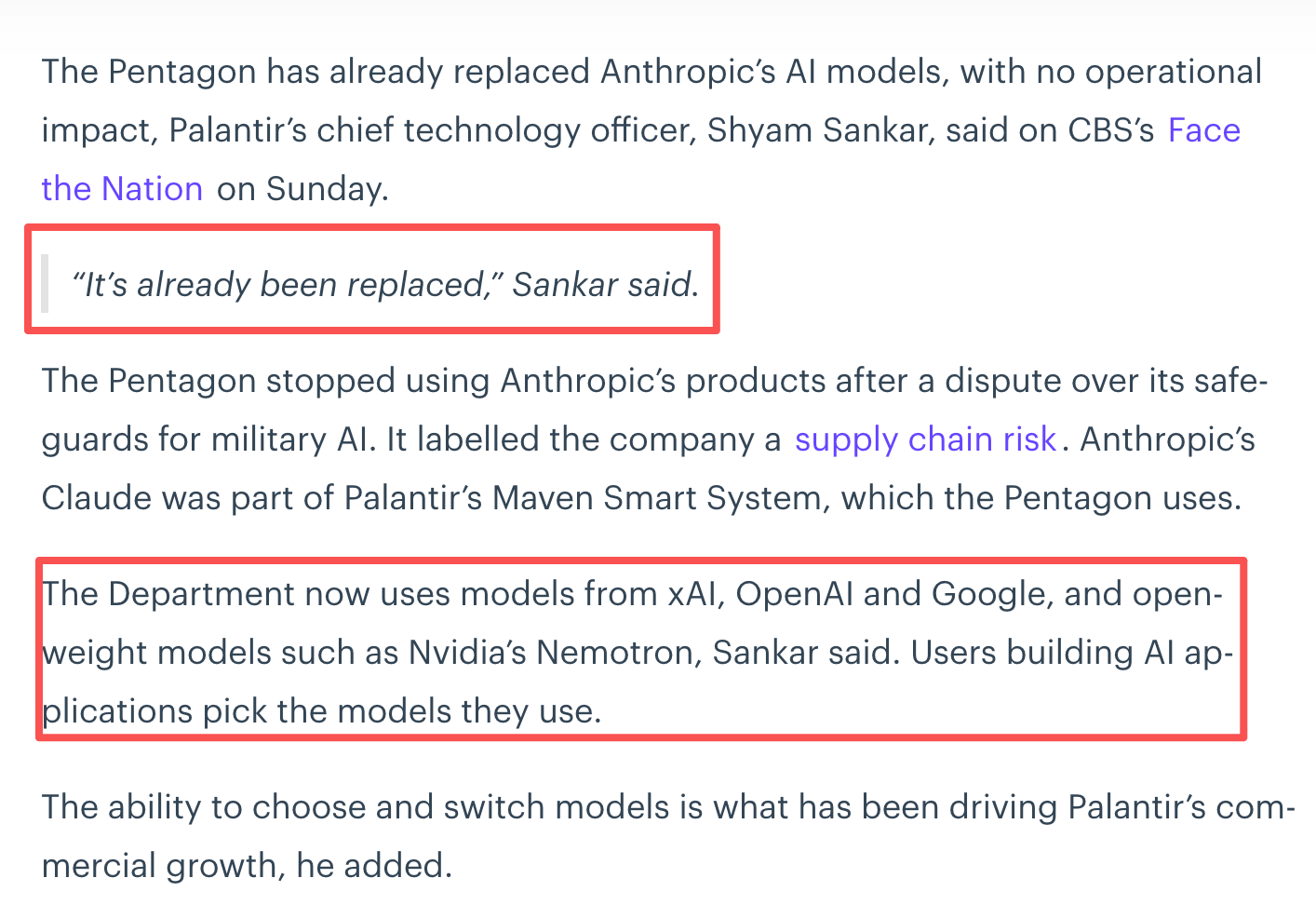
- Defense relations are delicate: the Pentagon has already replaced Claude with other models in the Maven system, and Palantir emphasizes that customers can safely switch between different AI models.
- Computing power chips remain questionable: Anthropic claims it "got AMD chips running in 3 days," but this only covers single-model prompt processing, does not involve large-scale cluster training, and has no third-party retesting.
Original | Odaily@OdailyChina)
Author | Wenser (@wenser 2010 )
On the evening of November 19, the "biggest IPO in history" of Anthropic officially concluded, with its fully diluted market cap briefly reaching as high as $1.8 trillion during trading, placing it among the "Top 10 most valuable companies in the world."
Before the opening bell, Anthropic co-founder Dario again discussed topics including the evolution of AI model capabilities, safety slowdowns, and compute and cash investment. He also mentioned that "AI-human collaboration is expected to compress a century of scientific and medical progress into 10 years," and in the Founder's Open Letter, he promised that Claude will never integrate advertising.
Overall, Dario outlined a grand vision in which "humanity's future rests on AI alone"; but behind this narrative, he also laid the groundwork for multiple sectors that may come under pressure. Of course, as AI accelerates, tech giants and healthcare giants are also evolving rapidly in their own ways. With AI as a powerful amplifier, their future trajectories remain uncertain.
The Many Faces Behind Anthropic's IPO: Security, Healthcare, and Chips
The reason Anthropic's IPO proceeded so quickly and urgently is that despite having already reached Series H in prior financing, the company still faces rising compute expenditures and unavoidable cybersecurity offense and defense. These two are also the two major sectors that will be directly affected after its IPO. Healthcare is one of the main targets for Dario's "facing challenges" and "painting a big picture." Let's examine them one by one.
Impact 1: Bullish for cybersecurity stocks, bearish for software stocks
First, the cybersecurity sector. Although with the development of large AI models, we have entered an era of "AI security offense and defense for everyone," for cybersecurity companies, this cannot be regarded as entirely bad. After all, on one hand, it means "more business"; on the other hand, large AI models are also helping cybersecurity companies achieve efficient vulnerability screening and timely bug fixes.
In this regard, for Nasdaq-listed Palo Alto Networks (PANW), this is an industry-level positive. Dario has previously listed cyberattacks multiple times as the most realistic dual-use risk, and the Founder's Open Letter also mentioned the Project Glasswing defense initiative launched in April this year, with PANW as one of the first core partners. According to public disclosures, in May this year, PANW used Anthropic's Claude Mythos, Claude Opus 4.7, and OpenAI's GPT-5.5-Cyber and other frontier models to scan more than 130 products in about one month, finding 75 valid vulnerabilities, far above the company's usual disclosure frequency of 5 to 10 per month. Internal testing showed that frontier models achieved a success rate of over 70% in chaining multiple minor issues into usable attack paths, but also came with about a 30% false positive rate; security teams still need to invest substantial engineering effort to build dedicated scanning guardrails. Another security company founded in 2011, CrowdStrike (CRWD), is in a similar situation, with its stock price rising as much as 49.79% over the past 6 months. Although such companies' performance is also a main driver of stock price gains, the development of large AI models has indeed provided a boost to some extent.
In stark contrast are software stocks.
In the enterprise SaaS software space, Salesforce (NYSE: CRM). Although the "Salesforce Case Study" released simultaneously on Anthropic's IPO website shows that the company's engineering team, with the assistance of Claude models, increased per-capita effective output by 151% year-over-year and reduced online incident rates by 5%; and the two sides have also engaged in product-level collaboration, with Salesforce also holding less than 1% of Anthropic's equity, Anthropic still poses a certain threat to it, with Salesforce falling as much as 24.39% over the past month.
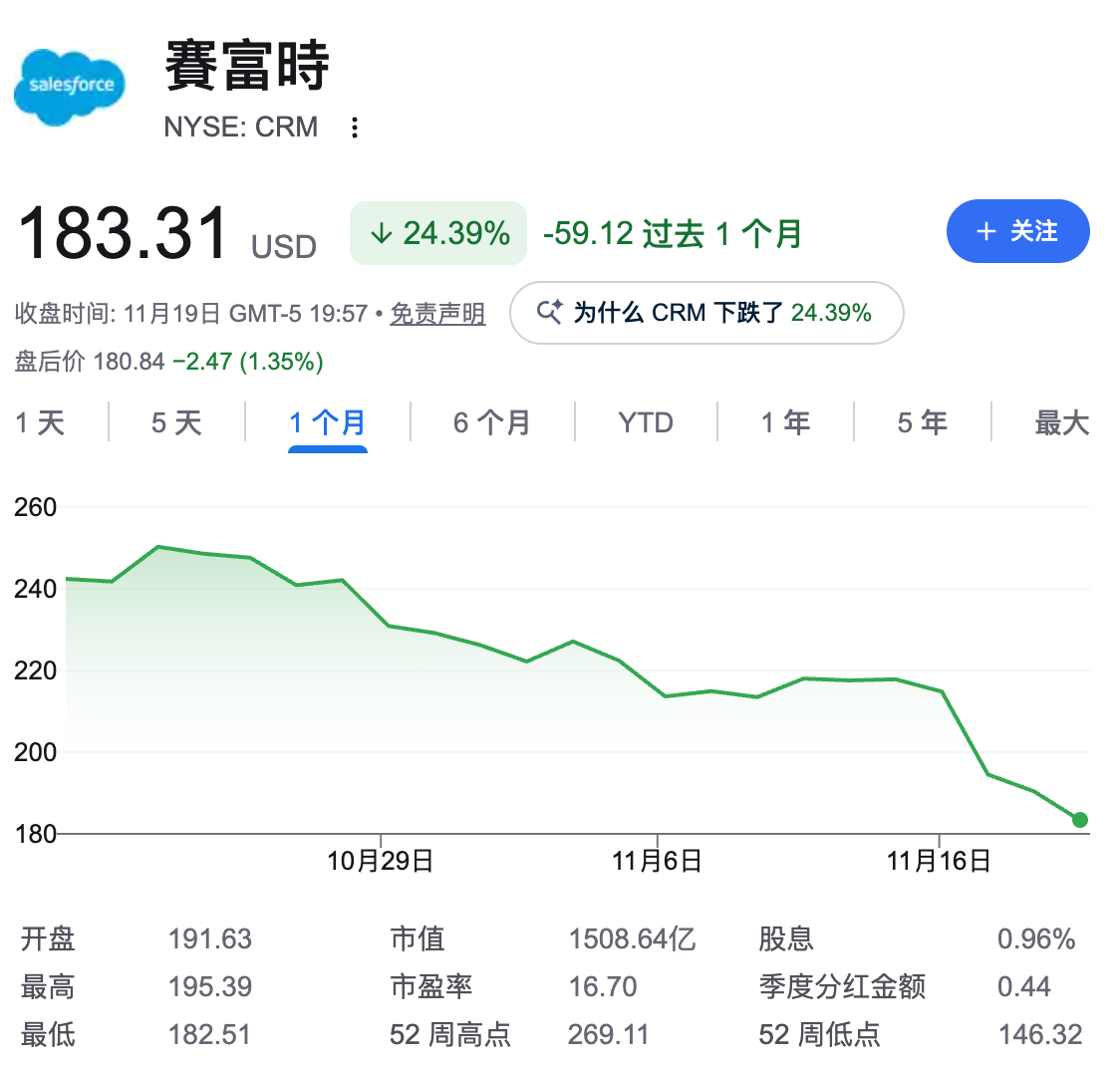
The capital market is still repeatedly weighing whether cost reduction and efficiency gains or seat-based pricing discounts carry more weight. A similar timing mismatch also occurred with IT consulting and systems integration giant Accenture (ACN). Although Anthropic's prospectus and roadshow videos listed Accenture as an important customer and integration partner, and Accenture CEO Julie Sweet revealed that in the short term, large government and enterprise demand for large model integration and compliance will bring Accenture a new wave of systems integration and data governance orders, whether these orders can be guaranteed long-term effectiveness and whether its ecosystem position can persist remains an open question.
Impact 2: Healthcare, National Defense Security, and Compute Chips
On the bell-ringing stage, Dario painted a very big picture, but also left Anthropic a way out in advance. His exact words were roughly, "Large AI models are expected to compress a century of medical progress into a decade." This is only a long-term vision; at the current stage, it is still in the early results phase, and medical experiments and clinical trials still require time.
Specific examples in this regard are most notable among healthcare giants.
Among specific pharmaceutical companies, Eli Lilly (LLY) has relatively more solid implementation. According to the Lilly Case Study officially released by Anthropic, since integrating Claude in 2024, in April this year the company became one of the first large pharmaceutical companies to open Claude Enterprise to more than 50,000 employees, with full-time employee activity exceeding 85% across five functions: legal and compliance, technology, finance, oncology, and R&D; in October 2026, it also launched a pilot of the Claude Science research workbench and jointly refined a data leak prevention audit hook. The collaboration has greatly accelerated early target literature retrieval and R&D collaboration, but new drugs typically take 3 to 5 years or more from project initiation to approval. In the short term, large pharmaceutical companies' stock prices still depend heavily on the launch pace of blockbuster drugs and healthcare reimbursement policies.
Another large pharmaceutical company, Bristol Myers Squibb (BMY), has taken bigger steps. Previously, BMY executive Greg Meyers introduced that they had compressed real-world evidence (RWE) analysis that originally took one to two months into 4 to 5 minutes, and expected AI to shorten overall clinical trial timelines by 20% to 30%. Of course, constrained by factors such as patient recruitment speed, hospital ethics approval, and FDA review, the current 20% to 30% reduction remains an internal company expectation and has not yet been realized in complete Phase III large-sample pipelines.
Clinical trial outsourcing leader IQVIA (IQV) is no slouch either. The company previously claimed that with tools such as large AI models, it achieved results including 33% faster study start-up, 50% faster data cleaning, and more than 45% shorter trial phase intervals, helping pharmaceutical companies bring new drugs to market up to 2 years earlier. Going forward, if IQVIA, with its proprietary clinical databases, compliance experience, and approximately 94,000 employees, can upgrade its data platform and high-value-added agency services, it is expected to achieve further rapid growth.
In national defense security, Palantir Technologies (PLTR) is a key company involved. Previously, Palantir CTO Shyam Sankar publicly emphasized that the U.S. Pentagon had already replaced Claude with xAI, OpenAI, Google, and Nvidia's open-source model Nemotron in the Maven smart system, and that missions were unaffected; in subsequent interviews, he also emphasized that the company would strengthen clients' ability to securely switch between different AI models. Currently, it is not PLTR that needs Anthropic, but Anthropic that needs to manage its relationship with PLTR and the U.S. Department of Defense.
Of course, if Anthropic subsequently expands the scope of directly delivering end-to-end AI agents to federal and subordinate departments, PLTR will also be impacted to some extent, but its stock price trend will still mainly depend on U.S. national defense security spending and market sentiment toward the AI sector.
Finally, let's discuss compute chip-related targets.
After vaguely participating in the turmoil surrounding Nvidia founder Jensen Huang's departure, Anthropic stated that it could "get models running on AMD chips in 3 days," which, combined with AMD's strong earnings performance, once drove its stock price to rise against the trend in the semiconductor sector.
Anthropic's roadshow materials and fact sheet also listed AMD GPUs alongside Amazon Trainium, Google TPU, and Nvidia GPUs as the four core compute architectures; but according to AI Daily Radar's verification against the prospectus, the 3-day result only covers prompt processing for a single model, and does not include the much more difficult large-scale cluster training; moreover, it is only data disclosed unilaterally by Anthropic, and no third-party independent benchmark retest has been seen to date.
Yesterday, short-selling firm Hunterbrook Media even published a report alleging that AMD products are suspected of violating export controls and other issues, triggering a sharp drop in its stock price. In the short term, Anthropic's IPO is still a positive for AMD, but subsequent order verification is still needed to confirm whether its stock price can receive long-term support.
But regardless, change has already occurred, and the butterfly effect triggered by Anthropic's IPO will continue to spread over the next several years. As for its future growth direction, whether it becomes the "Leviathan of AI" or the "Sword-bearer of the AI industry," that will depend on where company executives, including Dario, go from here.