Weekly Editor's Picks (1121-1127)


- Core Viewpoint: The market is in a共振 correction phase driven by the ebb of AI trading and tightening liquidity. Hedge funds have already deleveraged, but "slow money" has yet to exit. Neither Bitcoin nor US stocks have confirmed a bottom, and the chain risks involving gold and Tether's reserve safety cushion have become a potential systemic hazard.
- Key Elements:
- Hedge funds have completed panic-driven deleveraging, but mutual funds, retail investors, and ETF flows remain in the market. The true bottom for US stocks may not have arrived yet.
- Bitcoin fell to $55,500 at one point, hitting a 27-month low. The drawdown reached 53% but only met 2 bottom indicators, and it did not break below the $53,200 realized price.
- Tether's safety cushion shrank from $7.95 billion to about $2.8 billion. Another 17% drop in gold or a 47% drop in Bitcoin could breach it.
- Sky founder Rune still owes about 77 million USDS. The founder borrowing against his own protocol's token has once again evolved into a protocol liquidity crisis.
- The FCC approved SpaceX's space data center plan, which aims to deploy up to 1 million satellites and exclusively adopt Nvidia's Vera Rubin system.
- Prediction markets were accurate in forecasting the midterm elections, but the top 1% of accounts captured 91% of profits. Ordinary users mainly lost money at the settlement stage, with holdings going to zero.
- Ethereum's Glamsterdam upgrade continues to be delayed. EIP-8037 will raise the gas fee for newly opened storage slots by about 5x, and 200,000 contracts face impact.
The information stream moves too fast,and in-depth analysis articles are easily drowned out by hot topics. The "Weekly Editor's Picks" column pulls these valuable judgment-laden pieces out of the flood of information,helping you filter out the noise,retain the insights,and gain inspiration.

Macro Landscape
Hedge funds have completed a near-panic round of deleveraging,but mutual funds,retail investors,and ETF flows remain in the market,which means the market may still be some distance from a true bottom. The real "slow money" has yet to sell.
So far,this has been an AI bear market rather than a bear market for the entire stock market,but that is about to change.
Apple is the last heavyweight stock that has yet to decline. Safe-haven capital is flowing into consumer staples.
With the hottest PCE data in three years,a December rate hike already priced at 97%,and new tariffs imposed on more than a dozen economies including the EU,the dollar has ample reason to keep rising,and long-duration tech stocks have ample reason to keep falling.
The final buyers will be leveraged retail investors.
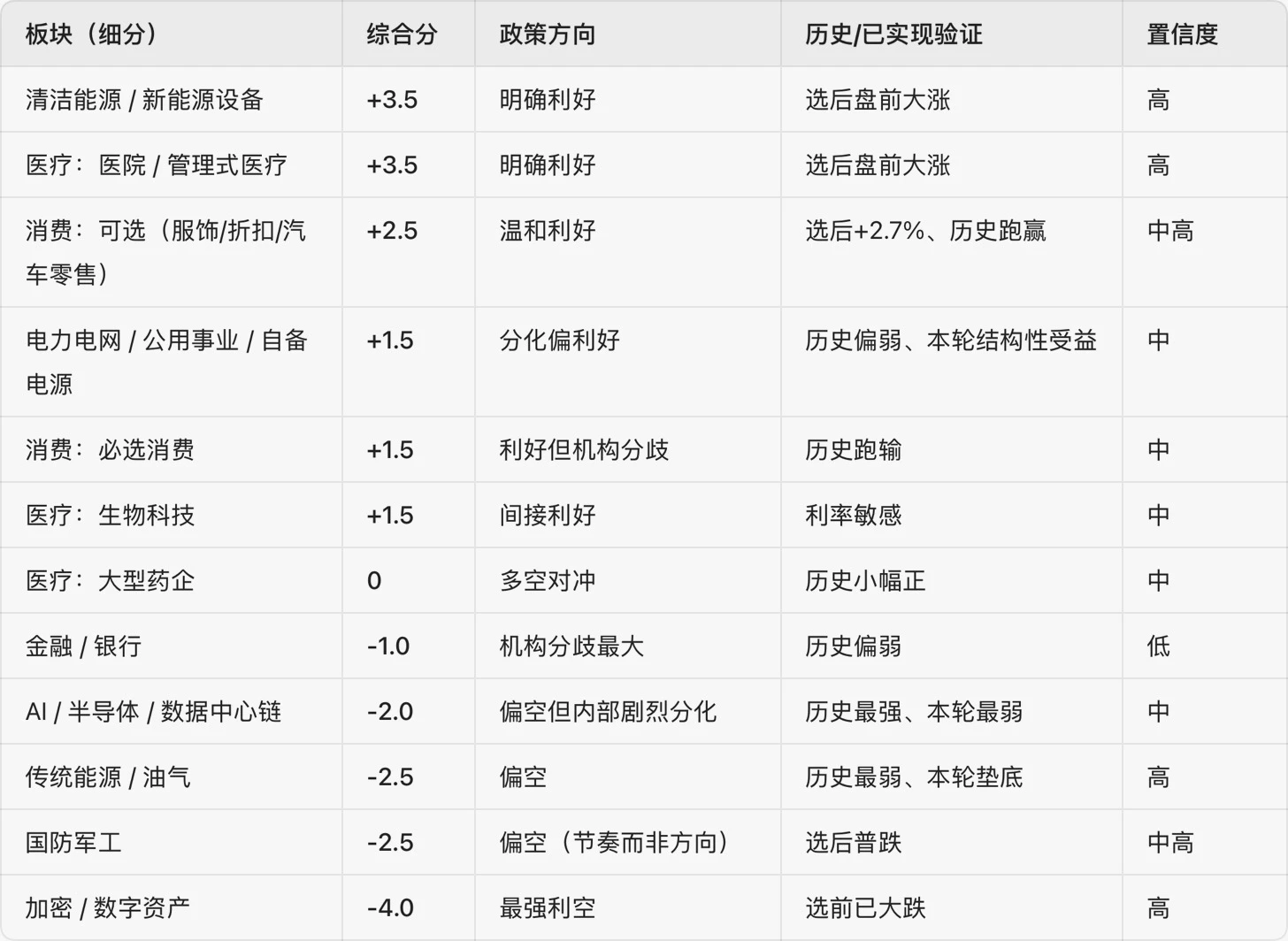
Countdown to a Democratic Takeover:Which Sectors Benefit First?
Bitcoin,US Stocks,and Gold:Which Will Bottom First?
Bitcoin's cyclical low requires price action and cross-asset signals to confirm each other.
Even if the low still roughly follows the four-year rhythm,the duration of the next upswing may be shorter. Likewise,the on-chain "equilibrium price" of about $38,600 provides a reference for a deep drawdown,though whether it is reached still depends on whether selling continues. If no new low is made over the next 4 to 7 weeks,some shorts may turn bullish in early 2027,creating conditions for a rebound from March to June.
The change that could truly bring about a recovery for Bitcoin is rate-hike expectations ceasing to be revised upward,with subsequent policy being more accommodative than the path the market has already priced in.
Gold is still falling. If it cannot stabilize for a prolonged period,the correction in risk assets could drag past his previously expected window. Even if gold is the first to stop falling,tech stocks still face another test,namely whether the rebound can break above previous highs,and whether investors are willing to keep paying current valuations for the expected returns on AI investment.
Investment and Entrepreneurship
BTC Falls to $55,000:A Generational Buying Opportunity?
The author predicts that a crisis in the AI industry will trigger BTC's ultimate bottom at some point within the next year,followed by a trend reversal driven by US credit expansion and monetary easing.
Retracting the Bitcoin Bottom Call:Galaxy Reviews 15-Year Cycles,Where Is the True Iron Bottom?
The research report provides a panoramic view of the current landscape across five dimensions:time cycles,drawdown depth,coin dormancy,macro liquidity,and ETF holdings. Although this cycle has lasted 412 days and appears long in the tooth,the 53% drawdown and the fact that only 2 bottom indicators have been met suggest the market has yet to undergo the kind of thorough shakeout seen in previous bear markets where prices fell below the realized price($53,205). The road ahead still faces severe tests.
After ANT Plunges 29% Below Issue Price,Is $75 the Bottom?
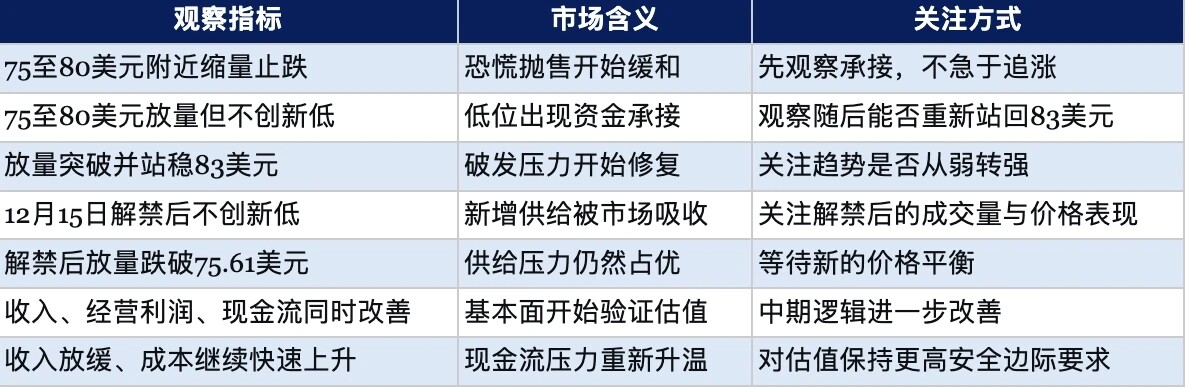
What ANT experienced in its first week of trading was not an ordinary tech-stock pullback,but a very intense IPO price discovery. $75.61 is now better viewed as a support test level rather than an "absolute bottom."
The biggest contradiction for ANT right now is that operating data is strong,but the market has already begun pricing in advance the capital and cash-flow costs that will need to be paid over the next few years. ANT's financial reports cannot be judged by revenue growth alone. What will truly matter going forward is whether three things can improve simultaneously:whether revenue growth continues to cover computing power costs,whether operating margins can stabilize,and whether operating cash flow can remain positive.
ANT's price action over the next few months is likely not to be a simple "fall and then rise," but rather a continuous process of being tested by new supply.
SpaceX Space Data Center Approved,Could Nvidia Return to $200?
The US Federal Communications Commission(FCC,responsible for radio and satellite communications licensing)has officially approved SpaceX's space data center plan "Starmind." Officials called it "the first space data center constellation license in US history." The plan calls for deploying up to 1 million satellites to build a space data center,and will exclusively use Nvidia's Vera Rubin NVL72 rack-scale systems. Musk explicitly stated that SpaceX will use Nvidia exclusively because they believe Vera Rubin is currently the best AI architecture,and they have co-designed the satellites' computing payloads with Nvidia.
On Thanksgiving Day,SpaceX not only announced a $22 billion share grant program for tens of millions of children in the US,but also further advanced Musk's earlier vision that "space computing power is expected to surpass ground-based computing power." More importantly,Nvidia's long-term orders have thus gained further security,making it a win-win on multiple fronts.
Also recommended:"2026 Global VC Review:AI Absorbs 90% of Funding Growth,Legacy Funds Still Struggle to Exit."
Prediction Markets
The Anti-Corruption Data Collective(ACDC)released the fifth briefing in its "Gambling on Democracy" series on November 23,reviewing the performance of prediction markets in the 2026 US midterm elections and concluding that prediction markets were no more accurate than their predecessors on elections,with new information close to zero,at the cost of ordinary users' money flowing to a very small number of accounts. The report acknowledged that Kalshi,Polymarket,and Polymarket US predicted this midterm election quite accurately,but also questioned whether such accuracy was worth the money,and who ultimately ended up with that money.
Ordinary users actually made money during the trading phase; the heaviest losses came at settlement,because they failed to sell losing contracts at high prices,held them all the way to expiry,and ended up with zero.
The counterparties in prediction markets are market makers and traders taking the other side of orders; the platform collects fees,and losses from mispriced trades do not go into the platform's pocket. Stating that "the platform is the winner" and "users lose money" side by side is valid,but the two are not part of the same causal chain.
Policy and Stablecoins
If Gold Falls Another 17%,USDT Could Really Blow Up
Tether's $7.95 billion safety cushion as of September has shrunk to about $2.8 billion at current market prices. Of that,the decline in gold prices caused about $2.8 billion in losses,and Bitcoin caused about $2.3 billion in losses. This is because Tether holds $16.3 billion worth of gold,while its Bitcoin holdings are worth only $6 billion.
If Bitcoin remains at its current price,gold falling to about $2,940 per ounce would bring the safety cushion to zero. That means gold would need to fall another 17% from current prices.
If the safety cushion were to be breached solely through a Bitcoin decline,Bitcoin would need to fall 47%,to about $32,100.
The above calculations assume that Tether's $4.18 billion in equity assets maintain their original value. If those equities fall in line with gold miners or Twenty One Capital,the safety cushion would shrink further to $1.2 billion to $1.9 billion,and gold would only need to fall another 8% to 12% to breach it.
Tether's own real-time data currently shows a safety cushion of $5.47 billion. It appears this figure incorporates the impact of Bitcoin's price decline but does not incorporate the impact of gold's price decline.
If you hold USDT,redemptions are still proceeding normally.
Since September,$8.75 billion worth of USDT has been redeemed,and USDT is currently trading at $0.9985. What is truly worth watching is Tether's report to be released in January next year,when its reserve coverage ratio may fall below 100%.
Also recommended:"The Democratic Counterattack:A Detailed Breakdown of the Possibility of Overturning 36 Trump-Era Crypto Policies."
CeFi & DeFi
The Next Stablecoin:A Nearly $300 Billion Potential Market,a 50x Growth Opportunity
Looking at tokenized stocks from the vantage point of 2026,they may be like stablecoins were in 2020 before widespread adoption:the market space is enormous,and the various demand streams generated around them will become an important part of the crypto market and even the global economy.
Amid the Crash,Small and Mid-Sized Crypto Treasuries Are Quietly Selling Coins
When a treasury company's stock price falls below the value of its holdings,its own crypto assets become the easiest source of cash. This is the reality after the model of relying on equity issuance to continuously expand crypto holdings has run its course. Buying back stock by selling crypto assets may improve mNAV far less than it appears on the surface.
The next wave of sellers may be companies facing forced liquidation pressure on loans.
For investors,what is truly worth paying attention to is the time lag between these transactions and company public disclosures.
On-chain tracking still has limitations,and actual sale sizes may be larger.
Borrowing $77 Million,Sky Founder Drains His Own Lending Pool?
Sky founder Rune repaid 3 million USDS to his own lending pool,and within just 24 seconds,the funds were entirely withdrawn by depositors and arbitrage bots. After several South Korean crypto exchanges successively flagged SKY and its stablecoin USDS as investment warning targets,Rune publicly apologized on X,acknowledging that his excessive borrowing was an important reason why stUSDS users could not withdraw funds.
Currently,Rune still owes about 77 million USDS and plans to repay the debt by selling some SKY tokens to institutional investors. The market speculates that Rune borrowed heavily because of a failed personal venture(game studio Raw Power Games).
ABCDE Capital co-founder Du Jun publicly expressed interest in acquiring the position.
From Curve to Sky,the story of DeFi founders pledging their own tokens to borrow heavily is playing out again. When the market is good,founders can obtain large amounts of cash without selling coins; when the market turns bad,personal debt can evolve into a liquidity crisis for the entire protocol.
Airdrop Opportunities and Interaction Guides
Ethereum and Scaling
Ethereum Glamsterdam Upgrade Continues to Be Delayed,200,000 Contracts Face New Gas Rule Impact
EIP-8037's new rules raise the fee for opening a new storage slot on-chain to about 5x,because such data will be carried long-term by all network nodes,making it a heavy burden. The new rules can make gas pricing more closely reflect the real workload of an operation,and control state bloat while the gas limit continues to rise.
The trouble is that many contracts already running on-chain have hardcoded in their code roughly how much gas this step should cost,or rely on how much gas remains to determine whether the next