Weekly Editor's Picks (1031-1106)


- Core Viewpoint: This week, the market focused on the tech stock selloff triggered by doubts over AI investment returns, the policy direction following the US midterm elections, and the impact of the Binance $6.3 billion theft incident on industry security and risk control. The crypto market is forging ahead under macroeconomic uncertainty.
- Key Elements:
- The combination of "double highs" in US asset prices and credit is approaching the crisis red line. AI investment is shifting toward external financing, and by 2028 it may clearly approach the "red zone warning area."
- The Democrats won a landslide in the midterm elections, which is short-term bearish for the advancement of crypto-friendly regulation, but the result had already been priced in, and US stocks may see a brief rebound.
- Apple, with $136.1 billion in free cash flow, has become a safe haven from AI volatility, with its market cap briefly surpassing $5 trillion, though it faces pressure from the memory cycle and loosening of the "Apple tax."
- Part of Circle's record Q3 revenue came from a one-time accounting gain from the ARC token presale, while USDC's reserve yield declined and circulation growth slowed.
- Binance was hacked for approximately $6.3 billion, with North Korean hackers identified as the culprit. CZ said the loss would be covered by its own balance sheet; the industry is reflecting on whether to introduce risk control mechanisms such as transaction delays.
- The total stablecoin market cap fell to its lowest level in over a year, shrinking by about $17 billion over six months; the digital asset custody market quadrupled in a year and is evolving toward trust services.
The information stream moves too fast, and in-depth analysis articles are easily drowned out by trending topics. The "Weekly Editor's Picks" column pulls content with judgment value out of the flood of information, helping you filter out the noise, retain the insights, and bring inspiration.

Macro Landscape
How Far Is the U.S. from the Next Financial Crisis?
The "double-high" combination of rapidly rising asset prices and strong credit expansion has historically been the most dangerous precursor to igniting a crisis.
Under this framework, once both indicators simultaneously cross the threshold into the "red zone," the probability of a financial crisis occurring in the corporate sector within the next three years is as high as 45%. As things stand, U.S. equity gains have easily surpassed the asset price threshold, but the rise in corporate leverage has so far remained moderate.
The funding sources for AI-related investment are shifting from operating cash flow to external financing (including debt financing). By 2028, the U.S. will move noticeably closer to the "red warning zone," but is expected to remain outside the boundary.
On the Democratic side, there has been an open "intra-party rebellion" and a carefully orchestrated ballot disruption scheme. On the Republican side, there have been dramatic situations such as "mother-daughter falling out" and "advertising attacks."
Regardless of the outcome of Tuesday's election, these fractures will not disappear with it.
The Final 36 Hours of the U.S. Midterms: A Golden Pit for U.S. Stocks and Bitcoin?
A Democratic sweep of both chambers: the bad news is that after winning a majority in both chambers, Democrats will in the short term affect the advancement of crypto bills and the SEC and CFTC's push for crypto-friendly regulatory policies, and increase tax pressure on industries such as AI data centers; the good news is that before the midterms, relevant news had already been priced in and digested in advance. After the election, regardless of the outcome, the U.S. stock market may see a short-term rebound, while the performance of crypto-related stocks will still be highly dependent on supportive statements from Trump and regulators.
After Reclaiming the Market Cap Crown, Apple Faces a Stress Test at the $5 Trillion Threshold
Unlike tech giants such as Microsoft, Google, and Amazon, which continue to ramp up data centers and computing infrastructure, Apple has consistently maintained relatively restrained capital expenditure. With robust cash flow, Apple became a "safe haven" for Wall Street capital during the past wave of volatility over "whether AI has peaked," and its market cap overtook the sold-off Nvidia, briefly standing at $5 trillion.
$136.1 billion in free cash flow is the foundation supporting a $5 trillion market cap. The iPhone is still carrying the load, but the divergence between hardware segments is intensifying. The real trigger for the after-hours decline was the backlash of the memory cycle and the loosening of the "Apple tax." Hardware giants ultimately cannot escape the cost squeeze of the upstream semiconductor memory cycle, and the tax-collection model of a closed ecosystem is also being impacted by the AI wave.
Goldman Sachs Explains: Why Gold Fell Below $4,000, and Why Further Declines Are More Likely
Gold is experiencing a textbook-style failure. All the macro factors that should have driven gold prices higher appeared simultaneously, yet gold prices instead fell.
The structural buyers supporting gold prices—central banks—are still present and continue to enter the market, but their pace of buying is far slower than the current pace of selling. "Price-insensitive" buyers have met equally "price-insensitive" sellers: central banks take whatever is on offer regardless of price, while large holders such as sovereign nations, to meet liquidity needs, likewise dump gold—the most liquid reserve asset—regardless of price. In the tug-of-war between these two forces, the faster side temporarily has the upper hand.
The market structure has not yet cleared, and downside risks have not been eliminated. $3,850 may be the next key support level.
Investment and Entrepreneurship
At first glance, Circle did deliver a fairly good report card in the third quarter. However, after breaking down the revenue structure, it becomes clear that a considerable portion of Circle's growth this quarter came from ARC token pre-sales, while the USDC business itself still faces pressure from declining reserve yields and slowing circulation growth.
For investors, once the "one-time accounting dividend" from ARC pre-sales gradually fades over the next few quarters, whether the aforementioned payment network and public chain ecosystem can truly take over and contribute sustainable recurring non-interest income will determine the final direction of Circle's valuation center in the secondary market.
A Brief Bull Return: Which Altcoins Are Worth Getting On Board?
Odaily starts from protocol revenue and, combined with mechanisms such as token buybacks and burns, sorts out four altcoins worth watching.
Hyperliquid: tens of millions of dollars in monthly revenue, plus U.S. market expectations beyond buybacks; Pump.fun: the "shovel seller" of the meme sector, earning from wave after wave of token issuance frenzies; Uniswap: the DEX leader flips the fee switch, and UNI finally begins to "capture" protocol revenue; Chainlink: not chasing hype, but acting as the "toll booth" of on-chain finance.
AI & Storage
Has the U.S. Stock Market AI Bubble Already Burst?
Wall Street is going through a costly moment of sobering up. As large tech stocks suffer their sharpest monthly sell-off since March 2025, doubts about the return on investment in artificial intelligence infrastructure are rapidly heating up, and signs of the AI trade receding are becoming increasingly obvious.
The sell-off has spread outward from AI and semiconductor sectors, triggering a chain reaction of massive leverage liquidations and margin calls, and liquid assets such as gold and silver have not been spared either.
The market's questioning of whether AI capital expenditure can generate considerable returns has evolved from a marginal issue into the core dark cloud weighing on the entire sector.
Some leading institutions have begun actively reducing risk exposure, shifting into defensive mode, and avoiding buying the dip in AI and related stocks. The real top of the market often forms when the public has not yet noticed it.
The Cost Is Too High to Sustain—Why Is Musk Still Going All-In on Grok Bot?
This year's successful listing of SpaceX, the splurge of over $60 billion in stock to acquire Cursor, and a series of prior accumulations have opened new possibilities for Musk's "infrastructure + model + application three-step AI strategy." With the popular application Grok Bot, SpaceXAI—Musk's "AI conglomerate organization"—has for the first time made it possible to connect the upstream and downstream of the AI industry along a curved path and seize the commanding heights of the sector's development.
The potential hidden concerns behind Musk's "three-line layout": infrastructure stability, the threat of a large-model singularity, and white-hot application competition.
Stock Falls 30% After Earnings—Is Intel Really That Bad?
Intel released its third-quarter earnings, yet its fourth-quarter guidance was clearly below expectations, and the decline widened to about 30% during regular trading hours.
Its data center business continues to grow, but PC demand is cooling; AI brings server orders, but also raises computer costs; foundry losses are still narrowing, but external orders have yet to break through.
The difficulty Intel faces is that rebuilding manufacturing capability takes years, while the market reassesses it every quarter. R&D, capacity expansion, and customer validation each have their own cycles, but investors will not keep accepting delayed returns just because these investments are essential. Especially when short-term profitability is under pressure, the more sufficient the reasons for continued investment, the more urgent the question of when the investment can be recouped becomes.
Policy and Stablecoins
This article is mainly aimed at U.S. taxpayers holding crypto assets, explaining the IRS's new rules, why the expatriation tax can be retroactively enforced for ten years, and how on-chain assets should be reported to the IRS.
Also recommended: "Democrats Control Congress: Seven Things the Crypto Industry Must Face."
CeFi & DeFi
Regulators Give the Green Light, but OKXICE Faces Boycott from 90% of U.S. Stock Companies
For issuers, more trading channels do not necessarily mean an improved trading ecosystem.
Listed companies' core concerns are concentrated in three aspects: fragmentation of price and liquidity, reduced visibility of trading activity, and the possibility that third-party trading results could in turn damage issuers' market reputations.
In the stock tokenization arena, the traditional market forces represented by listed companies and issuers have in fact come into competition with the emerging market forces represented by crypto companies.
Tiger Research: An Industry That Quadrupled in a Year—What Is Crypto's Next Trend?
The digital asset custody market has grown rapidly over the past year.
The custody business mainly charges service fees proportionally based on the scale of assets held, a model that limits its revenue ceiling; trust services that give institutions the authority to directly manage and invest in such assets are becoming the core direction of the next stage of evolution.
Anchorage and BitGo are expanding into stablecoin issuance and clearing and settlement, while Agora and Catena are going all-in on investment advisory and asset management. All four institutions have relied on or are applying for nationwide trust bank charters to broaden their business boundaries.
In the future, the core competitiveness of custody institutions will no longer depend solely on the scale of assets under custody they control, but more on the depth of value-added financial services they can provide to clients.
Also recommended: "A 10,000-Word Breakdown of Variational: How Did an Exchange Without an Order Book Become the Runner-Up Behind Hyperliquid?."
Airdrop Opportunities and Interaction Guides
Bitcoin
Mt. Gox Repayment Deadline Extended Again by a Year—When Will the 34,400 BTC Land?
On October 16, Mt. Gox bankruptcy trustee Nobuaki Kobayashi issued an announcement stating that permission had been obtained from the Tokyo District Court to extend the deadlines for three categories—base repayments, early lump-sum repayments, and intermediate repayments—from October 31, 2026 to October 31, 2027.
This is the fourth consecutive one-year extension of the deadline since the original deadline in October 2023.
There are still about 34,400 BTC on-chain, accounting for roughly one quarter of the planned distribution.
Ethereum
Vitalik's 100-Day Digital Minimalism Experiment: Disconnecting, No Algorithms, Reclaiming Attention
Vitalik rarely shared in a systematic way his hardcore self-experiment with "Digital Minimalism" over the past few months.
The most striking part was that he voluntarily cut off his phone's cellular mobile data network and relied solely on WiFi connections at fixed locations to maintain normal travel and a high-intensity work life for a full 100 days.
He bid farewell to algorithmic information cocoons, used the Firefly aggregation client, and explored specific technical configurations for offline maps and local small models. He also deeply analyzed, from the perspectives of philosophy and cognitive science, how modern people can reclaim attention sovereignty from the addiction to infinitely scrolling screens.
Security
After Binance's $6.3 Billion Hack, Are These Four Perp DEXs Secure Enough?
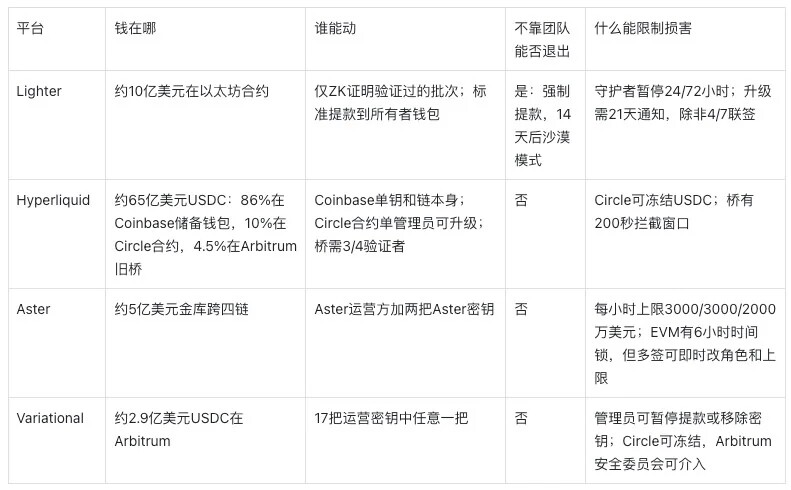
Whether DEX or CEX, only keep the money you are actively trading on an exchange.
Before scaling up, do two checks. First, where exactly is the money: is it locked in an on-chain contract, or sitting in a team-controlled wallet, an exchange custody account, or a cross-chain bridge? If it is a contract, who has permission to move it—a single key, a multisig, or, like Lighter, only ZK proof-based release? Second, can you exit without the team: does the contract have forced withdrawals, escape hatches, or time locks, or does every withdrawal require the operator's signature?
Don't treat the "DEX" label as a security guarantee.
Also recommended: "Panoramic Research Report: Is the Crypto World Ready to Respond to Quantum Attacks?."
Weekly Hotspot Catch-Up
Binance gradually replenished the stolen funds and restored withdrawal functions;
$7 billion in 24H net outflows: Binance withstands the withdrawal wave, most institutions stay on the sidelines;
Stablecoin annualized yields up to 12%, major exchanges launch a new round of wealth management battles;
FBI identifies Binance attacker as North Korean hackers;
Tracking the Binance hacker's money laundering path;