Unitree Technology's stock price briefly returned above 700 yuan—is it market manipulation by major players or a recovery in embodied intelligence?


- Core Viewpoint: After Unitree Technology's stock price plummeted from 1,100 yuan to 404 yuan, a combination of positive factors—including new product launches, a recovery in the sector, and JPMorgan's rating upgrade—drove a 65% rebound over the past 7 trading days back to around 700 yuan. However, the stock's low free float and capital speculation in on-chain derivatives leave the outlook uncertain.
- Key Elements:
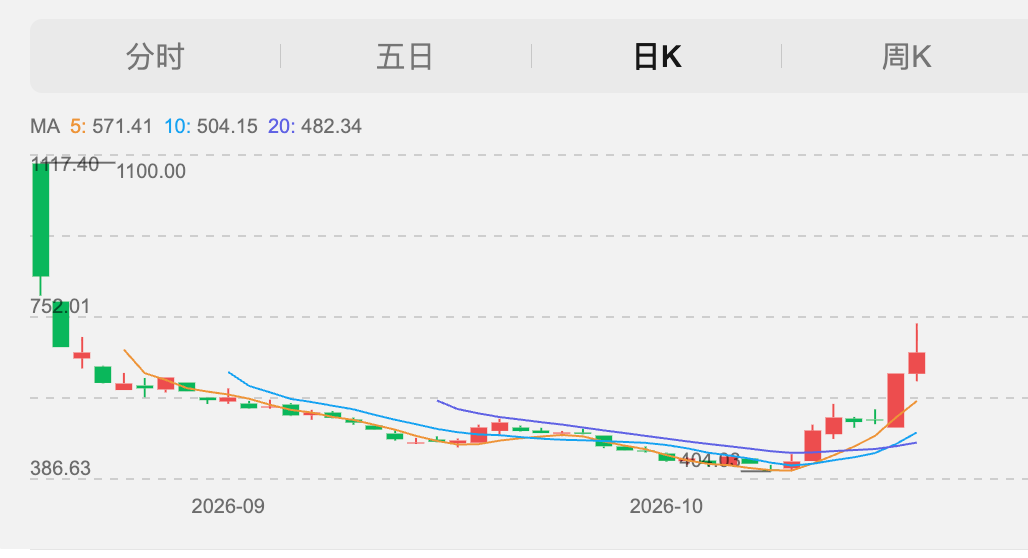
- Unitree Technology surged to 1,100 yuan on its debut day, then fell to a new low of 404 yuan on October 15, with market capitalization shrinking from 445 billion yuan to approximately 200 billion yuan.
- The new H2-X humanoid robot features battery life extended to 8 hours (double that of the H2), along with the launch of the UniUni swarm control system.
- JPMorgan upgraded its rating from "Underweight" to "Overweight," sharply raising its target price from 300 yuan to 995 yuan.
- Domestic humanoid robot production exceeded 40,000 units in the first half of the year, accounting for 97% of the global total, with full-year output expected to surpass 100,000 units.
- On the Hyperliquid platform, Unitree contracts recorded 24-hour trading volume of $54.8 million, with open interest of $27.62 million, indicating significant sentiment transmission from on-chain capital.
- Currently, circulating shares account for only 7.4%, with institutions net buying 249 million yuan in a single day and main capital net inflows exceeding 82.77 million yuan.
- The key upcoming catalyst is the release of third-quarter earnings on October 29.
Original | Odaily@OdailyChina)
Author | Wenser (@wenser 2010 )
Do you remember the reasonable valuation we gave for Unitree Robotics at the end of our article "How Much Is Unitree Robotics, the 'First Humanoid Robot Stock,' Really Worth?"?
At that time, based on pre-market on-chain pricing and market opinions, we boldly gave a reasonable valuation of around 200 billion yuan. Unexpectedly, Unitree Robotics' market cap once surged to 445 billion yuan on its listing day. But the capital market is always a "weighing machine," and Unitree's share price subsequently fell all the way, once dropping to 404 yuan—cut in half, then cut again.
Fortunately, with product launches, a recovering sector, and investment banks collectively turning bullish, Unitree Robotics gradually reversed its decline. Over the past 7 trading days, it rebounded by as much as 65%, with the share price once returning to 700 yuan. It currently stands at 672 yuan, with a market cap of 272 billion yuan. The next question the market may care about is: Is this rebound a performance by market makers, or are institutions entering? Is it a complete reversal, or just a fleeting "dead cat bounce"? In this article, Odaily will discuss these questions one by one.
Unitree Robotics on a Roller Coaster: From 1,100 Yuan to 404 Yuan, Then Back to 700 Yuan—The Combined Punch Behind the Rebound
Looking back at the share price K-line over the past two-plus months, Unitree Robotics (688836.SH) has taken a roller-coaster ride.
Since its share price surged to 1,100 yuan on its first trading day on August 19, Unitree Robotics has fallen into a "relentless decline." On one hand, the market questioned whether Unitree's revenue figures looked good and whether its P/E multiple was set too high; on the other hand, its absence in the "AI brain" area left Unitree with an obvious weakness in its leadership position in the humanoid robot and embodied intelligence sectors.
On September 10, A-share Unitree Robotics'share price fell below 500 yuan/share for the first time, with total market cap dropping to 202.1 billion yuan.
On October 15, Unitree Robotics' share price fell to 404 yuan, hitting a new low since listing, leaving investors in widespread despair.
But soon, a turning point arrived—and it was not a single piece of good news, but a "combined punch" of multiple factors including new product launches, a recovering sector, and bullish investment banks.
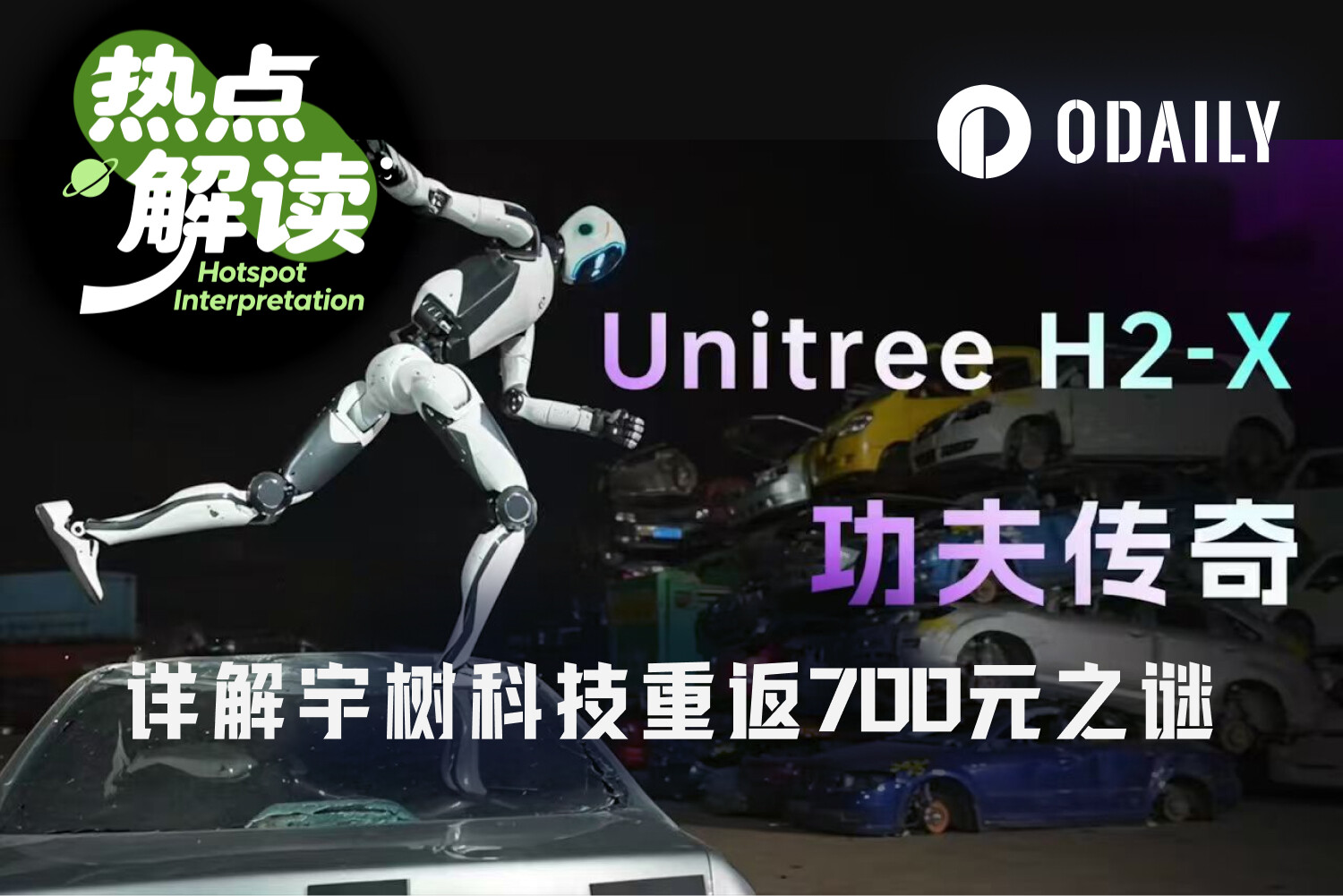
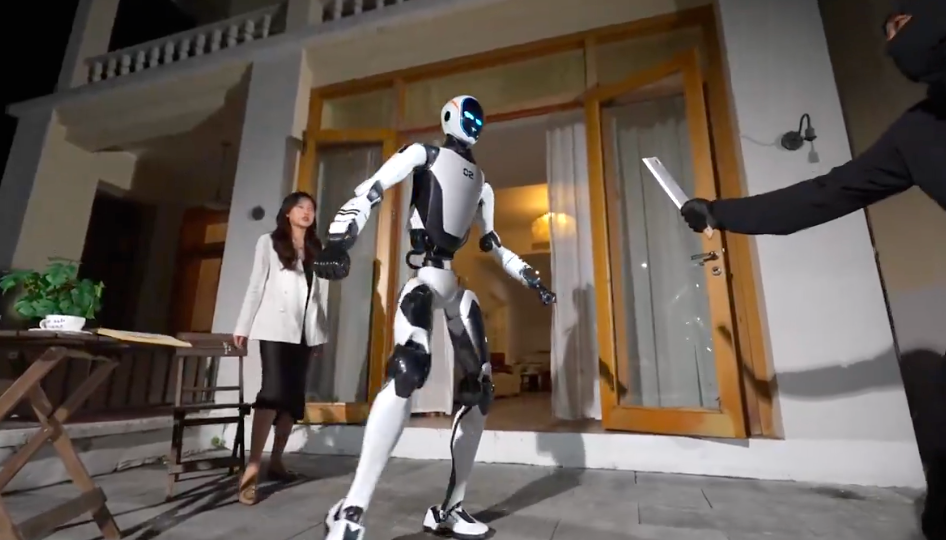
First, product updates. On October 16, Unitree Robotics launched the UniUni intelligent swarm control system, designed to enable rapid intelligent choreography of swarm robot movements and formations, real-time device status monitoring, and safety braking, marking an important step in swarm robot control and performances. On October 21, Unitree Robotics released its latest H2-X humanoid robot, named "Kung Fu Legend Guard," and actually demonstrated functions such as lifting a car to save a person barehanded, kicking a car door dented, jumping from a 4-meter-high platform and landing steadily, and personal defense. The endurance problem that has been most criticized in humanoid robots also achieved a milestone breakthrough, with battery life extended to 8 hours—more than double that of the previous H2 model.
The sector as a whole recovered. On October 19, the A-share humanoid robot sector continued to rally, with Unitree Robotics up more than 14%. Several stocks including Sihui Fuji, Ningbo Dongli, Riying Electronics, Hengtong Optic-Electric, and Zhaowei Motor had previously hit the daily limit, while Suochen Technology, Orbbec, and Beite Technology followed suit. After Physical AI "leader" World Lab, founded by Fei-Fei Li, sold itself to AMD for $8.2 billion, the market is redefining and repricing companies in the humanoid robot and embodied intelligence sectors. Meanwhile, domestic humanoid robot output exceeded 40,000 units in the first half of the year, accounting for 97% globally, with full-year output expected to exceed 100,000 units. AI giant OpenAI also grandly announced its entry into embodied intelligence. Sinolink Securities even stated outright: "2026 is the node for humanoid robots to materialize from 0 to 1."
Bullish investment banks may be the direct trigger on the capital side. On October 22, at the Hangzhou 2026 World Physical AI Conference, Unitree Robotics founder Wang Xingxing said that "Physical AI is very likely to see a breakthrough within 1-3 years; the ChatGPT moment for embodied intelligence may arrive as early as next year." After the conference, JPMorgan promptly upgraded Unitree Robotics' rating from "Underweight" to "Overweight," sharply raising its target price from 300 yuan to 995 yuan, and said the move was a reassessment of its previous cautious view after attending the conference.
A series of positive catalysts directly stimulated a frenzy of market capital inflows. Since October 19, Unitree Robotics has frequently seen single-day gains of around 10%. Today, the stock received net inflows of more than 82.77 million yuan from main funds, accounting for 0.41% of its circulating market cap. In addition, Dragon and Tiger List data showed that institutions collectively net-bought 249 million yuan of Unitree Robotics that day. After today's sharp rise, its share price surpassed Frequency Laser to become the 5th most expensive stock in the A-share market. Behind such results, in addition to the above factors, the stock's high market cap and low float characteristics are also somewhat related to the many derivatives contract positions on Hyperliquid and CEXs.
On-Chain Derivatives Remain a Barometer for Unitree Robotics' Price Trend: Hyperliquid and Binance as Representative Platforms
Apart from pre-listing pre-market pricing, Unitree Robotics derivative contract positions on Hyperliquid and many CEXs also largely play the role of "risk hedging" and "profit harvesting" tools.
As of writing, the Unitree Robotics contract price on Hyperliquid's trade.xyz portal stands at $98, with 24-hour trading volume reaching $54.8 million and open interest at $27.62 million. On October 23, the Unitree Robotics contract price on Hyperliquid once surged nearly 25%, and in terms of leading pricing, the sentiment transmission effect of on-chain capital once again came into play.

Previously, on October 20, the UNITREE perpetual contract price on Hyperliquid stood at $80.285, up 13.82% in 24 hours, with an intraday high of $81.745. During the same period, Unitree Robotics' A-share price was 550.04 yuan, up 10.91%, after rising 16.15% the previous trading day.
Currently, Hyperliquid's reference hourly funding rate is around -0.017%. In contrast, Binance's related contract has a reference funding rate of -0.37% per 4 hours, with 24-hour trading volume reaching $180 million and open interest at $20.14 million.

According to Hyperbot data, the long whale positions in Unitree Robotics are currently worth $1.98 million and $8.75 million respectively, with profits of $4,500 and $743,000 respectively. The short whale positions are worth $1.15 million and $1.95 million respectively, with unrealized losses of about $230,000 and $260,000.
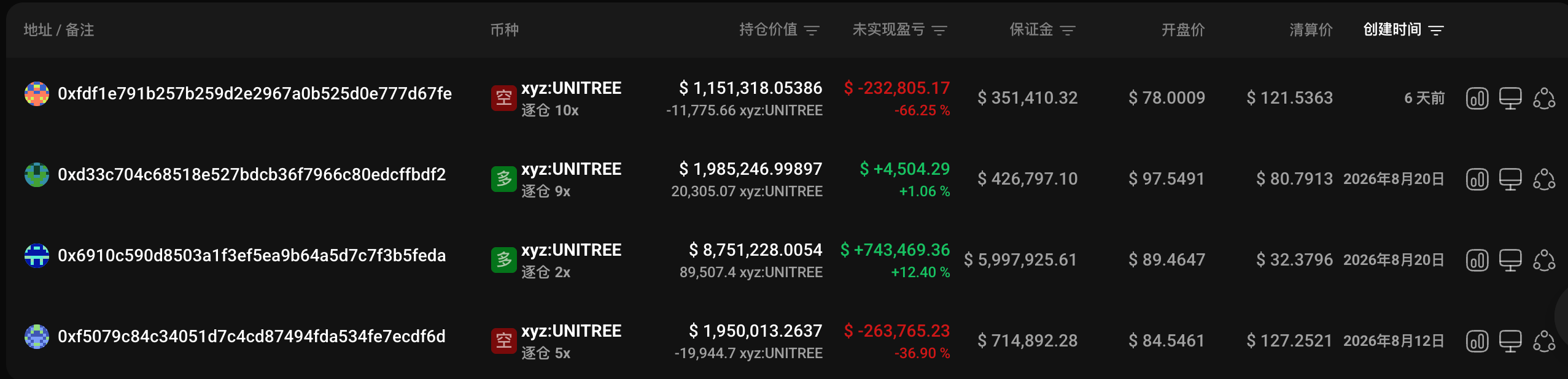
Of course, everything is built on the fact that Unitree Robotics currently has only 7.4% of its shares in circulation. Therefore, considering a series of positive catalysts and improvements on the capital side, this rebound is not yet over.
As for whether it can last, a clear answer may have to wait until Unitree Robotics officially releases its third-quarter financial report on October 29.