



BiyaPay Market Watch | Nvidia to Acquire a Model Company? Why Is the AI Chip Leader Expanding Beyond Its Core?


- Key Takeaway: Nvidia's talks to invest in or acquire Reflection AI reflect how AI competition is extending from raw hardware performance to model entry points and ecosystem control. However, the actual impact on customer relationships and the industry landscape still requires product and commercial validation.
- Key Elements:
- Nvidia reported Q2 FY2027 revenue of $96.2 billion, up 106% year-over-year; data center revenue reached $89 billion, up 117% year-over-year, with its operating foundation highly dependent on AI infrastructure demand.
- Participating in the model ecosystem can lower the barrier to enterprise deployment and expand real inference demand, but caution is warranted if demand stems from financing loops rather than actual usage.
- Deep integration between models and computing platforms could shift enterprise procurement logic from comparing chip prices to comparing system deployment convenience, thereby extending hardware advantages.
- A supplier moving deeper into the model layer may raise customer concerns about long-term dependency, prompting cloud providers and model companies to increase investment in in-house development or alternative chips.
- Demand expansion and market share shifts are two different dynamics; improved model performance does not necessarily lift all AI stocks, and beneficiaries must be distinguished from those under pressure.
- The deal structure remains undetermined; minority equity investment, technology licensing, and full acquisition differ significantly in terms of control, operational responsibility, and customer perception.
- The key to follow-up validation lies in whether cooperative products can be launched reliably, whether enterprises are willing to deploy and pay, and the impact of new business on R&D spending, profit margins, and cash flow.
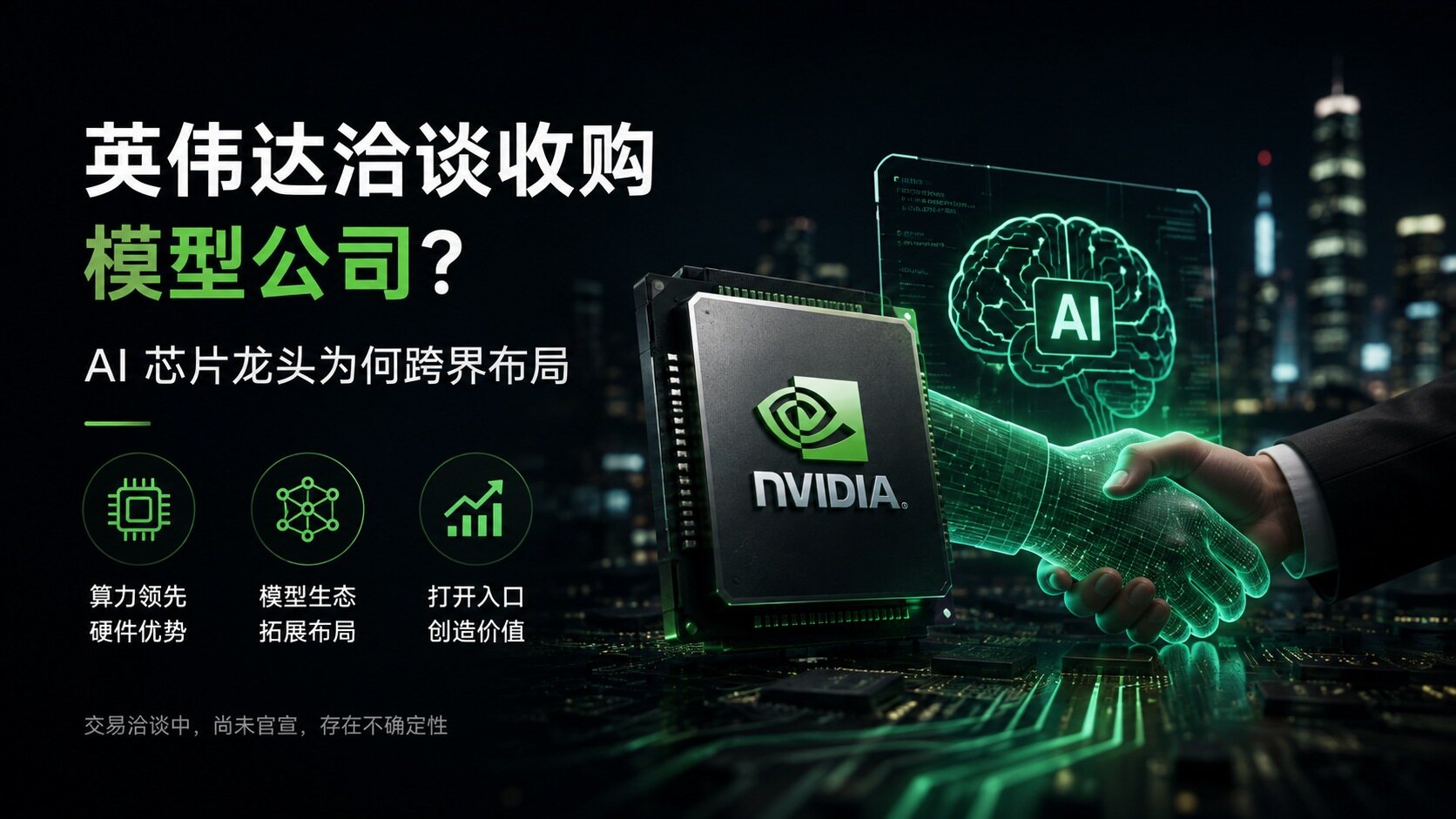
Nvidia's latest move puts a key question in the AI competition squarely on the table--once you control compute, do you also need to control the model gateway?
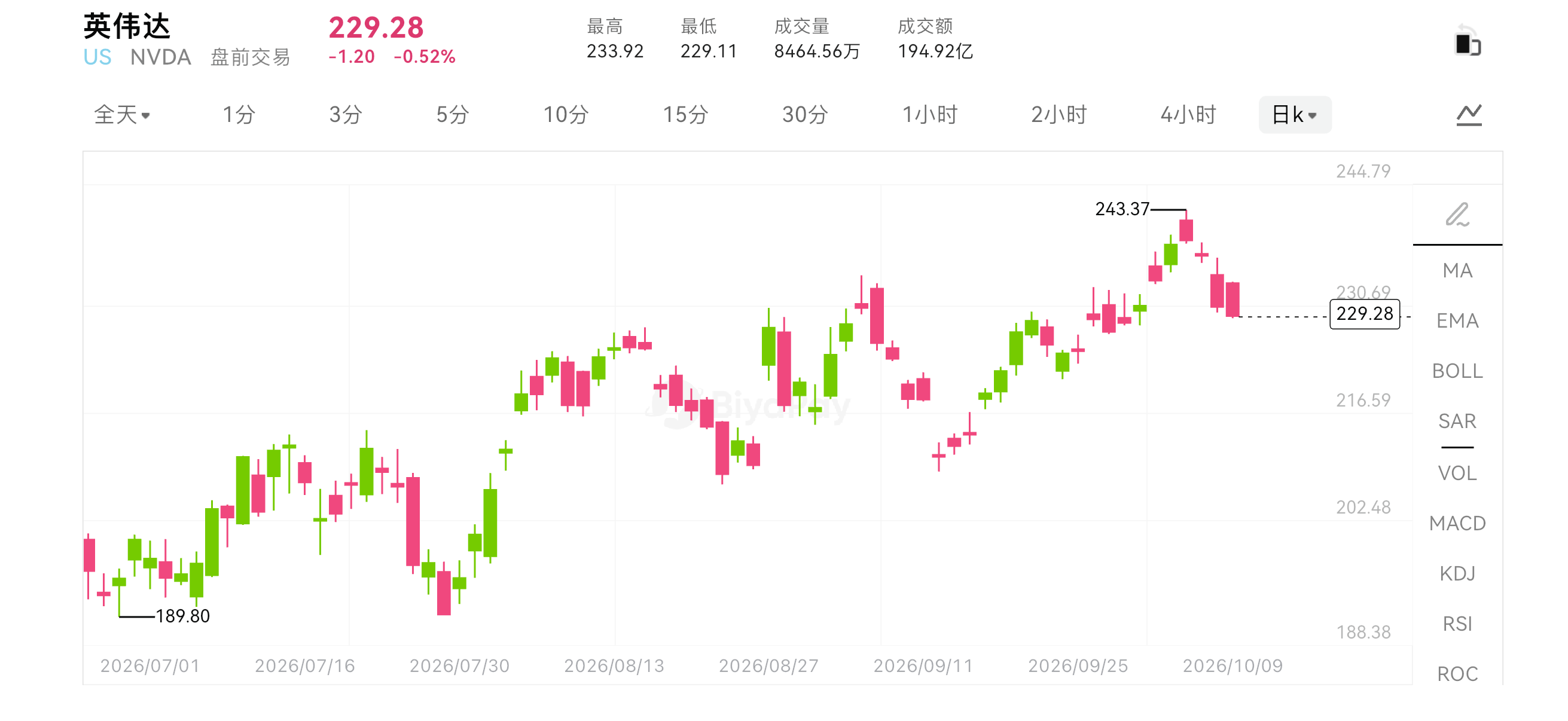
BiyaPay market data shows Nvidia closed at $229.28 on October 9, down 0.52%. On October 10, it was reported that Nvidia is in talks to further invest in or acquire Reflection AI, and may also pursue a deal by absorbing the team and obtaining technology licenses. Discussions remain at an early stage, with no announced deal and no confirmed acquisition price. The news is worth watching, but there is still a long way between "in talks" and "has acquired."
What the market should discuss more is the business logic behind such moves. Why is Nvidia pushing deeper into the territory where its chip customers operate? Is it expanding the entire AI market, or does it want to keep more industry profit within its own ecosystem? These two directions can coexist, yet they lead to different valuation judgments.
The better chips sell, the more you need to care about how customers make money
In Nvidia's fiscal 2027 second quarter, the quarter ended July 26, 2026, revenue was $96.2 billion, up 106% year over year; data center revenue was $89 billion, up 117% year over year. These figures show that its core business remains highly dependent on AI infrastructure demand.
But chip demand must ultimately be supported by customers' revenue. Model companies, cloud providers, and enterprises can rely on financing to expand compute for a period of time, but over the long term they need to prove that the equipment they purchase can generate sufficient commercial returns. If application revenue growth cannot keep pace with compute investment, pressure will eventually travel back up the supply chain to suppliers.
From this perspective, participating in the model ecosystem is not entirely a departure from the core business. Models that are easier to deploy and more practically valuable may bring into the AI market enterprises that were previously unwilling to bear complex development costs. Only when enterprise usage increases can demand for inference and supporting infrastructure have a chance to expand. The key here is whether the new demand comes from real usage rather than a simple loop of financing.
When observing news like this, looking only at NVDA can easily mix industry changes with broader market fluctuations. On BiyaPay, a global one-stop asset allocation platform, you can compare the market performance of U.S. tech companies side by side, then assess them together with cloud business, capital expenditure, and cash flow. The platform supports digital currency exchange for USD and HKD, with no need to apply for an offshore account, allowing real-time zero-commission participation in real stocks such as U.S. and Hong Kong equities.
The value of the model gateway lies in changing customers' cost of choice
Chips, development tools, and models are not unrelated products. When an enterprise chooses a model, it simultaneously considers deployment difficulty, inference costs, data management, and ongoing maintenance. If a model works more smoothly with a given computing platform, the purchasing decision may shift from "which chip is cheaper" to "which system is easier to bring online."
This is also the potential value of Nvidia pushing deeper into the model layer: allowing hardware advantages to extend through software and developer experience. Leadership in a single chip must be continuously maintained through new products, while a mature ecosystem influences development habits, application compatibility, and enterprise procurement processes.
However, greater model openness may also reduce enterprises' dependence on any one provider. Whether it can be deployed in different environments and whether it supports other computing platforms will both affect customer choice. An open model itself does not naturally equal an exclusive advantage for Nvidia. What truly matters is whether performance, cost, and deployment experience can together create appeal.
Therefore, one acquisition report alone is not enough to conclude that Nvidia has already taken control of the model layer. Even if cooperation advances further, technology integration, product launches, and enterprise adoption will all take time.
Going deeper into customers' markets also complicates the relationship
The other side of this kind of positioning most worth discussing is the relationship between Nvidia and its customers.
Model companies need chips, and cloud providers need compute, but they also want to retain their own product gateways, customer relationships, and technological advantages. If a supplier moves ever deeper into the model and application markets, some customers may reconsider their long-term dependence and increase investment in other chips or in-house solutions.
Such changes will not immediately disrupt existing procurement. The migration costs of large-scale computing platforms, software compatibility, and supply stability all mean customers are unlikely to change deployment because of a single news item. But it may affect the procurement structure over the next few years, as well as customers' judgment of their bargaining power with suppliers.
The balance Nvidia needs to maintain is to let the model ecosystem help customers expand the market while avoiding making customers feel that their core business is being replaced by a supplier. Different transaction structures will affect this balance. Minority equity investment, technology licensing, and a full acquisition are not the same thing in terms of control, operational responsibility, and customer perception.
For AI U.S. equities, distinguish between demand expansion and share transfer
If better models drive more enterprises to actually use AI, chips, networking, storage, and cloud services may benefit together. This is the logic of demand expansion. If cooperation mainly changes the market share of existing model companies, companies that benefit and companies under pressure may appear at the same time. This is the logic of a changing competitive landscape.
The two cannot be conflated. Improved model performance does not necessarily make all AI stocks rise together, and increased compute usage does not necessarily improve the profits of all companies. Lower model service prices may stimulate usage volume while compressing service providers' unit revenue; more efficient inference may reduce consumption per task while creating more new scenarios. The final outcome depends on whether demand expansion can outweigh the effects of price and efficiency changes.
For Nvidia itself, the market also needs to compare the ecosystem value brought by new businesses with the additional investment required. Investment and acquisitions consume capital and may also increase R&D, employee retention, and integration costs. If technological synergy cannot translate into customer adoption, news hype will struggle to become sustained operating contribution.
The next step in verification falls on products and customers
For now, the first thing to wait for is formal disclosure from both sides: whether it is an additional investment, team and technology cooperation, or an acquisition; and what the specific rights and obligations are. Before this information is confirmed, it is not appropriate to write any transaction structure into earnings forecasts in advance.
Commercial verification comes after that. Whether the cooperative product can be launched reliably, whether enterprises are willing to deploy it, whether actual usage grows, and whether that growth can translate into sustainable revenue. If relevant information is disclosed in the future, it will also be necessary to observe the impact of the new business on R&D spending, profit margins, and cash flow.
What truly gives this news weight is that competition in the AI industry is extending from single-point hardware performance to the path by which enterprises adopt an entire technology stack. Nvidia has an opportunity to expand its ecosystem through this, but it also needs to manage more complex customer relationships. How much value it can create beyond selling chips will ultimately be answered by products that enterprises are willing to use and pay for.