



Citrini's 79-Page Report: Agentic Finance Will Reshape Crypto — Will Mainstream Coins Fall Behind?


- Core Thesis: Citrini Research's 79-page report argues that AI agent finance will be built on blockchain, and investors should rotate from mainstream coins like Bitcoin and Ethereum toward DeFi protocols that generate real fees and infrastructure stocks, focusing on value capture rather than market beta.
- Key Takeaways:
- The report recommends shifting capital from BTC, ETH, and XRP toward DeFi protocols and infrastructure stocks, with Derive, Lighter, and ether.fi carrying the highest weights in the portfolio (approximately 10% each).
- Over the past year, Derive surged 1,300%, with most tokens on the list posting double-digit gains, leaving BTC, ETH, and XRP behind.
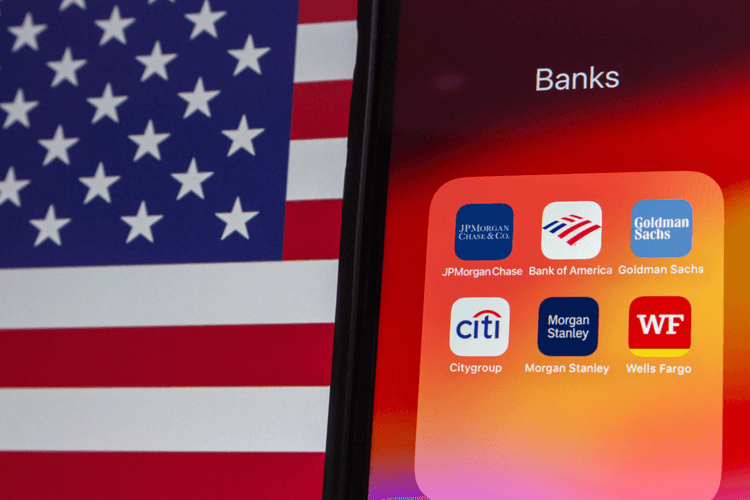
- The report warns of a systemic risk of "agentic bank runs": AI agents programmatically moving funds will drain cheap deposits from traditional banks, and the current system lacks the design to cope with this.
- Drawing an analogy to internet protocols, blockchain may become the programmable back-end infrastructure that agents call directly, without ordinary users needing to understand the underlying technology.
- The "Hyperliquid moment": during the Iran conflict, on-chain exchanges provided the most accurate crude oil prices, after which RWA adoption accelerated markedly and tokenized equities became composable.
- The core investment question has shifted: from "is tokenization legitimate" to "who can capture economic value" — namely, protocols that continuously charge fees from trading, lending, and payments.
Original author: Billy Bambrough, Forbes
Original compilation: AididiaoJP, Foresight News
Editor's note: On October 8, 2026, analysts at Citrini Research published a 79-page research report titled Breaking The Wall: Has Blockchain Finally Reached Its Moment? Forbes subsequently wrote a briefing based on the report. This article is compiled on the basis of the Forbes briefing and further supplements some views from the original report.
BlackRock says the crypto "floodgates" have opened, while Citrini Research recommends moving away from major coins and toward DeFi protocols and infrastructure stocks
In 2026, AI trading continued to dominate the market, and Bitcoin and crypto assets as a whole came under pressure. Still, Bitcoin's price has rebounded from below $60,000 in July to above $80,000. At the same time, BlackRock revealed that the "floodgates" for Bitcoin and crypto assets have suddenly opened; one of Wall Street's most intimidating and influential institutions also said the crypto market is at an "inflection point." But that inflection point may leave Bitcoin, Ethereum, and XRP out. Even so, a large-scale crash could also be a game changer for Bitcoin's price.
Wall Street Report: Agentic Finance Will Be Built on Blockchain
In the 79-page report titled "Breaking The Wall," analysts at Citrini Research argued that AI agents and crypto-based tokenized assets are opening a new paradigm for fundamentally driven crypto investing. They believe the coming wave of agentic finance will be built on blockchain. Earlier this year, the firm shook the stock market by warning of a global intelligence crisis in 2028.
The report says the blockchain industry spent 15 years building something unexpectedly useful in an agentic world: round-the-clock, programmable financial infrastructure that allows assets, ownership, and settlement to coexist in a world that has already converged. AI agents will operate programmatically across applications around the clock, and money and financial assets will eventually do the same. That brings people back to the crypto industry, which for most of the past decade has looked like an industry with "a solution first and a problem second."
Don't Just Focus on Major Coins: Capital May Shift to DeFi and Infrastructure Stocks
To bet on agentic finance, the report recommends shifting funds away from assets such as Bitcoin, Ethereum, and XRP and toward DeFi protocols that can generate fees, as well as publicly listed companies focused on infrastructure. The report says financial assets are being tokenized and brought on-chain, and traditional finance and the crypto world are converging; at the same time, agents have brought in a new type of user who does not care about the poor user experience of block explorers.
In Citrini's proposed portfolio, Derive, Lighter, and ether.fi have the highest weights, alongside a basket of stocks including real-world asset tokenization company Securitize, stablecoin issuer Circle, and Bitcoin and crypto exchange Coinbase. The authors said plainly that one cannot assume major coins, especially Bitcoin and Ethereum, will hit all-time highs because of this; even if they do, there are better bets.
The rest of the portfolio includes smaller but better-known tokens such as Ethereum competitor Solana, Hyperliquid's HYPE, liquidity protocol Aave, and synthetic dollar protocol Ethena; lesser-known tokens tied to platforms such as Aerodrome, Maple, Pendle, and Ondo Finance are also on the list.
Who Led Gains Over the Past Year
Price performance also supports this judgment. Over the past year, Derive surged 1,300%, while most other tokens on the list posted double-digit gains, leaving Bitcoin, Ethereum, and XRP behind.
The researchers also noted that an improved regulatory environment for technology, finance, and crypto, as well as the Iran oil crisis, drove the rapid takeoff of Hyperliquid's 24/7 derivatives trading linked to crude oil prices. The report's authors wrote that since then, adoption of real-world assets (RWA) has clearly accelerated; over the past month, large-scale changes have begun to appear in crypto, which seems to mark an inflection point.
Additional Views from Citrini's Original Report
Systemic Risk of an "Agentic Bank Run"
The report opens with an unsettling scenario: What happens when millions of AI agents continuously and programmatically move idle funds to the institutions or protocols offering the highest yields? Will the cheap deposit funding source that traditional banks rely on be continuously drained as a result? Could an "agentic bank run" occur?
The traditional financial system was designed for human users, who have brand loyalty, inertia, operational friction, and emotional factors; agents do not care about these things. They pursue only optimal returns and can execute around the clock, across institutions, and at extremely low cost. The report points out that once this behavior scales, it could create sustained pressure on banks' funding costs and liquidity, and the current system lacks a design to cope with it. This is not short-term trading advice, but a macro-level warning about the long-term impact of agentic finance.
Internet Protocol Analogy: Blockchain May Become "Back-End Infrastructure"
The report uses the development of the internet as an analogy: most people do not know exactly how HTTPS, TCP, or IP work, but they use them every day without awareness. The authors believe blockchain may follow a similar path in the future, becoming back-end programmable financial infrastructure that agents call directly, while ordinary users may not even need to understand the underlying technology.
The blockchain industry spent about 15 years building a system that is "always online, programmable, and able to let assets, ownership, and settlement coexist." In the agentic era, these characteristics become highly relevant: agents need to operate 24/7 and move funds and assets across applications without being limited by traditional finance's business hours or complex manual processes. The report argues that this is the key moment when blockchain truly finds its "reason to exist."
The Author's Personal On-Chain Experiment and Observations on Ecosystem Maturity
The report's author mentioned putting $1,000 into Coinbase Wallet and initially expecting to encounter a typical "rug-pull" or highly speculative environment, only to find that a mature financial application ecosystem far beyond meme coins had already formed on-chain. This includes tokenized Treasuries, stocks, options, programmable debt, lending, payments, and yield protocols, with the overall form increasingly resembling existing traditional finance (TradFi).
This observation supports the report's core judgment: on-chain financial applications have already been quietly developing, and when agentic users arrive, their usability may be further amplified because agents do not care about poor user experience.
A Shift in the Core Investment Question: From "Is It Legal?" to "Who Captures the Value?"
The report explicitly shifts investors' focus from "Is tokenization legal? Can it enter the U.S. market?" to a more substantive question: "When these products eventually enter regulated U.S. markets, who can capture the economic value?"
The key is not whether assets are on-chain, but who can continuously collect fees from trading, lending, payments, yield generation, and clearing. The report argues that the market will ultimately reward protocols and infrastructure that can generate real revenue, rather than simply holding major coins. This is also one of the main reasons it does not assume Bitcoin and Ethereum will hit new highs because of this theme.
Publicly Disclosed Portfolio Weights and Structural Features
The crypto basket disclosed in the report (15 tokens) completely excludes Bitcoin and Ethereum, and assigns relatively high weights to emerging derivatives and yield-related protocols, such as Derive, Lighter, and ether.fi at about 10% each, and Aave and Ethena at about 9% each. Derivatives-related targets account for a relatively high total share (about 39%), yield/staking-related targets about 27%, and blue-chip infrastructure about 26%.
The equity basket is mainly composed of infrastructure and tokenization-related companies (such as Securitize with a relatively high weight, followed by Circle and Coinbase), and does not include MicroStrategy or mining stocks. This structure reflects the report's approach of "focusing on value-capture segments rather than market beta."
The "Hyperliquid Moment" and the Inflection Point Significance of Tokenized Asset Composability
The report specifically mentions the weekend during the Iran conflict, when an on-chain exchange became one of the few liquid venues able to provide the most accurate crude oil prices, calling it the "Hyperliquid moment." After that, real-world asset (RWA) adoption clearly accelerated.
At the same time, tokenized stocks have become composable, able to flow across different applications and chains rather than being confined to a single issuer venue (Robinhood Chain and others were among the first to drive this process). The report argues that these developments together mark a true inflection point, bringing on-chain assets closer to practical financial tools rather than remaining merely experimental.
Explicit Warnings on Risk and a Non-Universally Bullish Stance
The report is not universally bullish on all crypto assets. It clearly states that higher on-chain activity or tokenization scale does not automatically push up the prices of all tokens; investors should focus on the segments that can truly capture economic value. The report also emphasizes that agentic finance and tokenization are long-term structural trends, but their transmission to prices takes time, and there are uncertainties around execution, regulation, and competition.