Chainflip Hacked for $12 Million: How Did the Hundred-Signature Defense Line Fall?


- Key Takeaways: Chainflip, a cross-chain trading platform, suffered a hacker attack with approximately $12 million in assets stolen; the attacker allegedly bypassed the validator co-custody mechanism by registering validator accounts in advance and obtaining complete signing keys to illegally authorize vault transfers.
- Key Elements:
- On November 21, the Bitcoin vault's 122.86 BTC (approximately $7.1 million) and the Ethereum vault's approximately $4.86 million in assets were transferred out successively, with the FLIP token dropping over 60% within 24 hours.
- The hacker laid the groundwork ten days in advance: obtaining funds from Tornado Cash and buying FLIP on November 11, registering validator accounts on November 20, and executing the attack the following day.
- Bitquery's retrospective analysis of nearly 300,000 signatures found that the withdrawal signature used by the hacker carried an anomalous 39-digit identifier, suspected to have been self-generated outside the normal validator collaboration process.
- Chainflip vaults normally require at least 100 validators to co-sign authorizations, yet the attack transactions passed signature verification, exposing key management vulnerabilities.
- The team has suspended all services and completed validator key rotation approximately 13 hours ahead of schedule, while offering the hacker a 10% white-hat bounty, with a deadline of November 24 for the return of 90% of the assets.
- An LP compensation plan remains undecided; in September of this year, the protocol lost approximately 736,000 USDT due to a Tron chain vulnerability, and this incident has expanded losses to approximately $12 million.
Original | Odaily@OdailyChina)
Author | Asher(@Asher_ 0210)

On the afternoon of November 21, cross-chain trading platform Chainflip suffered a hack, with approximately $12 million in assets stolen, and its token FLIP fell more than 60% in the past 24 hours.
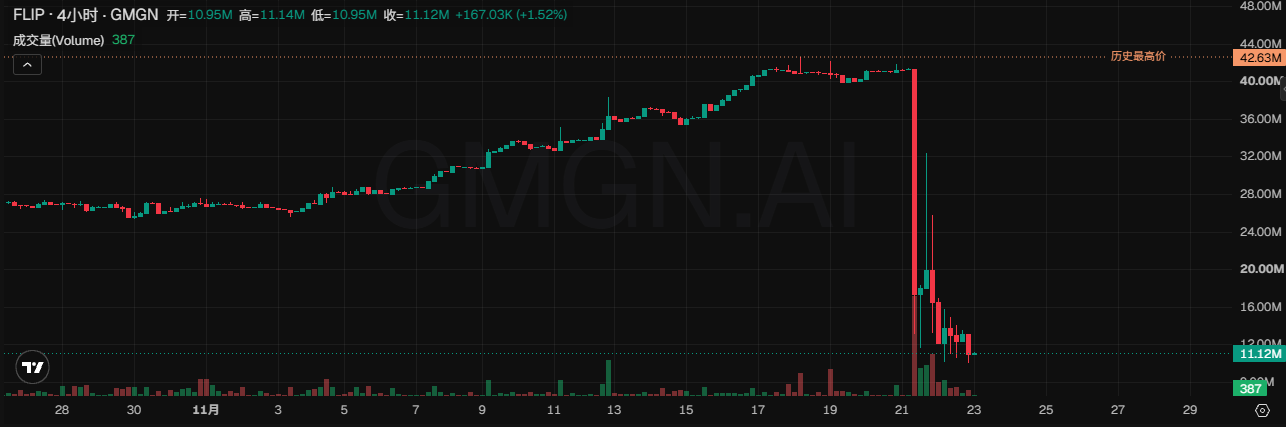
The first sign was an anomalous transfer on the Ethereum network, in which ETH and stablecoins worth about $4.86 million were moved out. It was not until the next day that Chainflip confirmed that the hacker had also stolen 122.86 BTC worth about $7.1 million. On-chain records show that the hacker first moved the Bitcoin, and only about half an hour later transferred ETH and stablecoins out of the Ethereum vault.
These stolen assets were originally held in Chainflip's vaults to pay out assets from users' cross-chain swaps.
Chainflip: A Cross-Chain DEX Supporting Direct Swaps of Native Assets Across Different Chains
Chainflip is a decentralized cross-chain trading protocol that supports direct swaps of native assets between networks such as Bitcoin and Ethereum. Taking BTC for ETH as an example, a user sends BTC from a Bitcoin wallet and receives ETH at a specified Ethereum address. The entire process requires no wrapping of BTC into WBTC, no manual bridging, and no intermediary through a centralized exchange.
Chainflip uses a Just-In-Time Automated Market Maker mechanism (JIT AMM), which allows liquidity providers to update their orders based on market prices before a trade is executed. Actual payments and receipts are handled by vaults on each chain. The vault on the Bitcoin network receives the BTC transferred in by the user, while the vault on the Ethereum network pays the user with ETH pre-deposited by liquidity providers.
Every vault payout requires joint signature authorization from validators. In this attack, the transaction in which the Ethereum vault transferred funds to the hacker passed signature verification. Chainflip later disclosed that the hacker had registered a validator account just one day before carrying out the attack. Why would a payout that was not authorized by the protocol carry a valid signature?
Hacker Laid Groundwork Ten Days in Advance, Anomalous Signature Drained the Vault
Chainflip's vaults are jointly managed by validators. The network has a maximum of 150 validators, and under normal circumstances at least 100 of them must jointly participate in signing to authorize a fund transfer. Each validator holds only a portion of the key, and no single person can control the vault. However, if a hacker obtains enough key fragments through an exploit, it may be possible to reconstruct the full key, bypass other validators, and generate a valid payout signature on its own.
In fact, Chainflip had previously experienced similar key-theft attempts. On September 3 of this year, the team disclosed that three malicious validators exploited a vulnerability in the key handover process, sending anomalous messages to other nodes in an attempt to trick honest validators into leaking key fragments, ultimately obtaining the full key. At that time, the team detected and fixed the vulnerability in time, and no funds were lost.
In this attack, the hacker also prepared in advance. On November 11, the attacker obtained funds from Tornado Cash, then bought FLIP, and on November 20 registered a validator account. FLIP is the staking token required to bid for validator seats, and validators are precisely the group responsible for generating vault payout signatures.
On November 21, the hacker struck. At around 14:41 Beijing time, 122.86 BTC was transferred in a single transaction from the Bitcoin vault to a new address, worth about $7.1 million. Half an hour later, the Ethereum vault was also emptied, with 520.22 ETH, about 3.25 million USDC, and 758,000 USDT transferred out, worth about $4.86 million. The hacker then swapped the stablecoins for ETH via Uniswap and moved the funds into Tornado Cash. From the emptying of the Ethereum vault to the last batch of funds entering the mixer, only 8 minutes and 12 seconds elapsed, with a cumulative 2,909 ETH deposited.
After reviewing nearly 300,000 signatures received by the Ethereum vault since 2023, on-chain data platform Bitquery discovered a key anomaly: the numbers of normal payout signatures basically increase sequentially, but the signature used by the hacker carried an anomalous 39-digit number. This number is used to prevent signatures from being reused, but the contract does not require the numbers to be sequential. The number submitted by the hacker had not been used before, and the signature itself passed verification, so the vault executed the transfer.
Bitquery therefore suspects that this signature may have been generated outside the normal validator collaboration process, and that the attacker may have obtained the full signing key and then authorized the transfer on its own. Chainflip later also confirmed that it had identified the path of the key leak and taken remedial measures, but exactly how the hacker obtained the signing key, and whether this attack involved the previously discovered validator vulnerability, remains to be officially disclosed.
Team Offers 10% Bounty to Recover Funds, LP Compensation Still Undecided
After the attack, Chainflip immediately activated full security mode, suspended deposits, withdrawals, and swap services, and completed validator key rotation about 13 hours ahead of schedule. The team said it had identified the vulnerability that led to the key leak and taken remedial measures, but has not yet disclosed the full attack method.
To recover the funds, Chainflip Labs offered the hacker a 10% white-hat bounty, requiring the return of the remaining 90% of the assets by 2:38 a.m. Beijing time on November 24, including 110.575 BTC and 2,618.1 ETH, allowing the hacker to keep about $1.2 million. If the funds are returned on time, the team will withdraw the reports and complaints previously filed with law enforcement. Chainflip also claimed that it has obtained the server and related identity clues used by the hacker when registering the validator account, and is continuing to track the flow of the stolen funds.
On November 22, Chainflip founder Simon Harman responded on X that although the attack caused significant losses to liquidity providers (LPs), he remains confident that the protocol can eventually resume operations. However, a security investigation must be completed before restarting to ensure the safety of the remaining assets. The team plans to publish an incident report on November 23, and the LP compensation plan is still under discussion.
This is not the first time Chainflip has faced an LP compensation issue recently. In September of this year, Chainflip lost about 736,000 USDT due to a vulnerability in Tron chain transaction processing, and ultimately, through a validator vote, decided to use surplus funds from the protocol treasury to compensate affected LPs. Now that the loss has expanded to about $12 million, even if the protocol can resume operations, how to fill the vault gap and compensate LPs remains Chainflip's biggest challenge.