Gate Research: The Impact of Rate Hikes on the Crypto Market: Liquidity Shocks, Asset Divergence, and Scenario Analysis


- Core Viewpoint: The Fed restarted rate hikes with a 25 basis point increase in September 2026. A single rate hike itself has limited impact; what truly determines the medium-term direction of the crypto market is the subsequent interest rate path, inflation trajectory, and market leverage levels, rather than the rate hike event itself.
- Key Elements:
- August CPI rose 3.4% year-over-year and core CPI rose 2.4% year-over-year, with pressure from energy and housing components still high. The dot plot shows the median year-end rate rising to 4.1%, suggesting possible further tightening.
- Rate hikes transmit through four channels: raising risk-free yields, pushing up real interest rates, strengthening the dollar, and amplifying the high-leverage liquidation chain in the crypto market.
- Historical cycles differ significantly: rate hikes in 2017 did not stop the bull market; rapid rate hikes in 2022 combined with an industry credit crisis caused total market capitalization to fall about 64.1% for the year; in July 2023, under fully priced expectations, BTC fell only 0.16% in seven days.
- After the September 2026 decision, BTC rose 11.58%, ETH rose 11.94%, and SOL rose 18.70% in seven days, significantly stronger than the 2023 average, reflecting policy落地 and a recovery in risk appetite.
- Asset divergence is evident: BTC is relatively defensive, ETH is constrained by competition between staking yields and risk-free rates, and high-beta altcoins such as SOL have greater elasticity in both gains and losses.
- For stablecoins and RWA, the focus should be on fund scale rather than token price. High interest rates may drive funds from non-yielding stablecoins to RWA products such as on-chain U.S. Treasuries.
Introduction
In September 2026, the Federal Reserve announced a 25 basis point rate hike, the first upward adjustment of the policy rate in more than three years. Unlike past rate hikes amid economic overheating, this round of policy adjustment comes as inflation remains above the 2% target, the U.S. economy remains resilient, and global risk assets have already endured a prolonged period of high interest rates. For the crypto market, the significance of this hike goes beyond the 25 basis point increase itself; more importantly, it has broken the market's prior expectation that monetary policy would gradually shift toward easing, and has re-raised a key question: how long will high interest rates persist?
Theoretically, a rate hike raises the risk-free yield and the opportunity cost of holding crypto assets, and affects risk assets such as BTC and ETH through real interest rates, the dollar, and global liquidity. But historical experience shows that there is no simple one-to-one relationship between rate hikes and crypto market declines. In the hiking cycles of 2015–2018, 2022–2023, and July 2023, BTC's performance differed markedly, with industry cycles, market leverage, and policy expectations also playing important roles.
Starting from the reasons behind this rate hike, this article will outline the main channels through which monetary policy affects the crypto market, and, combined with historical hiking cycles, further analyze the differentiated impact that BTC, ETH, altcoins, stablecoins, and assets such as RWA may face, in order to determine whether this round of hikes represents a short-term shock or the beginning of a new round of repricing under higher interest rates.
1. Why the Fed Raised Rates in September
1.1 Inflation Remains Clearly Above the 2% Target
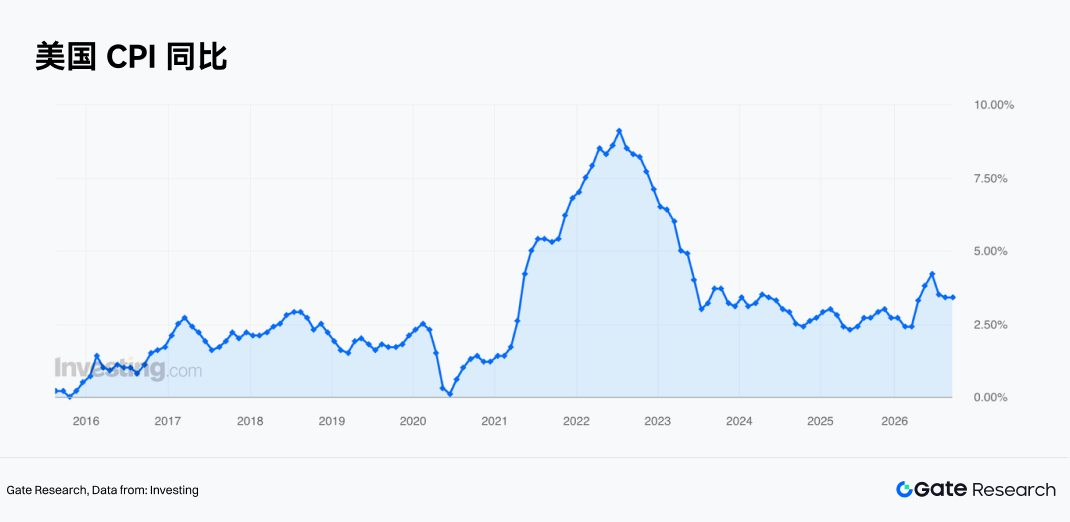
Looking at the CPI trend, U.S. inflation rebounded noticeably in the first half of 2026. Year-over-year CPI growth rose rapidly from 2.4% in January to 4.2% in May, then fell back somewhat, but the decline was not smooth. In August, CPI rose 0.4% month-on-month, well above July's 0.1%; it rose 3.4% year-over-year, unchanged from July and still clearly above the Fed's long-term 2% inflation target.
By composition, energy prices rose 2.1% month-on-month in August, with gasoline prices up 3.9%, contributing more than one-third of the month's overall CPI increase; housing prices also rose 0.3%. Meanwhile, core CPI, which excludes food and energy, rose 0.3% month-on-month and 2.4% year-over-year. This means that although inflation has cooled somewhat from its mid-year peak, overall price pressures remain elevated, and key components such as energy and housing continue to face upward pressure, providing an important basis for the Fed's renewed rate hike in September.
According to the latest September economic projections, the Fed's assessment of U.S. economic growth has improved, but it also raised its inflation and policy rate forecasts:
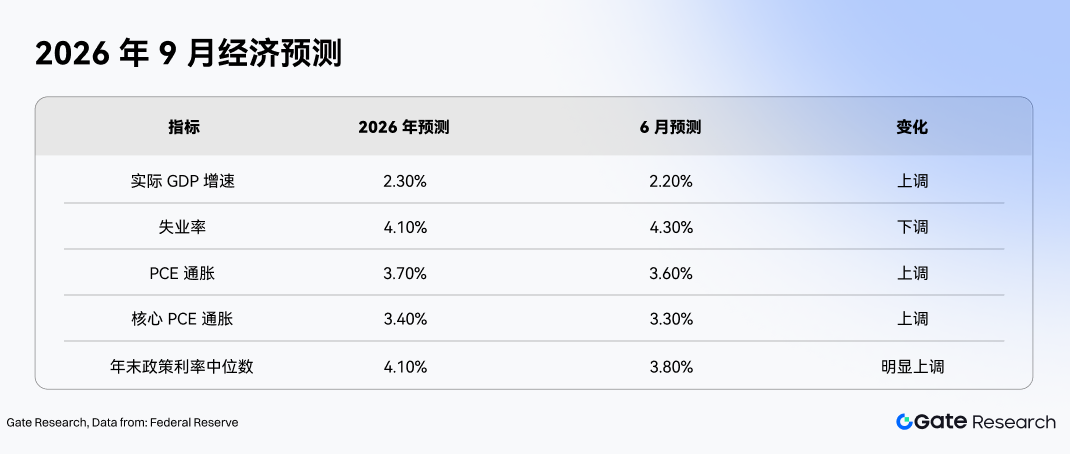
These projections convey a fairly clear signal: economic activity remains on a solid expansion path, with domestic consumption, productivity, and capital investment performing strongly, job growth broadly matching labor supply, and the unemployment rate not rising noticeably. At the same time, however, the inflation that troubles the Fed is also harder to bring down. In other words, the U.S. economy currently faces no obvious recessionary pressure, which gives the Fed room to continue raising rates to suppress inflation.
1.2 The Fed Needs to Maintain Market Confidence in the Fight Against Inflation
Beyond the economic data themselves, the Fed also needs to consider market trust in its determination to fight inflation. If inflation stays above the 2% target for an extended period while the Fed delays further action, households and businesses may gradually come to accept the expectation that "high inflation will last longer." Once this expectation takes hold, businesses may find it easier to raise prices, and workers will demand higher wages, ultimately making inflation more entrenched.
At the same time, market doubts about the Fed's ability to fight inflation could also push up long-term Treasury yields and term premiums, further increasing uncertainty in financial markets. Therefore, the September rate hike is not only a response to current inflation data but also a clear signal to the market—as long as inflation remains clearly above target, the Fed is willing to continue maintaining a relatively tight monetary policy.
1.3 The September Hike May Not Be the End
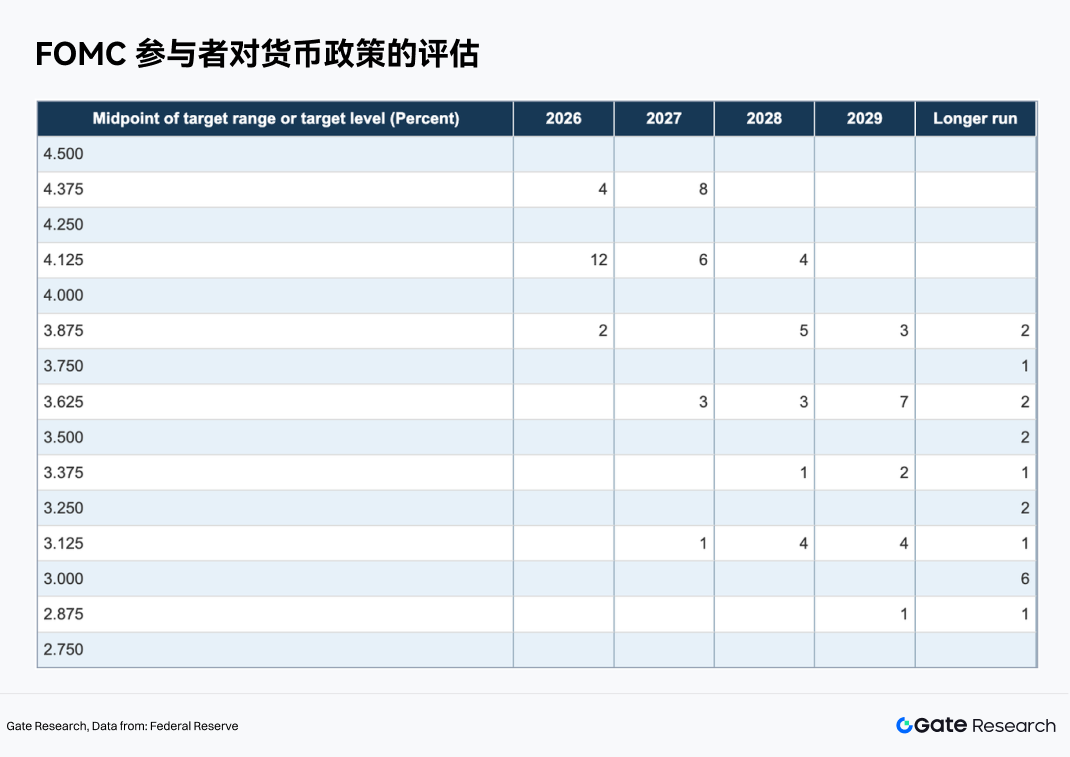
More than the 25 basis point hike itself, the market is more concerned with whether the Fed will continue raising rates. The September dot plot showed that the median forecast for the federal funds rate at the end of 2026 rose to 4.1%, above the midpoint of 3.875% of the target range after this hike. Of the 18 participants, 16 expected the year-end rate to reach at least 4.125%.
This means that most Fed officials believe the current rate level may still be insufficient to fully control inflation, and the possibility of further tightening during the year remains. Therefore, for financial markets, the September hike itself is not the biggest variable. What truly deserves attention is inflation and employment data in the coming months, and whether the Fed will continue to raise rates. If subsequent data still show "strong economy, high inflation," the market will need to reassess the possibility of higher rates for longer, or even further hikes.
2. How Rate Hikes Affect the Crypto Market
The previous section explained why the Fed is raising rates. For the crypto market, the more important question is actually "through what channels rate hikes affect BTC, ETH, and other crypto assets."
In terms of outcomes, rate hikes do not directly change Bitcoin's supply, nor do they directly reduce transaction activity on the blockchain, but they do change the cost and flow of global capital. When dollar interest rates rise, low-risk assets become more attractive, and global liquidity and investors' risk appetite change accordingly, ultimately transmitting to the crypto market.
2.1 Rising Risk-Free Yields Reduce the Appeal of Holding Crypto Assets
The most direct impact of a rate hike is to raise the yield on dollar assets. Because crypto assets such as BTC and ETH do not themselves offer fixed fiat interest, when the yields on low-risk assets such as short-term Treasuries and money market funds keep rising, investors can obtain relatively substantial returns even without taking on significant price volatility. At this point, the choice of capital allocation changes: since holding low-risk dollar assets also yields relatively high returns, investors' willingness to take on additional risk to allocate to assets such as BTC and ETH naturally declines.
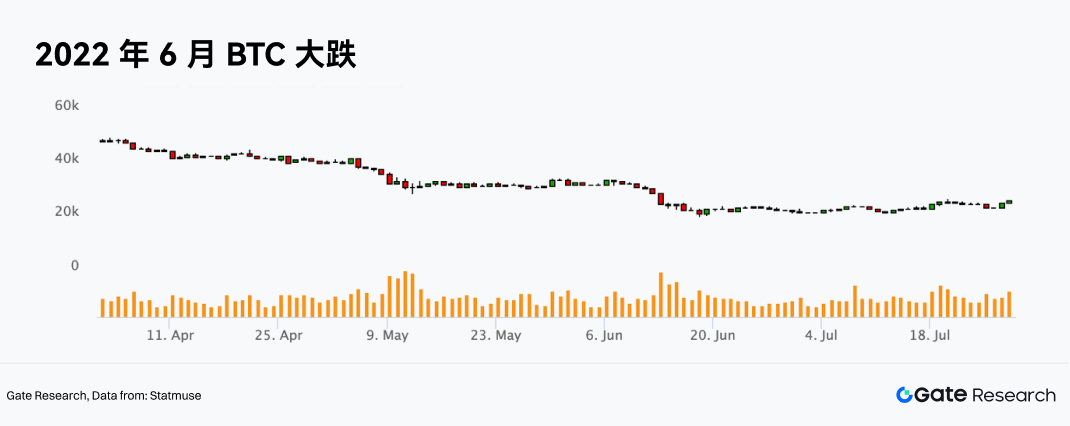
June 2022 is a fairly typical case. At that time, U.S. inflation continued to exceed expectations, and the market quickly raised its expectations for the Fed's tightening. On June 15, the Fed ultimately raised rates by 75 basis points at once, lifting the federal funds rate target range to 1.50%–1.75%, the largest single hike since 1994.
In addition to inflation exceeding expectations and the rapid tightening of monetary policy, the crypto industry itself was also experiencing a severe credit and liquidity crisis. Events such as Celsius suspending withdrawals and Three Arrows Capital (3AC) falling into liquidity distress further intensified market panic and triggered large-scale deleveraging. BTC fell from about $29,084 on June 10 to about $19,018 on June 18, a cumulative decline of about 34.6% over eight days, at one point dropping to about $17,709 intraday.
This effect is often more pronounced in altcoins. Compared with BTC and ETH, many altcoins lack stable cash flows and mature value support, and their prices rely more on market narratives, capital inflows, and risk appetite. Once funding costs rise, such assets are usually more vulnerable to valuation contraction.
2.2 Rising Real Interest Rates Put Overall Pressure on Risk Assets
Approximated through the Fisher equation: real interest rate ≈ nominal interest rate - inflation rate
When real interest rates are low and market liquidity is ample, investors are more willing to seek high-risk, high-return assets, and the crypto market tends to attract incremental capital more easily; conversely, when real interest rates rise and safe assets can already provide relatively high returns, demand for highly volatile assets declines.
Therefore, the impact of rate hikes is not limited to higher Treasury yields; it may further push up real interest rates and tighten overall financial conditions. For stocks, rising rates mean a higher discount rate for future cash flows, which usually weighs on valuations. Although crypto assets do not have a fully corresponding traditional cash flow valuation model, they are likewise highly dependent on global liquidity and investors' willingness to bear risk.
Relevant IMF research also shows that Fed monetary tightening may affect crypto assets through the global risk-taking channel. As institutional investor participation increases, the correlation between the crypto market and traditional risk assets such as stocks has also strengthened. Therefore, the impact of rate hikes on the crypto market is not an isolated process but part of the repricing of global risk assets.
2.3 A Stronger Dollar Raises the Cost of Buying BTC and ETH
In addition, the most direct impact of interest rate changes is transmitted to the crypto market through the dollar. Specifically, when U.S. rates rise while other major economies do not raise rates in tandem, the yield advantage of dollar assets usually widens, attracting more capital to the dollar. This may create multiple pressures on the crypto market. On the one hand, dollar appreciation raises the cost for some non-dollar investors to buy dollar-denominated assets such as BTC and ETH; on the other hand, global capital's greater preference for assets such as dollar cash and Treasuries also reduces capital flowing to high-risk markets. Especially during phases when global liquidity tightens simultaneously, crypto assets and rate-sensitive risk assets such as tech stocks may come under pressure at the same time.
2.4 High Leverage in the Crypto Market Further Amplifies Volatility
Changes in the macroeconomic environment determine the market's overall direction, while the crypto market's own high-leverage structure may further amplify this impact. Compared with traditional markets, the crypto market trades 24 hours a day and widely uses perpetual contracts, margin trading, collateralized lending, and cross-platform leverage. When rate hikes drive risk appetite lower and BTC and ETH begin to fall, highly leveraged positions may quickly face margin pressure. The market may thus form a self-reinforcing chain:
Price decline → insufficient margin → forced liquidation of leveraged positions → increased selling → declining market liquidity → further price decline
Therefore, sometimes the macroeconomic shock itself is not particularly large, but if the market had previously accumulated a large number of highly leveraged longs, a small price decline may trigger concentrated liquidations and ultimately evolve into market volatility far exceeding the magnitude of the initial macroeconomic shock.
3. The Impact of Past Hiking Cycles on the Market
Historically, there is no simple one-to-one relationship between rate hikes and crypto market declines. In different cycles, crypto assets' responses to monetary policy have differed markedly: sometimes BTC could continue to rise even after hikes had begun; at other times, rapidly tightening liquidity significantly amplified market declines. The key to this difference lies in the pace of hikes, whether the market had priced them in advance, and what stage the crypto industry itself was in at the time.
3.1 2015–2018: Rate Hikes Do Not Necessarily End a Crypto Bull Market Immediately
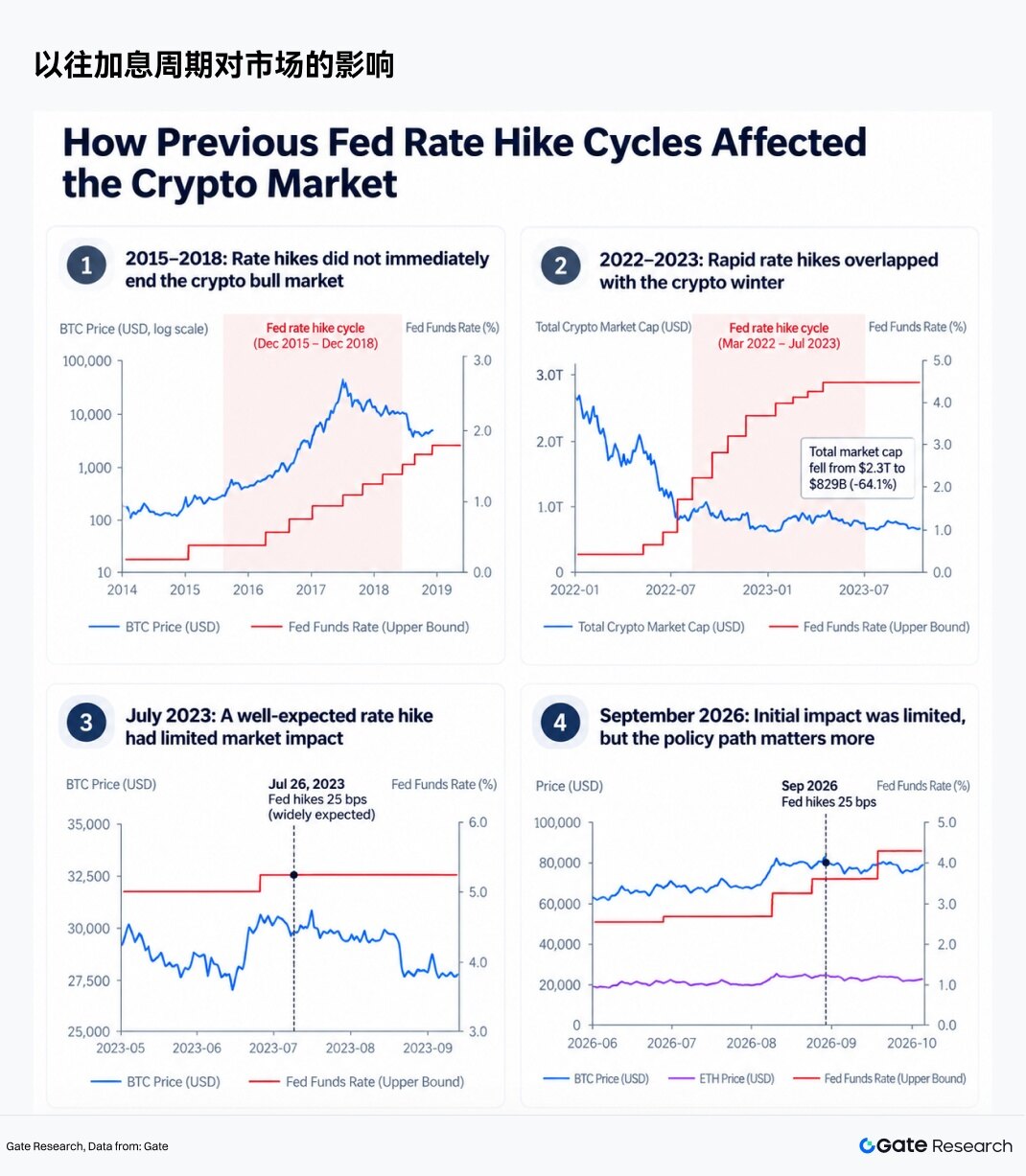
The Fed began its hiking cycle in late 2015, but BTC did not immediately turn bearish. On the contrary, the crypto market experienced a large-scale rally in 2017, BTC prices climbed rapidly, and the ICO boom also attracted a large amount of new capital into the market.
This stage shows that rate hikes are only one variable affecting the crypto market. When the industry itself is in a period of rapid expansion, user adoption is rising, speculative capital continues to flow in, and new market narratives keep emerging, the crypto market's own growth momentum may, for a time, exceed the pressure brought by macroeconomic tightening.
By 2018, the situation began to change. As market valuations became excessive, the ICO bubble burst, and speculative sentiment receded, crypto assets entered a phase of significant adjustment. At the same time, the Fed was still raising rates, and the external liquidity environment was noticeably weaker than before. Therefore, the 2018 decline is better understood as the combined result of an internal industry bubble bursting and external liquidity tightening, and cannot be simply attributed to Fed rate hikes. This history also shows that rate hikes usually do not immediately end a bull market, but they gradually reduce the market's tolerance for high valuations and high-risk assets.
3.2 2022–2023: Rapid Rate Hikes Amplified the "Crypto Winter"
In 2022, the Fed began one of its more aggressive tightening cycles in decades, raising the federal funds rate target range from 0.25%–0.50% in March to 4.25%–4.50% by year-end. As dollar rates and Treasury yields continued to rise, valuations of global risk assets came under broad pressure, and the crypto market also lost the important liquidity support it had enjoyed in the previous low-rate environment.
During the same period, total crypto market capitalization fell from about $2.3 trillion at the start of the year to about $829 billion at the beginning of 2023, a decline of about 64.1% for the year. But this "crypto winter" also cannot be entirely attributed to the Fed. Events such as the Terra/UST collapse, the bankruptcy of Three Arrows Capital (3AC), the Celsius crisis, and the FTX collapse occurred in succession, exposing the industry's internal high leverage and credit risks in concentrated fashion.
The whole process was more like a continuously reinforcing transmission chain:
Rapid Fed rate hikes → external liquidity tightening → crypto asset prices falling → exposure of internal industry leverage → credit crises at institutions and platforms → deleveraging further accelerating the market decline.
3.3 July 2023: A Well-Anticipated Hike, Limited Market Reaction
In July 2023, the Fed raised rates again by 25 basis points, lifting the federal funds rate target range to 5.25%–5.50%, the last hike of that tightening cycle.
Compared with the rapid hiking phase in 2022, BTC's immediate reaction this time was noticeably calmer. An important reason is that the market had largely expected this hike before the FOMC meeting, so the relevant impact had already been reflected in asset prices in advance. This again shows that financial markets are not merely trading "whether the Fed hikes rates," but how large the gap is between the final outcome and prior expectations.
When the size of the hike fully matches market expectations, the 25 basis points themselves may no longer be the core variable determining the market. Investors instead pay more attention to the wording in the Fed statement, the policy bias for the next meeting, and whether inflation, employment, and economic growth data support further tightening.
3.4 September 2026: Limited Initial Shock, the Subsequent Rate Path Is More Critical
This logic was reflected again in September 2026. Although this was the Fed's first rate hike in more than three years, BTC and ETH's immediate reaction after the decision was announced was not drastic. After the decision, BTC mainly fluctuated in the roughly $75,000–$76,500 range, while ETH mainly traded around $2,370–$2,430, with a relatively limited initial price reaction. This indicates that a single 25 basis point hike had already been priced in by the market to some extent.
Compared with a single 25 basis point adjustment, what truly deserves attention going forward are several longer-term questions: whether there will be a second hike during the year, whether the policy rate will remain above 4% for longer, whether long-term U.S. Treasury yields will continue to rise, and whether inflation will again exceed market expectations.
At the same time, unlike previous cycles, the crypto market today is also affected by factors such as spot ETF flows, regulatory policy, and institutional allocation. This means that even in the face of the same interest rate changes, the crypto market's reaction may not simply replicate 2018 or 2022.
Looking back at past cycles, a single FOMC decision usually only affects short-term volatility. What truly determines the medium-term trend is the entire interest rate cycle and the stage the crypto industry itself is in.
Therefore, for the current market, the September rate hike itself is no longer the most important issue. More noteworthy is the market's repricing of the rate path in the coming months: if inflation remains elevated and the economy stays resilient, expectations of further Fed tightening may continue to weigh on risk assets; but if inflation and employment cool noticeably and the market begins to trade the end of the hiking cycle again, macroeconomic pressure may also gradually ease.
4. Differentiated Impact on Major Crypto Assets: 2023 vs. 2026
As mentioned earlier, the similarities between 2023 and 2026 are that both involved a single 25 basis point hike, inflation above