




Stock Price Drops Below IPO Price, Dealt a Blow on Its First Flight Post-IPO, What's Next for SpaceX?


- Core Thesis: The 13th test flight of SpaceX’s Starship was aborted due to an engine malfunction, putting pressure on the stock price. The article argues that after going public, the capital market's tolerance for SpaceX's "fast iteration and fail-fast" approach has decreased. A test flight failure has shifted from being a cost of R&D to an event that impacts valuations and commercial expectations.
- Key Elements:
- The Starship test flight automatically aborted during the ignition phase because some Raptor engines failed to start. Musk stated that the engines would be replaced, with plans for the next flight attempt early next week.
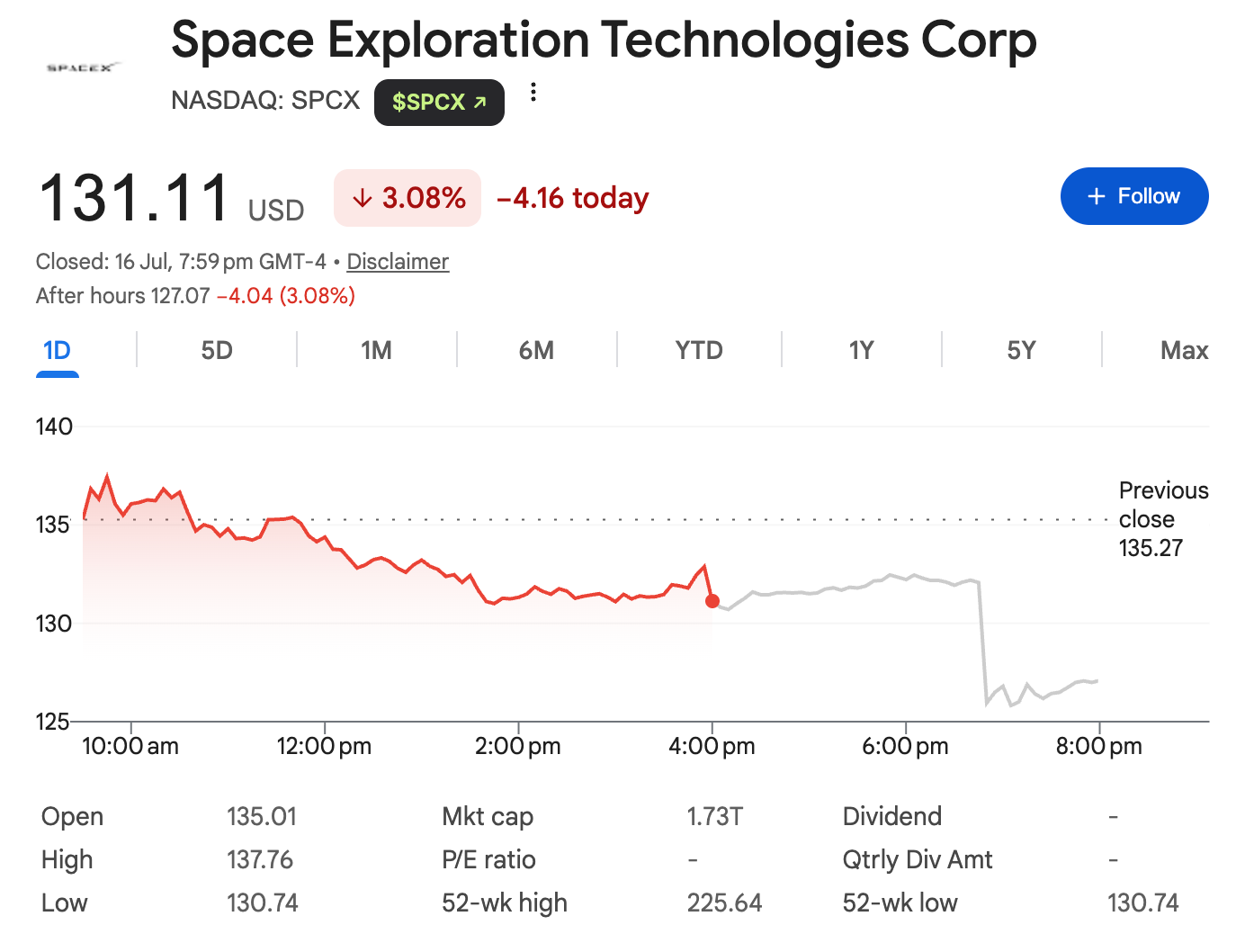
- News of the test flight failure caused SpaceX's stock price (SPCX) to momentarily drop in after-hours trading to around $127.07. Prior to this, its stock price had already fallen nearly 40% from its IPO price.
- Before going public, investors placed greater value on R&D iterations and data accumulation, viewing failures as part of the engineering process. After going public, a test flight failure directly triggers concerns about the timeline for commercialization and the pace of revenue realization.
- The inherent contradiction between the capital market's demand for more certain growth expectations and the uncertainties inherent in aerospace R&D is forcing a shift in management strategy to balance stock price stability with technological exploration.
- Analysis suggests that the outcome of the next flight will determine the short-term direction of the stock price: success could alleviate market concerns and repair sentiment, while failure would lead to further price declines.
Original by Odaily Planet Daily (@OdailyChina)
Author: Azuma (@azuma_eth)
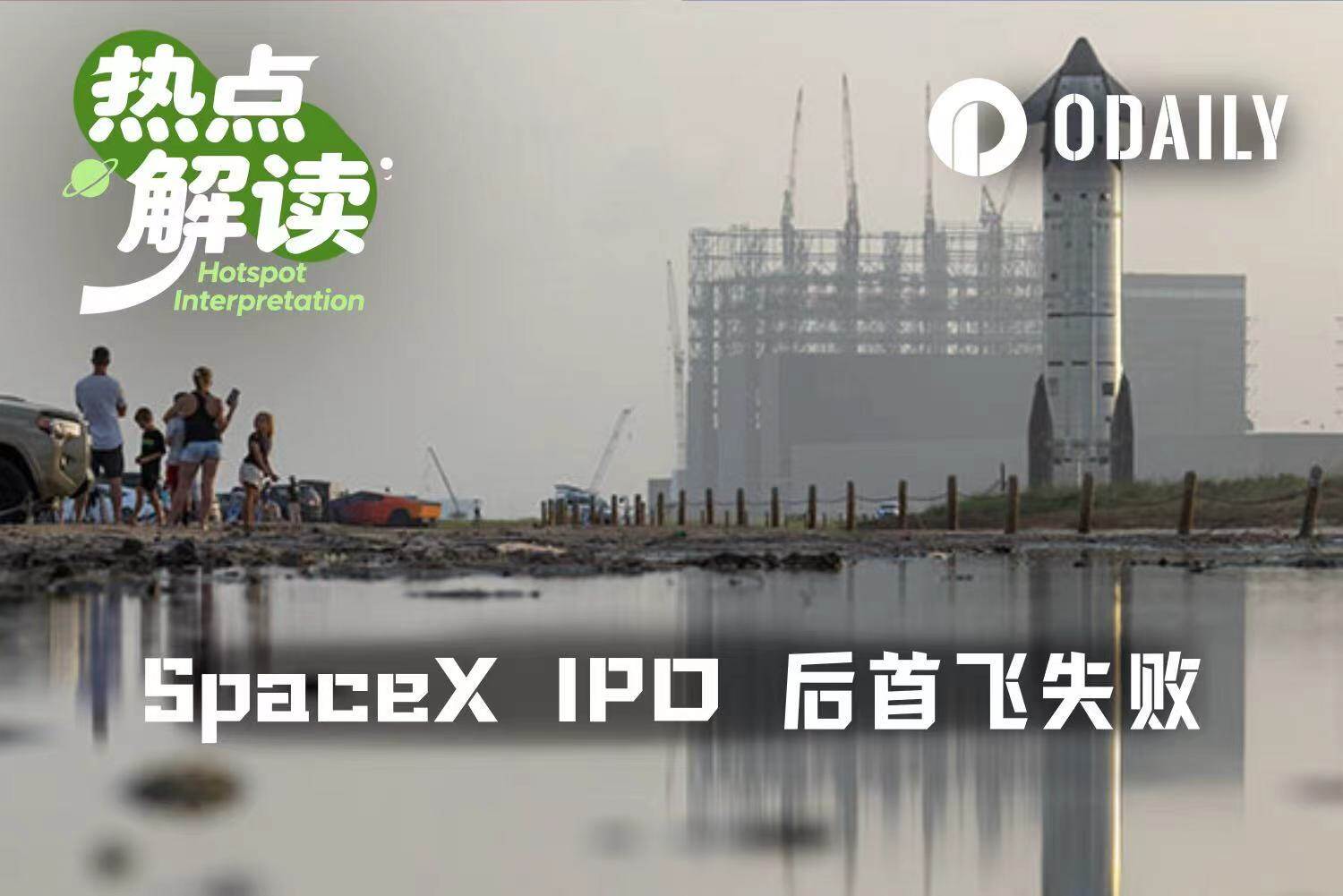
In the early hours of July 17, Beijing time, SpaceX originally planned to conduct the 13th test flight of Starship. However, just as the countdown reached the final ignition phase, some Raptor engines failed to start as expected, triggering the automatic launch abort sequence, and the test flight had to be called off.
Elon Musk stated that to ensure a smooth flight, SpaceX would remove and replace two Raptor engines, hoping to make another launch attempt in a few days, with the most likely launch time being early next week.
Prior to this test flight, SpaceX's stock price had just fallen below its IPO price, with the largest decline since listing nearing 40%. As the first Starship test flight since SpaceX's IPO, the market had hoped to use it to validate Starship's latest progress and inject a shot of adrenaline into the recently sluggish stock price. However, the failed launch once again dealt a blow to SpaceX's stock — SPCX experienced a brief post-market sell-off, currently trading at $127.07.
Failed test flights are nothing new for SpaceX, but judging from the secondary market's reaction this time, investors are clearly re-evaluating a question: After going public, can SpaceX still afford the luxury of "unlimited trial and error"?
Failed Test Flights Are Nothing New, But Times Have Changed
Rewind a few years ago, each failed Starship test flight was largely seen as part of the engineering progress. Discussions in the community about Elon Musk "blowing up rockets," while tinged with a joking tone, also carried a degree of respect.
SpaceX has always adhered to a Silicon Valley-style R&D philosophy — build fast, test fast, fail fast, then iterate quickly. Rather than completing all verification on the ground, SpaceX prefers to get rockets into the sky as quickly as possible, gather data from real flights, and then continuously optimize the design. As a result, over the past dozen or so Starship test flights, various mishaps — from mid-air disintegration to failed booster recoveries and orbital verification issues — have been almost constant throughout the development process. Yet these setbacks have not prevented Starship from continually evolving.
In the pre-IPO era, this R&D model was widely accepted by investors. Whether institutional shareholders or employee stockholders, the focus was more on whether the R&D pace was steady and technological barriers were being built, rather than whether a specific test flight succeeded or failed. For them, a failure meant obtaining a new set of flight data, meaning one step closer to eventual commercialization — essentially part of the R&D cost.
But after the IPO, how the capital market views Starship has begun to change. For secondary market investors, Starship is no longer just an R&D project; it has become a key variable affecting the company's valuation. A failed test flight not only means replacing engines and rescheduling launch windows but could also mean delayed commercial deployment timelines, a slower pace of revenue realization, and a readjustment of future cash flow projections. In the past, engineers saw data accumulated from a test; now, Wall Street sees whether growth expectations can be met on time.
This shift doesn't mean capital markets demand that SpaceX "only succeed, never fail," but rather that every failure will be incorporated into the valuation framework and recalculated. Especially in the context of a company that is already listed and commands a high growth premium, any event that could impact Starship's commercialization timeline will be more likely to trigger stock price volatility than in the past.
Going Public: A Driving Force, Also a Constraint
A month ago, SpaceX completed the largest IPO in human history.
For any capital-intensive, high-investment tech company, the greatest significance of going public is gaining access to more stable and lower-cost financing. For SpaceX, which is still in a phase of rapid expansion, continuing to build the Starlink constellation, advancing Starship R&D, and laying the groundwork for an even larger commercial space network all require massive capital expenditures. The funding channels provided by the IPO undoubtedly supply ample "fuel" for these long-term plans.
But the capital market never provides anything for free. With more public investors becoming shareholders, SpaceX must now contend not just with pure engineering problems, but with the capital market's continuous scrutiny of growth, profits, and delivery timelines.
In the past, Musk could tell investors: "Failure is also part of R&D."
Now, every delay, every launch abort, every test flight incident can quickly be reflected in the stock price, further impacting the company's financing ability, market sentiment, and potentially even indirectly squeezing management's decision-making space. The capital market inherently seeks certainty, yet the defining characteristic of aerospace R&D is precisely uncertainty. An inherent tension always exists between the two.
For SpaceX, going public means gaining more abundant capital resources, but it also means shouldering heavier pressure.
Next Week's Rerun is Crucial
Fortunately, this test flight was not a failure after liftoff (at least it didn't explode); the launch was actively terminated during the ignition phase, making the problem relatively clear to pinpoint. According to Musk's latest statement, SpaceX will attempt the launch again early next week.
For SpaceX's engineers, this might be just another ordinary launch delay; but for the newly public SpaceX, this rerun carries significance far beyond technical verification.
If the rerun goes smoothly, market concerns about Starship's R&D pace could ease, and the recently pressured stock price might see a sentiment-driven recovery. Conversely, if another mishap occurs, SPCX could sink to even lower levels.