



Good performance, slight decline; bad performance, sharp plunge: US tech stocks are trapped in a "vicious cycle"


- Core Thesis: US tech stocks are facing an asymmetric dilemma where "good earnings fail to lift prices, while bad news triggers sharp sell-offs." This reflects growing market skepticism about the high valuations and returns of AI investments, with price drivers shifting from fundamentals to positioning structure and deleveraging.
- Key Points:
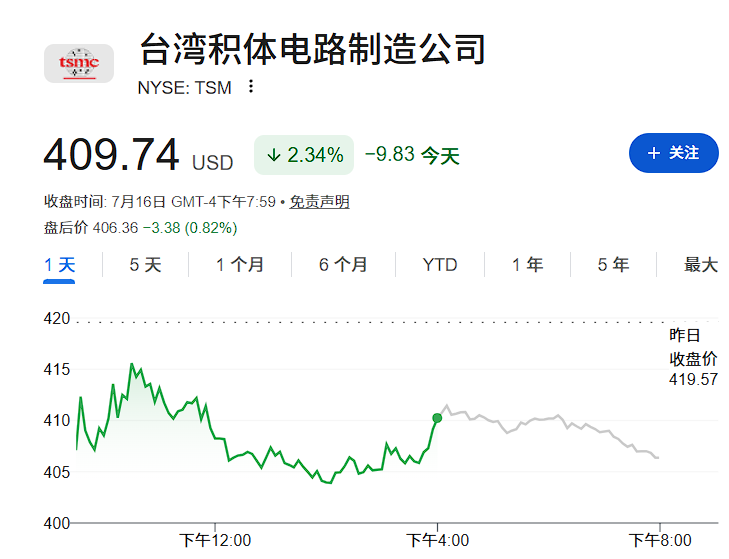
- TSMC's Q2 net profit surged 77% year-over-year and it raised its revenue guidance, yet its stock still fell 2.3%. IBM's single-day plunge of over 20% following a profit warning shows an extremely high bar for earnings expectations.
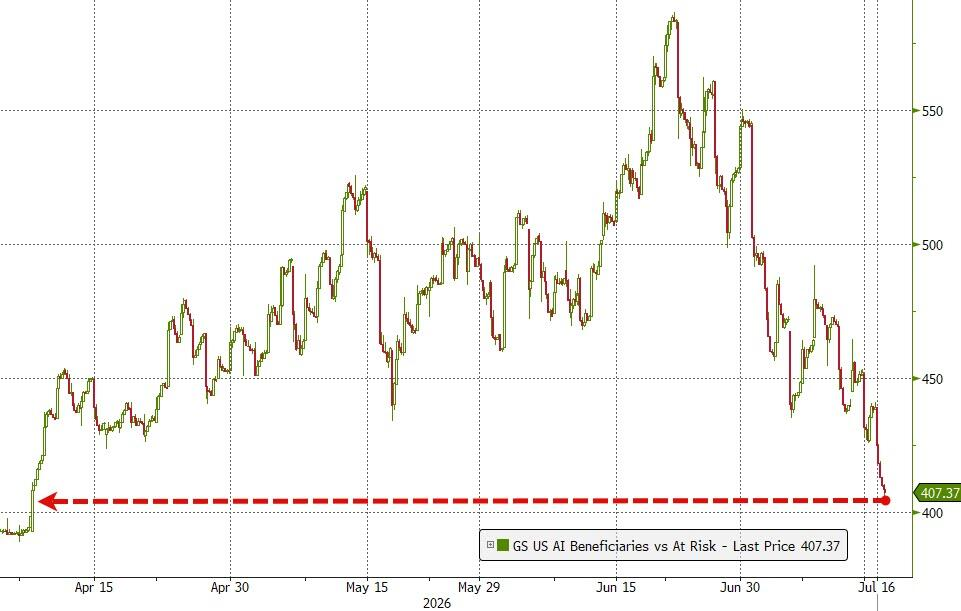
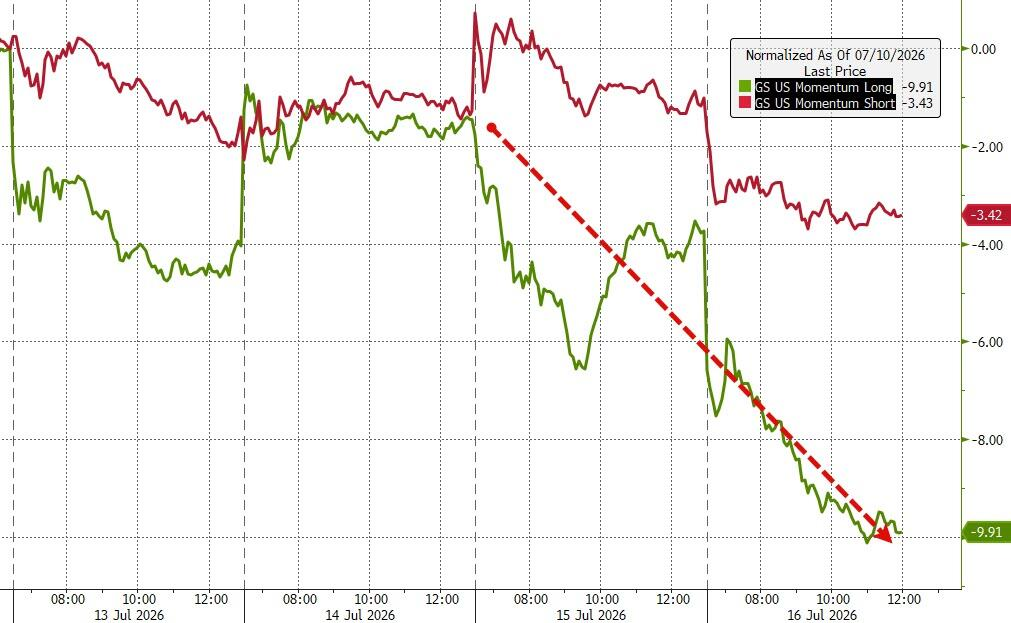
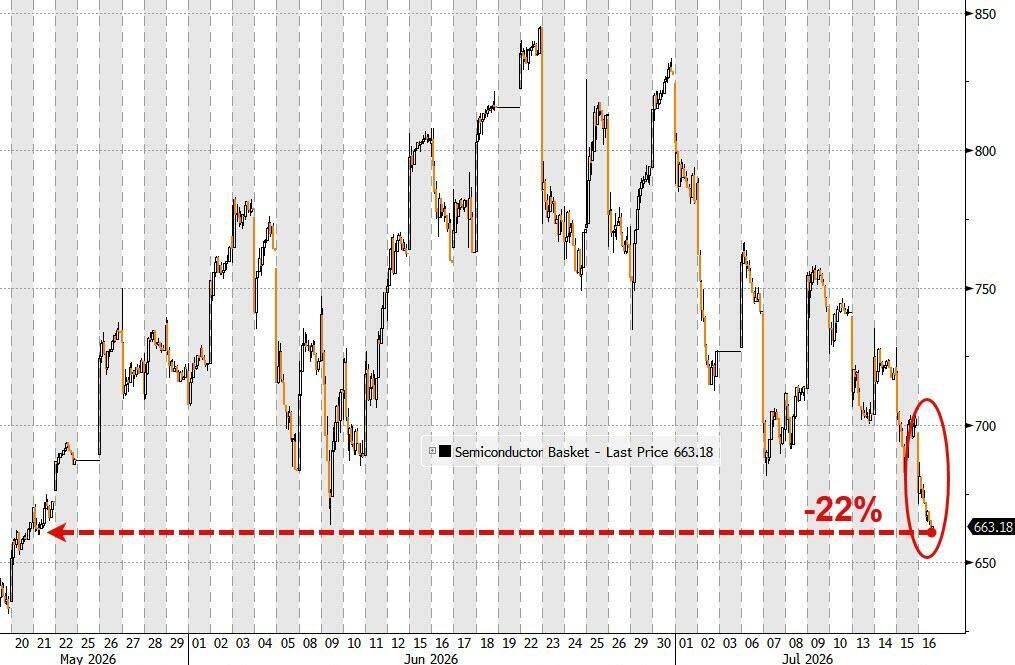
- The Nasdaq index declined, with the semiconductor sector dropping 22% from its mid-June high, entering a technical bear market. Goldman Sachs' momentum stock index has lost a fifth of its market value this month.
- SpaceX's stock price fell below its IPO price ($135), reflecting investor introspection on the high valuations of AI companies. Cloud computing giants like Google and Amazon saw their stock prices fall, while their bonds came under pressure due to massive spending plans.
- Chip companies like ASML and Micron saw their stocks sold off after reporting earnings that beat expectations, indicating that performance expectations for the hardware sector have been raised to extremely high levels, with positioning structure, not fundamentals, driving the trend.
- The systematic deleveraging process that began in June is still ongoing, with leveraged ETFs, options, and margin accounts still having room for further deleveraging, creating sustained market headwinds.
- AI-related stocks and heavily shorted hedge fund stocks are exhibiting "wrong-way" price movements, indicating internal market structural disorder, with volatility at five-year highs.
Original Author: Dong Jing
Original Source: Wall Street CN
U.S. tech stocks are caught in a dilemma that leaves investors between a rock and a hard place: Impressive earnings reports fail to boost stock prices, while poor results trigger sharp sell-offs. This asymmetrical market reaction is shaking Wall Street's confidence in the AI investment narrative and accelerating capital outflows from high-valuation tech stocks.
TSMC reported a 77% year-over-year surge in quarterly net profit on Thursday, setting a new record, and raised its 2026 revenue growth forecast to over 40%. Yet its U.S.-listed shares still closed down 2.3%. Meanwhile, IBM plummeted over 20% on Tuesday after issuing a profit warning, a decline even steeper than on "Black Monday" in 1987. A Vital Knowledge analyst summed up the current predicament:
"Tech stocks just can't seem to win — beat-and-raise quarters don't lift stocks, but earnings disappointments get punished severely."
Market analysts believe investors are concerned about high AI valuations and massive expenditure returns. The extremely high bar for earnings expectations has led to a significant divergence between fundamentals and stock prices. Compounding this, the market is undergoing a systemic deleveraging and momentum trade unwinding, where positioning structure, rather than fundamentals, now dictates the trend.
The Nasdaq Composite fell 1.5% on Thursday, led by declines in memory and chip stocks. SanDisk, Western Digital, and Seagate each dropped over 9%, while Intel and Micron fell roughly 6% apiece. The U.S. semiconductor sector has fallen about 22% from its mid-June peak, officially entering a technical bear market. Goldman Sachs' "momentum stock" index tumbled 6% on Thursday alone and has lost a fifth of its market value so far this month.
Strong Earnings Get the Cold Shoulder as Market Logic Shifts
The most alarming aspect of the current tech stock correction is the stark divergence between robust fundamentals and price action.
As a Wall Street CN article noted, TSMC not only saw its Q2net profit surge 77% year-over-year to a record NT$706.6 billion (approximately $22 billion), with gross margins hitting 67.7%, but also raised its 2026 capital expenditure guidance to between $60 billion and $64 billion. ASML had previously reported a "beat-and-raise" quarter. Micron's latest quarterly results also significantly exceeded expectations, yet its stock has corrected roughly 25% from its high.
Market analysts believe that the results from all three companies further reinforced the narrative of accelerating AI-driven demand expansion, providing new positive data supporting AI capex and computing power investment logic. However, the fact that semiconductor and memory stocks still declined despite such positive catalysts suggests that current price movements may no longer be driven by fundamentals but by positioning structure and factor dynamics — and also indicates the earnings expectations bar for the hardware sector has been set extremely high.
Notably, SpaceX, once seen as a symbol of the AI boom, has not been spared either.
SpaceX completed its IPO last month at a record $86 billion valuation with an offering price of $135. The stock surged to a high of $225.64, attracting a flood of retail capital. However, on Thursday, its shares fell another 3.1% to $131.11, dropping below the IPO price.
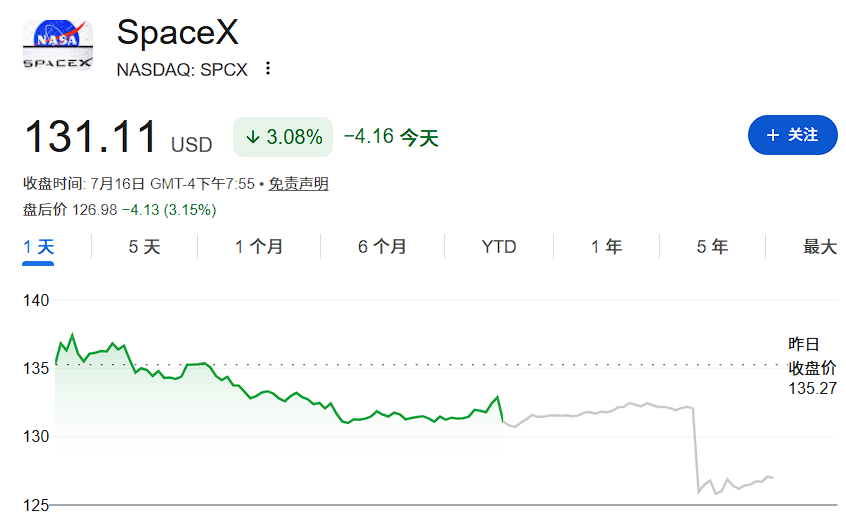
This trend reflects a broad investor reassessment of high valuations for AI-related companies. According to the Financial Times, some investors are growing increasingly concerned about when the massive spending by U.S. tech giants on data centers will generate tangible returns.
Google shares fell 4.4% on Thursday, and Amazon dropped 1.2%. Bonds issued by "hyperscale cloud providers" have also recently come under pressure due to scrutiny over their massive borrowing and spending plans.
Chip Stock Trends Become a Market Bellwether
Amid multiple intersecting pressures, the trajectory of the semiconductor sector has become a core observation point for the entire stock market.
Analysts believe, "The future direction of chip stocks remains the most important question for the equity market. They are showing some clear cracks, so we need to see a strong and sustainable rebound soon, or else it will send a real warning signal."
Currently, the semiconductor sector has fallen roughly 22% from its mid-June peak, officially entering a technical bear market. Against the backdrop of stocks being sold off after beating expectations at ASML, Micron, and Samsung, high-beta momentum strategies have suffered another major blow.
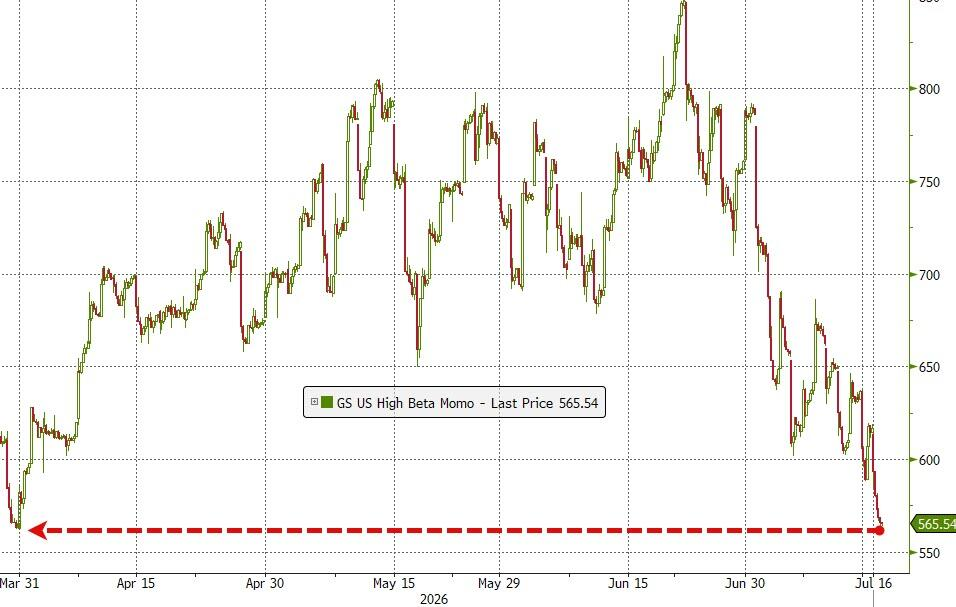
The market's implied correlation remains near historic lows, clearly decoupling from the VIX index. This indicates that current volatility stems more from a structural factor repricing than systemic panic — but this does not mean the risks have been cleared.
Deleveraging Wave Continues, Momentum Trade Accelerates Unwind
Behind the recent sell-off is a systemic deleveraging process that began in June.
JPMorgan strategist Nikolaos Panigirtzoglou stated, "The deleveraging phase by investors that started in June appears to still be ongoing. We believe there is more room for deleveraging in leveraged equity ETFs, options, and margin accounts, which will act as a persistent headwind for the stock market."
Goldman Sachs data shows that the entire artificial intelligence space is under pressure, with optical interconnect, AI semiconductor, and data center sectors all falling between 5% and 12% over the past two days.
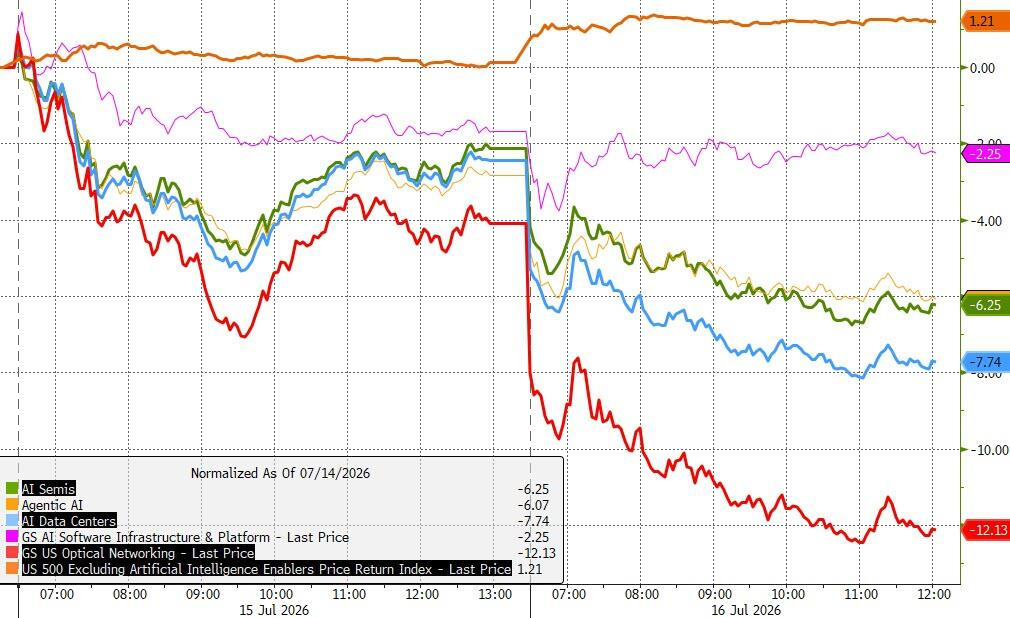
Goldman Sachs' momentum stock index has fallen roughly 20% so far this month. According to Goldman Sachs analysis, after adjusting for volatility, the volatility of this factor has risen to a five-year high, nearly ten times the three-week realized volatility of the S&P 500.
Some analysts point out that "wrong-way" price movements have emerged between AI-related stocks and "AI-risk" stocks, hedge fund long positions and short positions, and high-beta 12-month winners and losers. This indicates significant internal structural dislocation in the market.