






Movement Labs 申請破產,Movement Industrial 及基金會或成最大贏家


- 核心觀點:前開發公司 Movement Labs 申請破產實為精心策劃的「金蟬脫殼」,旨在將資產、智慧財產權和團隊轉移至新實體 Move Industries 和 Movement 基金會,以切割風險並規避美國司法部對 MOVE 代幣拋售事件的調查與訴訟。
- 關鍵要素:
- 破產前已轉移核心資產:Movement Labs 透過《Fenix 項目協議》將智慧財產權和合約轉移至 Movement 基金會,放棄 MOVE 代幣發行權,並將團隊以 120 萬美元價格轉讓給 Move Industries。
- 破產實體已成空殼:申請破產時,Movement Labs 無經營性資產、無員工、僅剩約 6 萬美元現金,負債最高 1000 萬美元,主要目的是留下訴訟索賠等遺留風險。
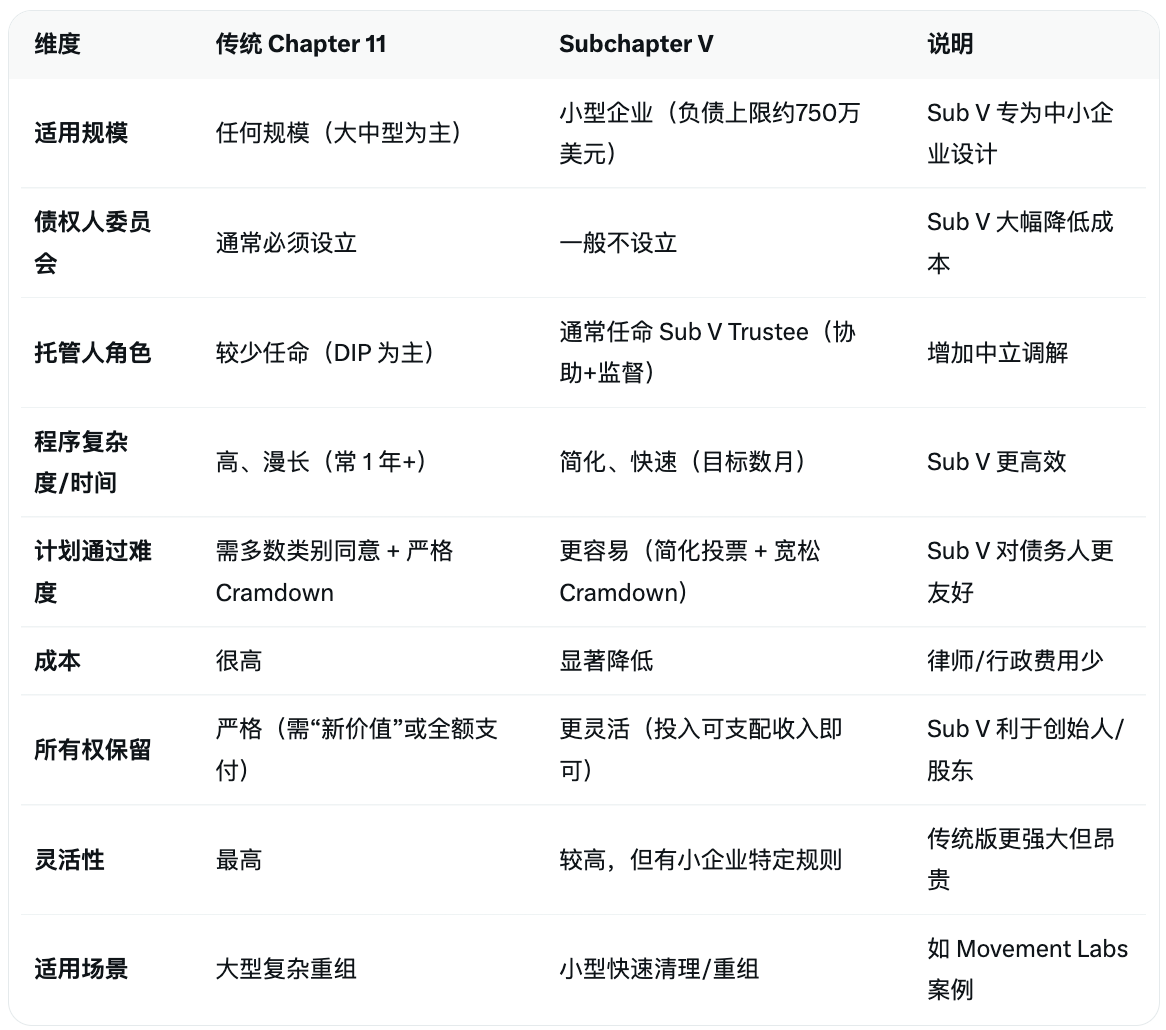
- 破產策略選擇:該公司選擇小型企業簡化破產程序(第 11 章第 5 子章),避免設立債權人委員會進行潛在審查,以快速完成流程。
- 融資條款保護新實體:Movement 基金會子公司提供 570 萬美元融資,但附加嚴苛條件,包括禁止調查或起訴 Movement 基金會、Move Industries 及移交的高管和員工,明確排除捲入醜聞的前聯創 Rushi Manche。
- 破產背景:Movement Labs 此前因涉及 Rushi Manche 關聯的 6600 萬枚 MOVE 代幣拋售及內幕交易醜聞,正面臨美國司法部大陪審團調查,此次破產旨在為 Movement 網路與 MOVE 代幣清除合規障礙。
Original|Odaily Planet Daily(@OdailyChina)
Author|Wenser(@wenser 2010 )

Last night, news that "Movement developer Movement Labs files for bankruptcy protection" caused an uproar in the crypto community. No one expected that this "star L2 project," which had previously sought $100 million in funding at a $3 billion valuation, would end up at the brink of bankruptcy.
However, as more details emerged, the truth finally came to light: the entity filing for bankruptcy was only the former development company, Movement Labs, and it has no impact on the Movement network. The Movement network has been operated by Move Industries since May 2025 and has pivoted to an L1 network focused on cross-border payments and stablecoin settlement. Movement Industries CEO Torab alsoconfirmed this news in a post.
Just when we thought this was merely a cliché case of "legacy issues caused by developer team rotation," a post revealing the true bankruptcy process of Movement Labs offered a different perspective: This is not a simple bankruptcy filing, but a meticulously orchestrated shell game.
Unraveling the Mystery of Movement Labs' Bankruptcy: Former Developers Transform into a Bankruptcy Shell
According to a tweet from Thomas Braziel, a partner at the corporate insolvency firm 117Partner, Movement Labs' bankruptcy filing appears to be a premeditated "shell game": Before filing for bankruptcy, the company had already transferred its operational business, intellectual property, contracts, token rights, and employees elsewhere. The original company was left with only $60,000 in cash and litigation claims.
In other words, this is not a normal application for bankruptcy protection, but a strategic move to sever risks and protect Movement Industries and the Movement Foundation from litigation disputes. These two entities are precisely the recipients of the assets formerly belonging to Movement Labs, the original developer of Movement.
In the bankruptcy protection filing documents submitted by Movement Labs, we can find more evidence supporting this view:
- In mid-July 2026, the company filed a Chapter 11 (Subchapter V, streamlined procedure for small businesses) petition in the U.S. Bankruptcy Court for the District of Delaware. The company reported assets between $100,000 and $500,000, liabilities up to $10 million, and fewer than 299 creditors.
- According to the prior "Fenix Project Agreement," Movement Labs transferred its remaining intellectual property and key contracts to the Movement Foundation, relinquished its rights to issue MOVE tokens, and agreed to terminate its business operations.
- Movement Labs transferred its core team to Move Industries (the current developer of the Movement network) for a total consideration of $1.2 million.
- As of the bankruptcy filing date, Movement Labs had no operating assets, no active business operations, and no full-time employees. It only had approximately $60,000 in cash. The company was still involved in litigation claims and residual contractual rights.
- The Movement Foundation's Cayman Islands subsidiary, MNF DIP SPV Ltd., is offering Movement Labs a financing package of up to $5.7 million to cover debt repayment and exit planning. However, this is subject to a series of stringent conditions, including but not limited to the bankruptcy court acknowledging and upholding the "Fenix Project Agreement," requiring the bankruptcy trustee to be approved by this subsidiary, and prohibiting any investigation or legal action against the Movement Foundation, Movement Ltd., the DIP lender, and numerous affiliated entities. Notably, this protection extends to Movement's former co-founder Cooper Scanlon, Polychain Capital's Chief Legal Officer Ruby Sekhon, and all transferred executives, directors, and employees of Move Industries (including CEO and lead Torab Arya/Torab Torabi). However, former co-founder Rushi Manche, who was previously dismissed due to market manipulation and token insider trading scandals, along with market-making institutions, are not covered by this clause.
Thus, Movement Labs became the entity taking on all the burdens and blame. The Movement Foundation, its Cayman Islands subsidiary, and Movement Industries, in turn, became the "financiers" funding the creditor litigation, seizing the initiative to prioritize settlements and approve the trustee's bankruptcy plan. Whether former co-founder Rushi Manche, acting as a creditor in the bankruptcy, can recover the $1.6 million in legal and litigation fees incurred from previous lawsuits now depends on the goodwill of the Movement Foundation's subsidiary. Currently, this subsidiary has temporarily approved $750,000 for the bankruptcy proceedings.
At this point, it's necessary to discuss the difference between Chapter 11 and Subchapter V of the U.S. Bankruptcy Code.
According to public information, Chapter 11 of the Bankruptcy Code applies to medium and large enterprises, requiring the formation of a creditor committee. The process is complex, time-consuming, and correspondingly more expensive to execute. Subchapter V of Chapter 11, under which Movement Labs filed for bankruptcy protection, is designed for small businesses (like Movement Labs, considered a "small business" with no full-time employees). The bankruptcy process under this subchapter is streamlined for speed and simplicity, thereby avoiding potential scrutiny that a creditor committee might impose.
According to the documents, the deadline to object to the final DIP financing order is 4:00 PM ET on August 20. The final bankruptcy review hearing will be presided over by Judge Thomas M. Horan at 11:00 AM ET on August 27.
Behind Movement Labs' Bankruptcy: MOVE Token Under DOJ Investigation, Co-founders Go Separate Ways
In April last year, Movement was embroiled in the "66 million MOVE token sell-off incident." The sell-off, valued at $38 million, was revealed by an internal contract at that time. The market maker behind MOVE tokens, Rentech, and its parent company, Web3Port, once again faced significant backlash over market-making controversies.
Ultimately, the incident concluded with Binance freezing the market maker's accounts and confiscating profits, Coinbase suspending MOVE trading, the Movement Foundation using recovered funds for a $38 million token buyback, and the termination of co-founder Rushi Manche. However, the U.S. Department of Justice continues to investigate this matter and the MOVE token launch through a grand jury, with Rushi being one of the parties involved in the lawsuits.
Currently, Rushi Manche still holds 34.25% equity in Movement Labs and retains the corresponding title of co-founder, but he does not have any business decision-making authority. This token sell-off incident, along with the revelation that "Movement Labs secretly promised up to 10% of token allocation to two advisors," were the direct catalysts pushing Movement Labs toward the bankruptcy protection filing.
Additionally, it is worth noting that Cooper, another co-founder of Movement Labs, is not without fault either.
Previously, Thapaliya, a participant behind the MOVE token airdrop, revealed that Cooper insisted on granting specific wallets (75,000 of them) the maximum possible MOVE token allocation per wallet. Through on-chain heatmaps, they pointed out that these wallets were almost the exclusive addresses claiming and then selling over 60 million MOVE tokens in bundles during the Move token airdrop on December 9, 2024. Currently, Cooper has stepped back from the Movement ecosystem's decision-making body and had previously handed over leadership to Move Industries CEO Torab, seemingly retiring from the crypto space.
As things stand, aside from the DOJ investigation and related lawsuits, Rushi's development within the broader crypto industry hasn't been significantly impacted.
In December last year, Rushi announced the formation of Nyx Group, planning to invest up to $100 million to support crypto token projects, aiming to provide liquidity and comprehensive operational support for projects preparing for token launches, including community building, financial management, and compliance guidance. It seems he is pursuing his "second act."
As for whether Movement Labs can successfully escape compliance scrutiny and the fallout from the token sell-off and market-making controversy through this "shell game," the upcoming bankruptcy hearing may reveal the final answer.


