Meta Becomes the "Last Straw" as Nasdaq "Finally" Crashes, US Treasuries Rally Sharply


- Core Viewpoint: Meta raised its AI capital expenditure guidance and disclosed approximately $825 billion in future spending commitments. Combined with Middle East tensions pushing oil prices higher and triggering risk-off sentiment, this triggered a broad selloff across the US stock market's AI supply chain. The market's focus has shifted from AI demand growth to capital expenditure sustainability and the realization of investment returns.
- Key Elements:
- The Nasdaq fell 2.6%, marking its largest single-day drop since June, the Philadelphia Semiconductor Index plunged 6.7%, and Meta's market capitalization evaporated by approximately $124 billion in a single day.
- Meta raised its 2026 capital expenditure guidance to $135 billion-$145 billion, its future spending commitments rose to approximately $825 billion, and its five-year CDS hit a record high.
- Escalating Middle East tensions pushed Brent crude above $110/barrel intraday, safe-haven funds flowed into US Treasuries, and the 10-year Treasury yield plunged more than 19 basis points in a single day, falling below 5%.
- Semiconductor equipment stocks led the decline, with Lam Research and KLA falling nearly 10%, as supply constraints limited their business guidance, triggering a reassessment of growth expectations for the equipment sector.
- The broad decline across the supply chain shows that concerns have expanded from individual stock valuations to the entire AI infrastructure investment chain, with companies reliant on external financing such as CoreWeave being particularly vulnerable.
- Upcoming earnings reports and capital expenditure plans from Alphabet, Microsoft, and Amazon will be key to determining whether the AI trade can stabilize.
Original authors: Li Dan, Bao Yilong
Original source: Wallstreetcn
Meta's announcement that it will further expand AI capital expenditure became the last straw that crushed the U.S. tech sector.
On Thursday, October 22, the Nasdaq Composite plunged 2.6%, its largest single-day drop since June, while the Philadelphia Semiconductor Index tumbled 6.7%, with the entire AI supply chain coming under pressure.
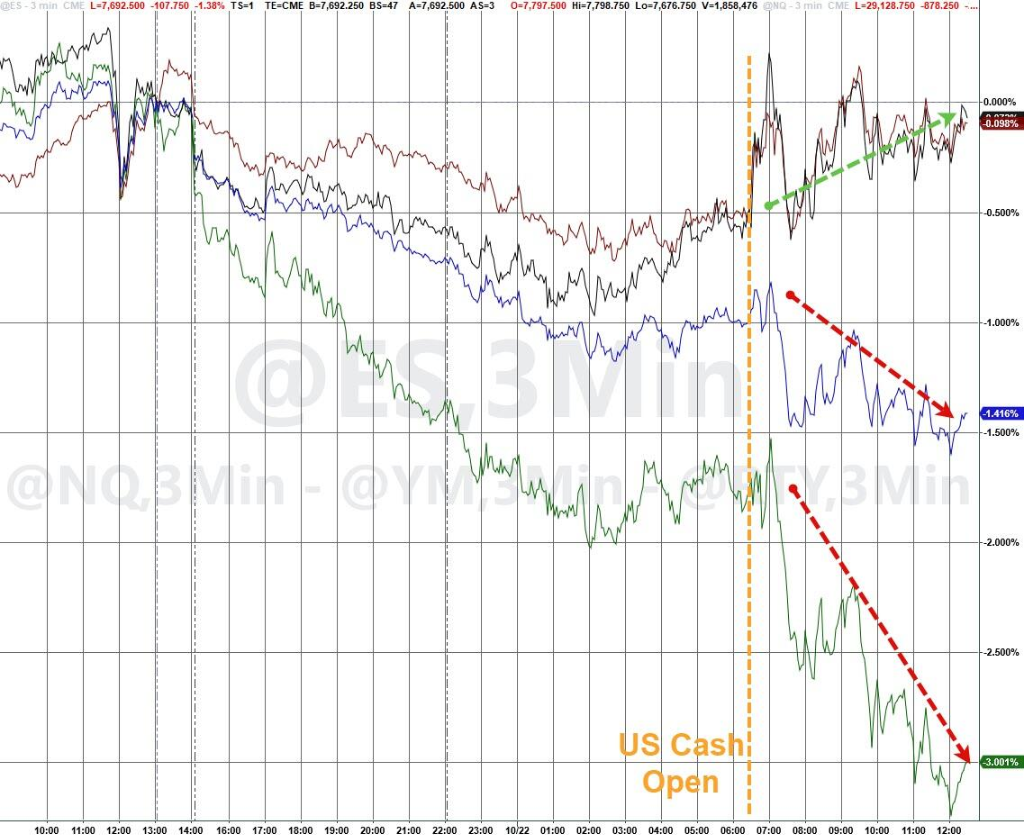
Meta's third-quarter revenue and profit both beat market expectations, yet it raised its 2026 capital expenditure guidance, disclosed that future spending commitments had risen to approximately $825 billion, and announced the issuance of a new class of non-voting shares to raise funds needed for AI expansion.
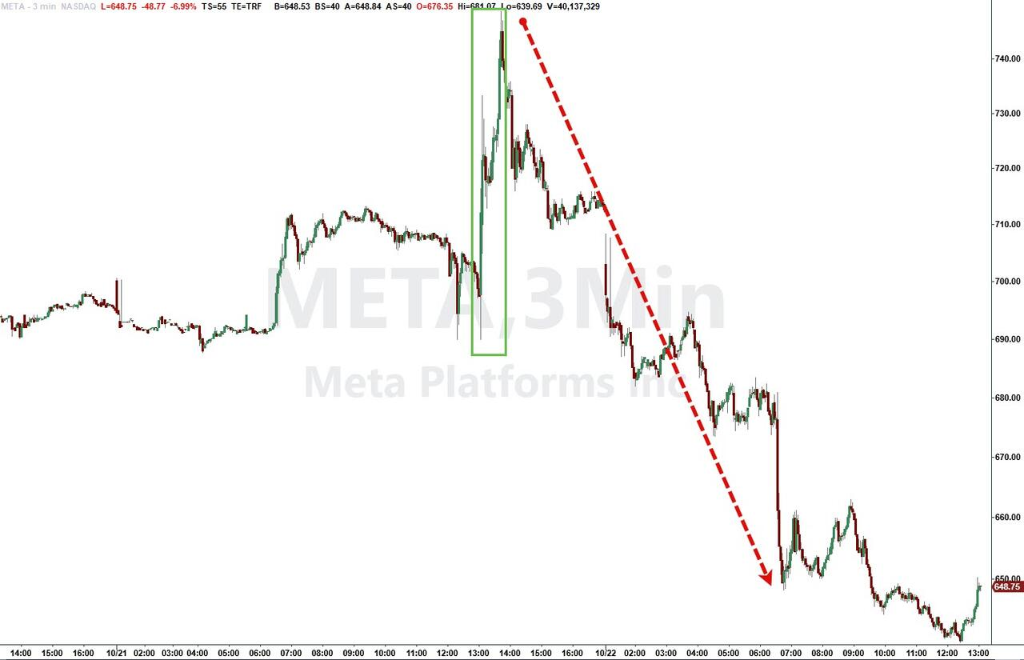
The news quickly ignited market concerns over financing pressure and return on investment at tech giants, sending Meta shares down about 7% and wiping out roughly $124 billion in market value in a single day.
Meanwhile, escalating tensions in the Middle East drove oil prices sharply higher, with safe-haven funds flooding into U.S. Treasuries. The 10-year Treasury yield plunged more than 19 basis points in a single day, falling below the 5% threshold for the first time in nearly a month and marking its largest single-day decline since March 2023.

The Philadelphia Semiconductor Index and the semiconductor industry ETF SOXX, which had rebounded about 2% on Wednesday, closed down nearly 7% on Thursday. Memory chips, optical communications, and AI cloud computing sectors suffered broad selloffs.
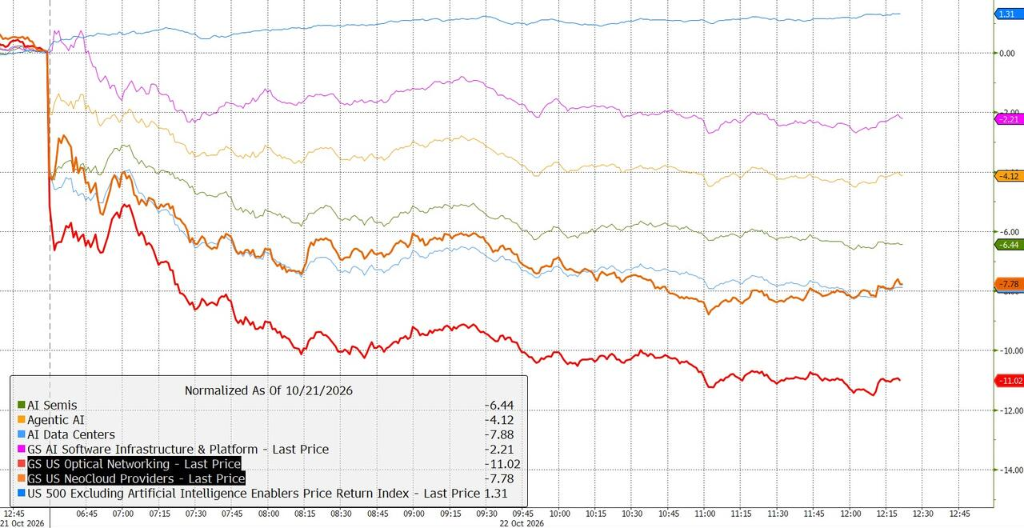
Before Thursday's selloff, retail investors had just aggressively added to semiconductor and AI-related stocks within a single week. The crowded positioning built up from concentrated buying left popular sectors more vulnerable when risk appetite reversed.
Joseph Saluzzi, partner and co-head of equity trading at Themis Trading, said: "It feels like a risk-off day, and tech stocks are always the first to get hit." He also noted that the bond rally confirmed the market was adopting a safe-haven strategy. Investors are worried that "after the midterm elections, the Iran war could escalate and last longer than expected."
Middle East Risks Push Oil Higher, Safe-Haven Trades Hit Tech Giants
The attack on Saudi Arabia heightened market fears of a broader Middle East conflict, with Brent crude briefly breaking above $110 per barrel. Rising oil prices reignited inflation concerns, and with the U.S. midterm elections less than two weeks away, higher energy prices could further amplify market worries about inflation and the policy outlook.
Against this backdrop, funds began reducing exposure to risk assets and shifting toward relatively safe Treasuries. Tech stocks, with their elevated valuations and greater reliance on future growth expectations, were the first to come under pressure. The simultaneous rise in Treasury prices and fall in U.S. equities on Thursday further highlighted the risk-off character of the day's trading. Therefore, while the sharp decline in the semiconductor index occurred within the AI supply chain, it cannot simply be attributed to the market turning broadly bearish on AI.
Rising oil prices not only increase cost pressures on the global economy but may also push up inflation expectations, fueling market concerns that central banks such as the Federal Reserve will have limited room to cut rates. At the same time, AI infrastructure construction itself requires substantial capital, power, and equipment, and rising energy prices and financing cost pressures could further affect calculations of investment returns.
For AI-themed stocks, this creates a dual pressure: on one hand, the market demands that companies prove their massive investments can deliver returns; on the other hand, rising oil prices and potential interest rate pressures could raise future investment costs and compress valuation space.
Thursday's broad decline in chip stocks shows that the AI trade has entered a phase that places greater emphasis on earnings realization, capital efficiency, and financing sustainability. Strong demand remains an important support for the industry, but demand growth alone is no longer sufficient for all supply chain companies to sustain valuation premiums. In the coming weeks, earnings reports from large tech companies, capital expenditure plans, and supply chain and order outlooks from chip equipment firms will be key to judging whether the AI trade can stabilize.
Chip Leaders Fall Broadly, Equipment Stocks Lead Supply Chain Decline
The semiconductor sector retreated sharply on Thursday, with chip design, manufacturing, equipment, and memory stocks coming under nearly universal pressure. By the close, Broadcom (AVGO) fell 4.3%, Marvell Technology (MRVL) dropped 8.7%, Intel (INTC) declined 8%, and TSMC's U.S.-listed shares (TSM) fell 4.5%.
Semiconductor equipment stocks posted even steeper declines. Lam Research and KLA each closed down nearly 10%, while Applied Materials (AMAT) fell 8.2%. Among memory chip stocks, SanDisk (SNDK) closed down 8.5%, SK Hynix's U.S.-listed shares (SKHY) fell 8.1%, Seagate Technology (STX) dropped 7.9%, Western Digital (WDC) declined 6.4%, and Micron Technology (MU) fell 6.3%.
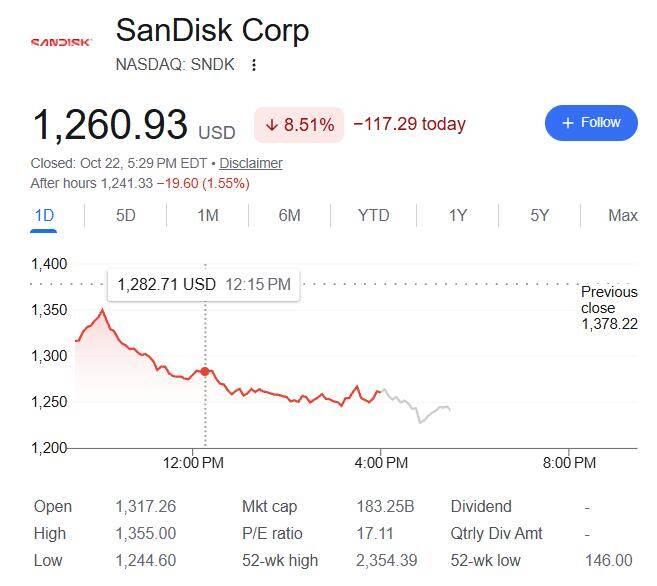
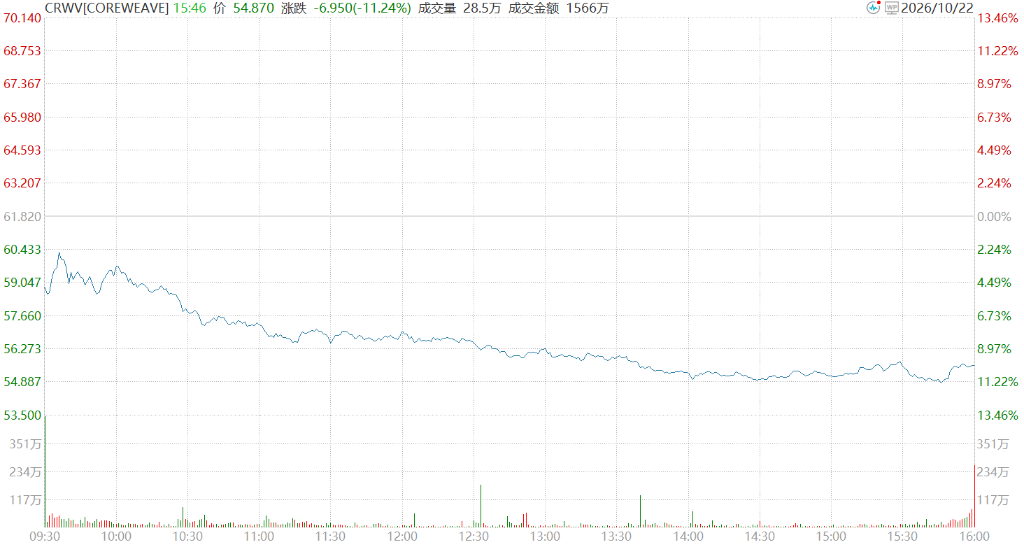
Optical communications and AI infrastructure-related stocks were also sold off. By the close, Coherent (COHR) fell 12.5%, Lumentum (LITE) dropped 11.5%, Credo (CRDO) declined 10.7%, and Corning (GLW) fell 8.1%. AI cloud service providers CoreWeave (CRWV) closed down about 10%, and Nebius (NBIS) fell 7.2%. By the close, Dell (DELL) dropped about 6.8%, Super Micro Computer (SMCI) fell 5.2%, and Oracle (ORCL) declined about 2.8%.

The cross-supply-chain selloff indicates that market concerns have expanded from individual chip companies' valuations to the entire AI infrastructure investment chain. The growth expectations of chip designers, equipment suppliers, memory manufacturers, optical communications companies, and cloud service providers are all closely tied to the ability of large tech companies to continue investing in AI infrastructure. Once investors begin to question the pace of returns on spending, related assets may come under simultaneous pressure.
Meta Raises Capital Expenditure, $825 Billion Future Spending Commitment Sparks Financing Concerns
Meta became another focal point of Thursday's AI trade pressure. The company's third-quarter revenue grew 26% year-over-year to $64.6 billion, beating market expectations; earnings per share (EPS) came in at $3.83, also above analysts' estimates of $3.57. But strong current-quarter results failed to dispel market concerns about future investment costs, and Meta shares fell more than 8% at midday before closing down about 7%.
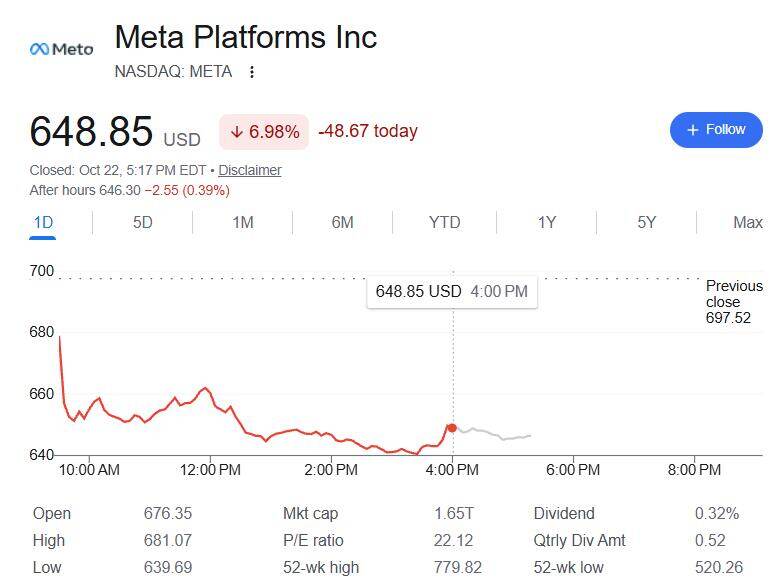
Meta announced 2026 capital expenditure guidance of $135 billion to $145 billion, raising the lower end of its previous guidance range of $130 billion by $5 billion. The company disclosed that future spending commitments, including leases, compute transactions, and energy agreements, had risen to $825 billion.
The market's focus is shifting from whether the AI business can grow to how much capital that growth requires and when it will generate sufficient returns. Meta CEO Mark Zuckerberg said the company's investments are paying off, the core business remains strong, and products such as the AI assistant Muse also show growth potential. But the company also acknowledged that some new AI investments will have longer payback periods than the core business.
Meta's credit risk indicators also deteriorated. Bloomberg data showed that Meta's five-year CDS spread briefly widened about 8.9 basis points to around 119.3 basis points intraday, hitting a record high. Rising CDS prices mean higher hedging costs for investors against potential debt default risk, reflecting the market's increased caution about the company's expanding AI investments and potential financing needs.
Meta also announced it would distribute a new class of non-voting shares to existing shareholders, which could be used in the future for financing, employee compensation, and potential acquisitions. The arrangement further raised market questions about how the company will fund its AI expansion.
Next, Google parent Alphabet, Microsoft, and Amazon will report quarterly results in succession. These tech giants' earnings will not only test whether AI demand is sustained but also reveal whether capital expenditure continues to accelerate and whether companies can gradually demonstrate that spending is translating into revenue, profit, and cash flow. For the market, the key to the AI trade is no longer just how fast demand is growing, but also whether the scale of spending is sustainable.
Lam Research Supply Constraints Prompt Reassessment of Equipment Stocks' Growth Expectations
Lam Research became one of the biggest decliners in the semiconductor equipment sector. After the company reported quarterly results, its shares were already down more than 10% in early trading and closed down nearly 12%. The company's outlook for the next phase of performance and supply constraint issues made investors more cautious about industry growth expectations.
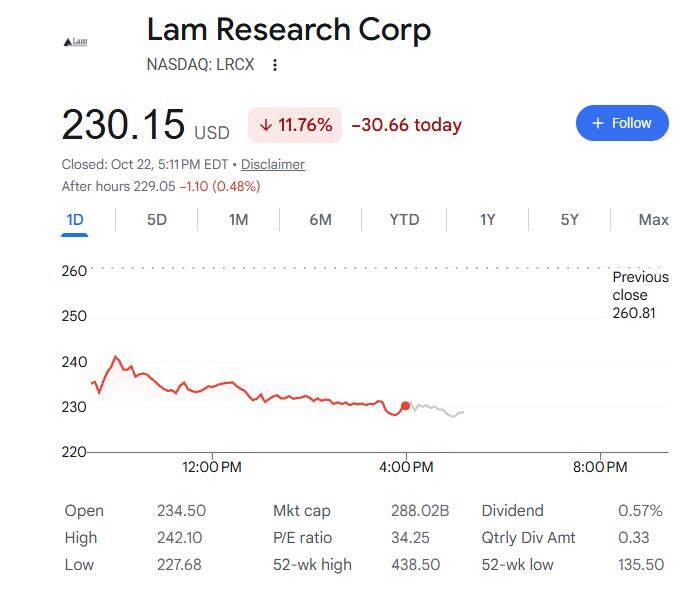
According to reports, after the earnings release, Lam Research management said the company's guidance could have been higher without recent supply constraints. Supply constraints mean that even with strong AI-related chip demand, equipment companies may not be able to deliver products and recognize revenue at the expected pace. This has prompted the market to reassess whether strong orders can be converted into actual results in a timely manner.
Valuations of semiconductor equipment companies are highly dependent on fab expansion and advanced process investments. Previously, AI data center construction drove chip demand growth, prompting fabs to increase capacity and supporting equipment companies' orders and share prices. However, limited equipment deliveries or adjustments to customers' expansion plans could affect the pace of revenue realization in the coming quarters.
The simultaneous sharp declines in peers such as Applied Materials and KLA indicate that investors are not confining the problem to Lam Research alone. The equipment sector had previously benefited from AI capital expenditure expectations, with share prices highly sensitive to future growth; when the market begins to worry about supply bottlenecks, capital expenditure pace, and valuation levels, related stocks are also prone to amplified pullbacks.
However, supply constraints do not mean AI chip demand has weakened. What is more worth watching now is whether equipment makers can alleviate delivery bottlenecks and whether large tech companies' data center investments can continue to support fab expansion. Subsequent earnings reports and management guidance will help the market judge whether this round of adjustment is a correction of valuations and positioning, or the beginning of a shift in AI supply chain growth expectations.
CoreWeave Bonds Relatively Stable, but Financing Pressure Remains in Focus
CoreWeave bonds, which had become a focal point of investor concern last week, were relatively stable on Thursday.
Data showed that the company's 2032-maturity bonds traded slightly below 80 cents on the dollar (par value 100 cents), down from about 90 cents last month but little changed from Wednesday.
CoreWeave is a relatively new AI cloud computing company whose position is particularly vulnerable in the current environment of rising financing pressure. Unlike hyperscalers such as Google and Amazon, CoreWeave lacks stable cash flow from established businesses and must rely more on external debt to finance infrastructure expansion.
The recent pressure on CoreWeave bonds reflects the broader financing difficulties across the AI infrastructure sector.
As tech giants such as Meta disclose future spending commitments in the hundreds of billions of dollars, and generative AI companies such as Anthropic and OpenAI continue to raise large sums in capital markets, investors are increasingly concerned that the available capital pool is being rapidly depleted.
CoreWeave shares fell about 10% on Thursday, coming under pressure alongside the broader AI cloud computing sector, indicating that the brief stability in the bond market does not mean market concerns about the sector's financing logic have dissipated.
Safe-Haven Funds Flood into Treasuries, 10-Year Yield Breaks Below 5.0% for First Time in Nearly a Month
Thursday's safe-haven trading was not confined to the stock market. As AI-related stocks fell sharply, French bond markets came under pressure, and Middle East tensions flared again, U.S. Treasuries rallied across the board, posting their best day in more than a year. Yields on some maturities fell by as much as about 20 basis points, with the 10-year Treasury yield breaking below the key 5.0% level for the first time in nearly a month. U.S. Treasury futures also saw buying, further strengthening the market.
More notably, market expectations for a Federal Reserve rate hike were pushed back. Bloomberg reported that traders now fully price in a 25-basis-point rate hike by January of next year, rather than December. Previously, rising energy prices were typically seen as a driver of inflation pressure and higher bond yields; but on Thursday, investors began to view high oil prices more as a risk that could drag on economic growth and hedged through buying Treasuries.
David Robin, rates strategist at TJM Institutional Services, said: "The situation is changing. Safe-haven is one thing, but growth risk is something else entirely." This distinction points to the deeper meaning of the day's bond market moves: the market is not just seeking safe assets because of rising risks, but also beginning to worry that AI investment sustainability and energy price shocks could affect the broader economic outlook.