



Ethereum Ecosystem Summit Held in Singapore, Ecosystem Core Players Discuss Institutional Adoption and Onchain Financial Development


- Core Viewpoint: The Ethereum Ecosystem Summit focused on institutional-grade infrastructure, stablecoin payments, asset tokenization, and agentic finance, with over 1,800 registered attendees engaging in in-depth discussions on the practical path of Ethereum's development from technical infrastructure to global financial and commercial applications.
- Key Elements:
- Ethereum co-founder Joseph Lubin emphasized the potential of zero-knowledge proofs in real-time verification and cross-network collaboration, envisioning wallets evolving into application gateways that integrate personal finance, identity, and data management.
- Institutional adoption requires the simultaneous development of protocol capabilities, privacy protection, and system compatibility. Lido's stVaults and EthSystems' privacy tools are responding to institutions' demands for compliance and confidentiality.
- Visa, Anchorage Digital, and others discussed agentic payments, proposing that "Know Your Agent" (KYA) will become a foundational capability for compliance and risk management.
- Lido announced Lido Lend, built on a Morpho Blue fork, focusing on looping lending scenarios to provide more reliable exit paths for conservative lenders and professional borrowers.
- Baillie Gifford, Superstate, and others pointed out that tokenization should deliver concrete improvements such as efficient subscriptions and redemptions, secondary liquidity, and collateral capabilities, with stablecoins becoming the funding gateway for purchasing financial assets.
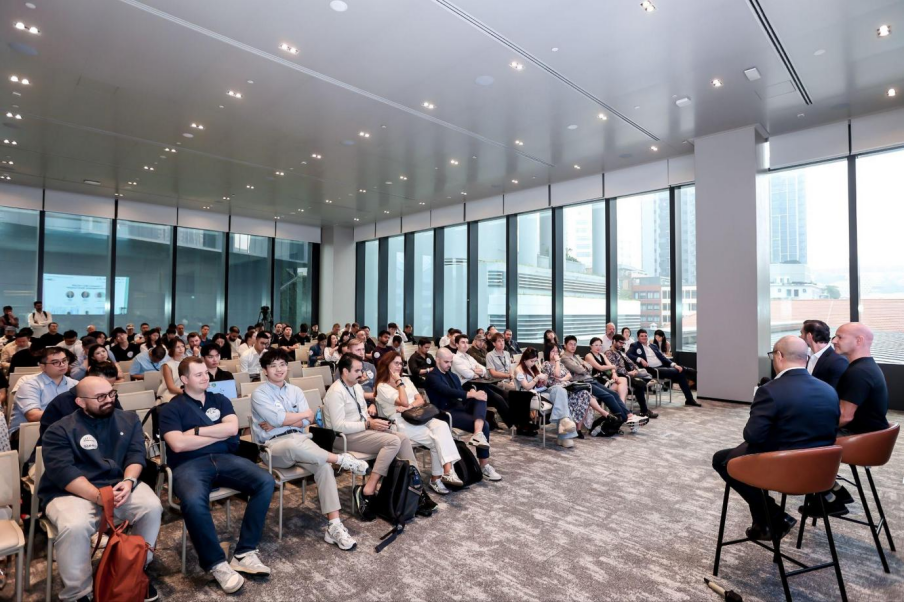
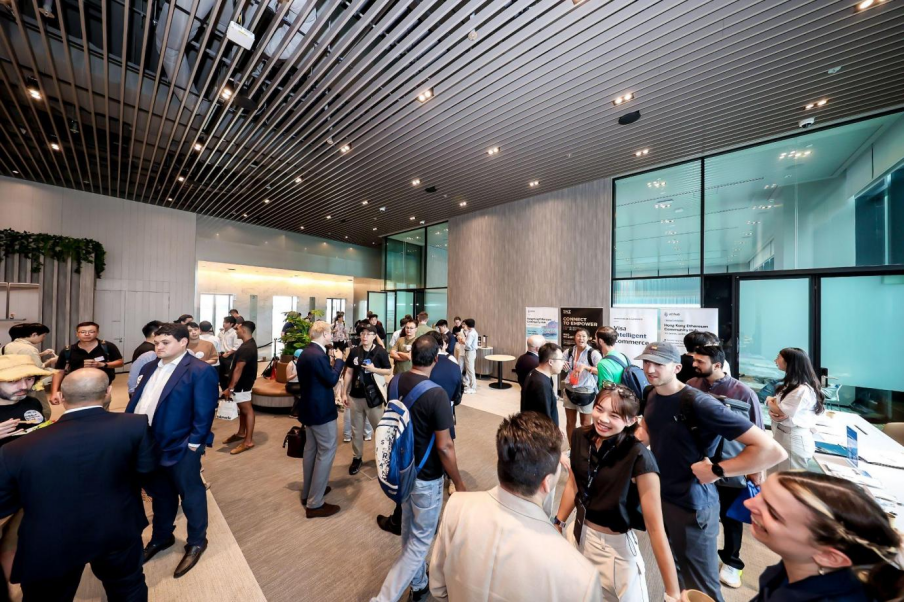
Ethereum Ecosystem Summit was held during TOKEN2049 Singapore. Hosted by Sharplink, Visa, and BlockUnion, and co-hosted by Lido Institutional and ETH HK Hub, the summit brought together core builders from the global Ethereum ecosystem, representatives of financial institutions, and industry leaders to engage in in-depth discussions on institutional-grade infrastructure, stablecoin payments, asset tokenization, agentic finance, and global ecosystem collaboration.
The summit received over 1,800 registrations, making it one of the most closely watched side events during TOKEN2049 Singapore. Key players from Ethereum protocol research and development, staking services, payment networks, asset management, digital asset custody, and application innovation gathered on-site to explore the practical pathways for Ethereum's continued evolution from technical infrastructure toward global financial and commercial applications.
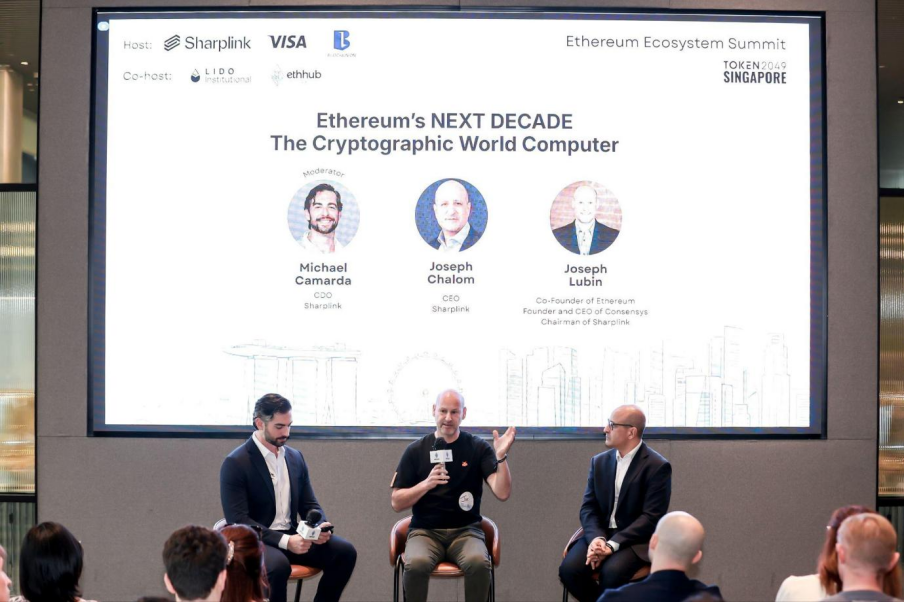
Ethereum's Next Decade: Cryptographic Trust, Financial Convergence, and User Sovereignty
This fireside chat was moderated by Michael Camarda, Chief Development Officer of Sharplink, with Joseph Lubin, Co-founder of Ethereum, Founder and CEO of Consensys, and Chairman of Sharplink, and Joseph Chalom, CEO of Sharplink, exchanging views on Ethereum's technological evolution, financial applications, and user sovereignty over the next decade.
Joseph Lubin stated that Ethereum provides a new technical foundation for global collaboration through decentralized trust. As traditional finance and decentralized finance gradually converge, open, programmable networks are expected to support smoother asset flows and further extend into identity, data, and internet applications. He also introduced the potential role of zero-knowledge proofs (ZK) in real-time verification and cross-network collaboration, noting that these technologies could reduce redundant computation, improve network performance, and provide new pathways for connecting assets and liquidity across different networks.
Joseph Chalom, drawing on his experience with the tokenization of the BUIDL fund, explained the practical significance of credible neutrality, openness, and decentralization for financial institutions. He pointed out that when institutions adjust their underlying infrastructure, they need to build confidence in the stability of operating rules, network availability, and long-term access capabilities.
Regarding future growth, both guests emphasized the importance of real-world applications and user experience. Chalom stated that stablecoins and tokenized products need to enter real trading and fund management processes to continuously generate liquidity. Agents, meanwhile, should have clear permissions, persistent identity, and transparent execution mechanisms, so that rules set by users can be enforced through code. Lubin, drawing on MetaMask's development direction, shared the connections between self-custody, payments, asset management, and delegated authorization. He believes that wallets are expected to evolve into application gateways that integrate personal finance, identity, and data management, further enhancing users' control over digital assets and online activities.
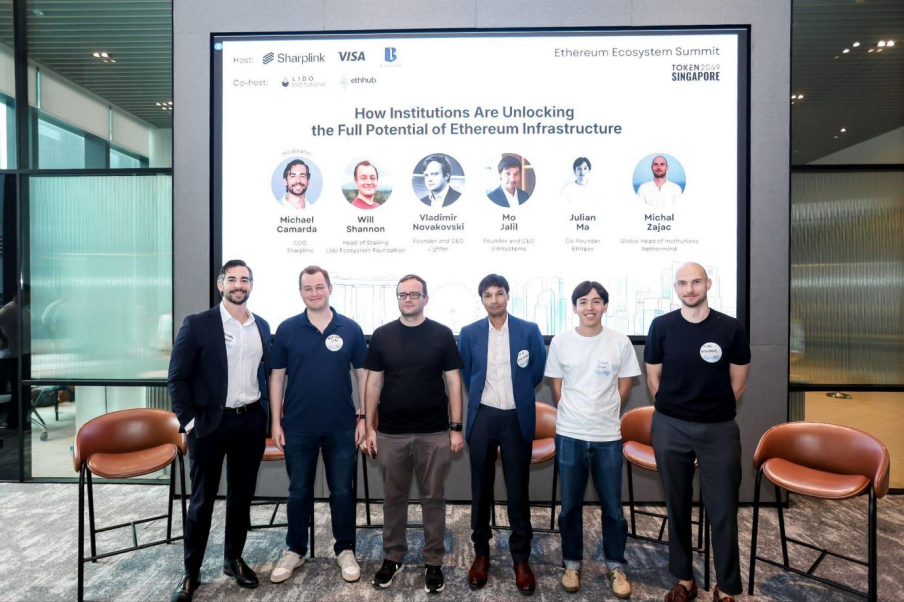
Institutional-Grade Infrastructure: Connecting Protocol Innovation with Real Business Needs
This panel was moderated by Michael Camarda, Chief Development Officer of Sharplink, and focused on the protocol capabilities, privacy protection, staking services, and system access required for institutional adoption of Ethereum. The panel also discussed long-term directions including privacy protection, post-quantum security, and mainnet scaling, emphasizing that institutional adoption requires protocol capabilities, risk control, and system compatibility to develop in tandem.
Julian Ma, Co-founder of Ethlabs, explained that Ethlabs is committed to bringing core protocol research and development closer to the actual needs of application teams and institutions, with a focus on shortening transaction confirmation times, improving interoperability efficiency between the mainnet and Layer 2 networks, and enhancing the cross-network asset transfer experience.
Mo Jalil, Co-founder and CEO of EthSystems, pointed out that confidentiality and compliance controls are important requirements for large institutions entering public chains. EthSystems, through engagement with banks, asset management institutions, and regulators, translates these requirements into open-source tools, technical specifications, and reusable privacy infrastructure.
Vladimir Novakovski, Founder and CEO of Lighter, drawing on Lighter's practices, elaborated on the relationship between Ethereum's security foundation and high-performance trading systems. He stated that Layer 2 networks can handle high-frequency trade execution while submitting cryptographic proofs of transaction correctness to Ethereum, providing verifiable guarantees for execution quality.
Will Shannon, Head of Staking at the Lido Ecosystem Foundation, shared changes in institutional staking due diligence. Institutions' evaluation scope is further extending to node operator distribution, client diversity, infrastructure resilience, liquidity, and custody access. Lido's stVaults provide institutions with more flexible node selection and independent accounting methods, while retaining the option to access stETH liquidity and DeFi applications.
Michal Zajac, Global Head of Institutional Business at Nethermind, approached from the perspective of connecting institutions' internal systems with blockchains, introducing technical practices such as pre-transaction checks, control over transaction fee payment recipients, and reporting on-chain transaction information to institutions' internal systems. He also noted that tokenized assets need standardized information that existing trading systems can recognize in order to reduce the complexity of institutional onboarding and operations.
Agentic Payments: Programmable Money, Trusted Authorization, and Financial Services Restructuring
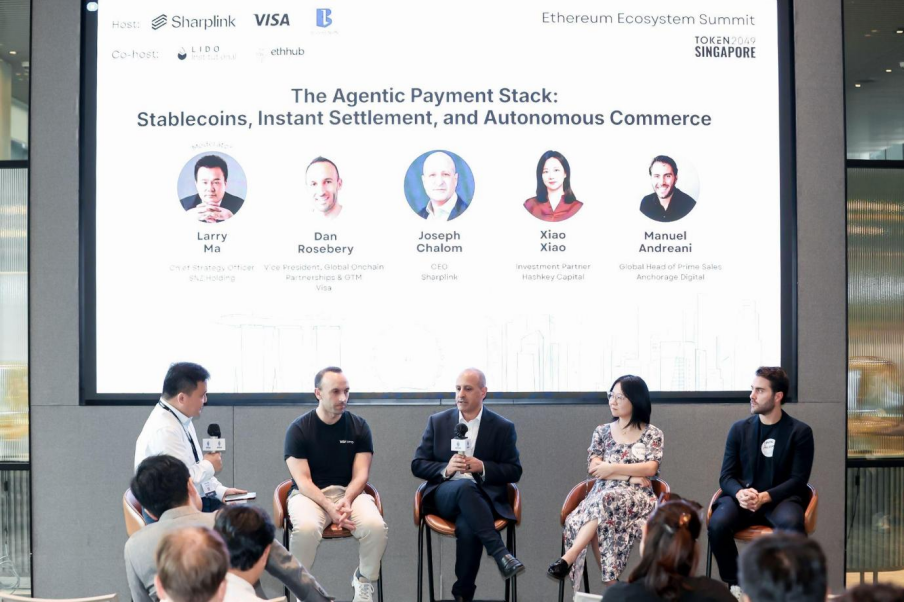
This panel was moderated by Larry Ma, Chief Strategy Officer of SNZ Holding, exploring how stablecoins, instant settlement, and agentic technology jointly drive the development of financial services and commercial transactions. Regarding the adoption sequence for enterprise and individual scenarios, guests offered different judgments, while collectively focusing on a core question: how to establish clear authorization boundaries and accountability mechanisms while improving execution efficiency.
Joseph Chalom believes that stablecoins provide programmable money that operates around the clock, tokenized assets expand the use cases for assets, on-chain trading platforms provide new space for financial activity, and agents are expected to become a continuous automated execution layer spanning these components. He particularly noted that improved financial knowledge and continuous attention capabilities will enable individual users to more proactively manage cash, investment portfolios, and other financial needs.
Dan Rosebery of Visa emphasized that in agentic commerce, trust, clear permission settings, and payment authorization are crucial, while existing payment networks also play an important role in helping merchants accept relevant payments.
Manuel Andreani, Global Head of Prime Sales at Anchorage Digital, proposed that agents in institutional scenarios need to operate under clear compliance, risk, and settlement rules, with complete audit trails preserved. "Know Your Agent" (KYA) will become a foundational capability worth watching. As execution processes become increasingly automated, financial institutions' value in rule enforcement, accountability, and client relationships will continue to persist.
Xiao Xiao, Investment Partner at HashKey Capital, believes that corporate treasury management and cross-border payments have relatively clear application needs, and programmable payments are expected to reduce friction in traditional processes. At the same time, agent identity verification, permission management, anti-fraud, and risk control will bring new opportunities for infrastructure development.
Lido: Extending from Liquid Staking to More Resilient On-Chain Lending Infrastructure
Isidoros Passadis, Chief Staking Officer of the Lido Ecosystem Foundation, in his keynote speech introduced Lido's product expansion direction and the newly announced Lido Lend. He stated that Lido's long-term vision is to support Ethereum in becoming the core economic and collaboration layer of the internet, and to further expand open, resilient on-chain financial infrastructure on the basis of liquid staking and Lido Earn.
Passadis introduced that Lido Lend will focus on specific scenarios such as looping, targeting conservative lenders and professional borrowers, aiming to provide more reliable exit paths and mitigate the impact of market volatility on borrowers. The solution is based on a modified Morpho Blue fork and plans to introduce additional safety mechanisms, complementing existing lending markets and the Lido product ecosystem. Its launch and acceptance by Lido DAO still require relevant governance votes. He also invited institutions to provide feedback and jointly refine the solution by combining business needs with regulatory requirements.

Institutional Adoption: Driving Tokenization and On-Chain Asset Management Through Product Utility
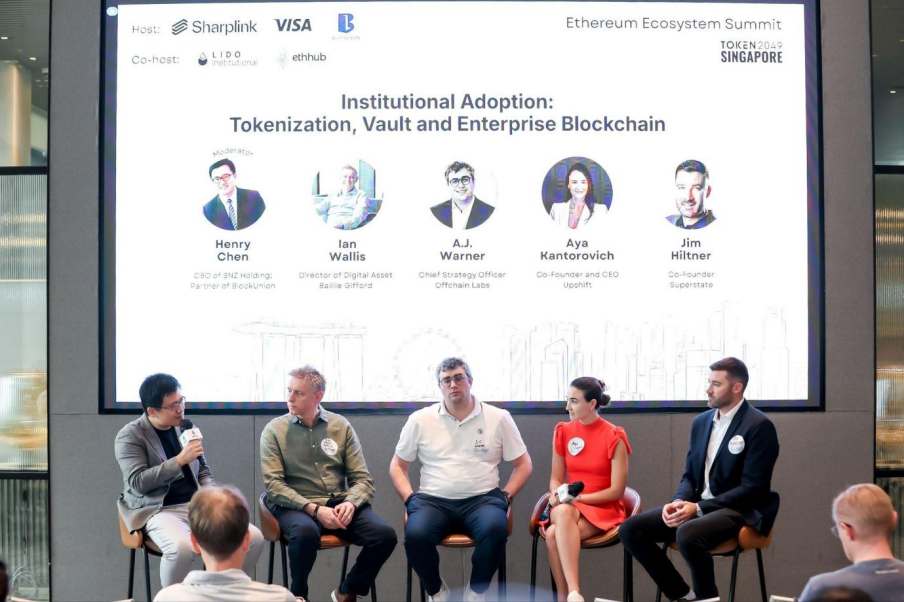
This panel was moderated by Henry Chen, Chief Business Officer of SNZ Holding and Partner at BlockUnion, discussing asset tokenization, on-chain asset management vaults, and enterprise blockchain development. Regarding native issuance versus wrapped tokenization, guests discussed the trade-offs in legal rights, market access, privacy, and issuance efficiency.
Ian Wallis, Director of Digital Assets at Baillie Gifford, pointed out that on-chain funds need to be operated as continuously iterating software products. Tokenization should bring tangible improvements to investors, including more efficient subscriptions and redemptions, secondary market liquidity, and the ability to use fund shares as collateral. Drawing on Baillie Gifford's practices, he introduced a product approach that starts from client needs and explores the correspondence between native on-chain funds and direct legal rights.
Jim Hiltner, Co-founder of Superstate, noted from the perspective of issuance and distribution that stablecoins are becoming a funding gateway for some investors to purchase financial assets. Through tokenization, asset management institutions can reach new investor groups and enable funds, stocks, and bonds to further participate in lending, trading, and other on-chain applications. Native tokenization is also expected to strengthen the direct connection between issuers and investors.
Aya Kantorovich, Co-founder and CEO of Upshift, shared the development of on-chain vaults and strategy management. As demand expands from overcollateralized lending to treasuries, equities, debt instruments, and thematic asset portfolios, vaults are becoming increasingly customized. She believes that crypto-native strategy management teams and traditional asset management institutions will engage in closer collaboration, and traditional asset management institutions will gradually participate in on-chain strategy management. She also emphasized that products still require ongoing management after going on-chain and need to be integrated into different ecosystems.
A.J. Warner, Chief Strategy Officer of Offchain Labs, drawing on Offchain Labs' collaboration experience with Robinhood, explained how enterprise blockchains can be designed around transactions, privacy, compliance, and product experience. He emphasized that whether institutions build independent networks should be determined by business objectives; for some asset issuance scenarios, shared infrastructure, liquidity, and composability may be more valuable.
Academic Research: Understanding Digital Assets Through Market Behavior, Risk Correlation, and Listing Signals
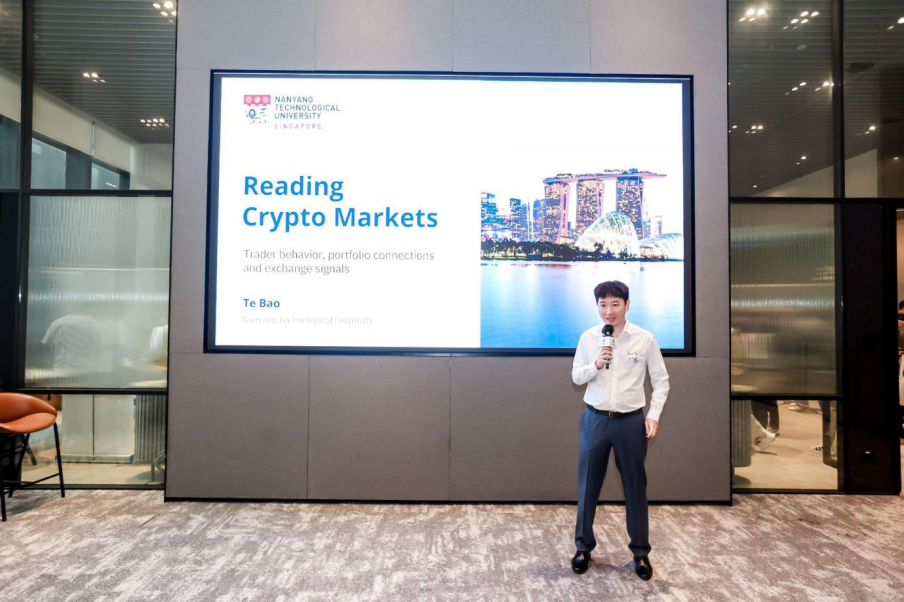
Bao Te, Associate Professor at the School of Social Sciences and Assistant Dean of the Graduate College at Nanyang Technological University, in his keynote speech introduced three studies on crypto markets, covering herd behavior in the NFT market, asset risk correlation, and trading platform listing premiums.
He discussed the impact of major news and market signals on investor behavior, and compared the differences between crypto assets and traditional stocks in terms of risk networks and risk-adjusted returns. In addition, he shared research findings on abnormal returns when assets first list on higher-rated trading platforms and the subsequent weakening of listing premiums, providing references for understanding digital asset pricing and portfolio allocation.
Global Ecosystem Collaboration: Expanding the Application Base Through Devcon and India's Developer Community
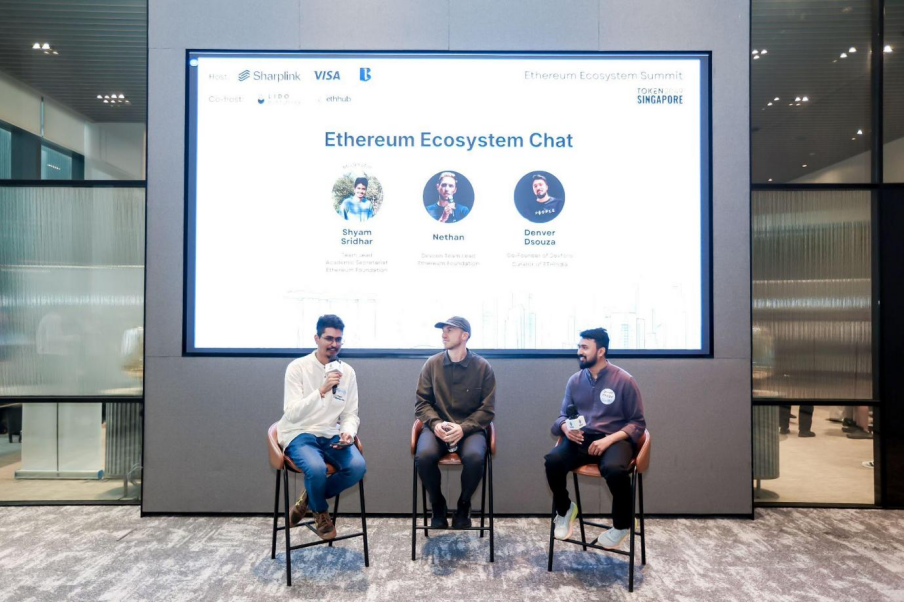
This ecosystem exchange was moderated by Shyam Sridhar, Head of Academic Affairs at the Ethereum Foundation, focusing on Devcon and India's ecosystem development. Nethan, Head of the Devcon team at the Ethereum Foundation, stated that India's active developer and user community is an important foundation for bringing Devcon to the region. He hopes the conference will enhance the public's and regulators' understanding of Ethereum's practical applications and support developers in continuing to build locally.
Denver Dsouza, Co-founder of Devfolio and curator of ETHIndia, introduced that the Indian community has accumulated a deep foundation through hackathons and developer events, with asset tokenization and institutional applications becoming new areas of focus. ETHIndia will connect local builders, the international community, and institutional participants, promoting exchanges and collaboration, and deepening all parties' understanding of Ethereum as a neutral, trustworthy technological foundation.
Connecting Asia with the Global Ecosystem, Advancing Long-Term Collaboration
The discussions at this summit covered protocol research and development, institutional onboarding, financial products, payment applications, and community building, showcasing the increasingly close connections among different participants in the Ethereum ecosystem. From improving infrastructure performance and privacy capabilities, to enhancing the practical utility of tokenized assets, to establishing authorization and trust mechanisms for agentic finance, all segments revolved around specific business needs and long-term development.
BlockUnion as the host and ETH HK Hub as the co-host further connected Asia with the global Ethereum ecosystem through this summit, providing a platform for exchange and collaboration among traditional financial institutions, technical teams, and entrepreneurs. The Hub will continue to support Ethereum technology research, institutional adoption, and real-world application development through cross-regional events, community building, and resource connections.
About BlockUnion
BlockUnion (HK) Limited ("BlockUnion") is a leading Web3 ecosystem platform in Asia, with "Connect to Empower" as its core philosophy. With over a decade of investment and project experience in the Ethereum and Web3 ecosystem, as well as long-term cultivation in Hong Kong and pan-Asian markets, BlockUnion focuses on community connection and aggregation, ecosystem service acceleration, technical research and consulting, and innovative investment incubation.
BlockUnion serves global Web3 ecosystems expanding into Asia, enterprises and financial institutions applying blockchain and digital assets, as well as developer and venture capital communities in the region. We have long supported the ecosystem development of Chainlink and Xinghuo BIF, and launched the Hong Kong Ethereum Community Hub (ETH HK Hub) with support from the Ethereum Foundation. Our team combines institutional capital markets experience with crypto-native backgrounds, helping partners connect with communities, ecosystems, capital, and policy.
About ETH HK Hub
ETH HK Hub is Asia's first physical Ethereum community Hub, supported by the Ethereum Foundation and jointly operated by BlockUnion, SNZ, and ETHTAO. The Hub is dedicated to connecting East and West, bridging Web2 and Web3, and driving the long-term growth and adoption of the Ethereum ecosystem through community building and resource coordination. For more information, please visit https://ethhkhub.com.
About Sharplink
Sharplink (NASDAQ: SBET) is a leading institutional-grade Ethereum treasury platform, designed to provide public market investors with smarter, more capital-efficient ETH exposure. Ethereum hosts the settlement activity for the majority of the world's stablecoins, tokenized real-world assets, and decentralized finance. Sharplink was founded in 2019 and is headquartered in Miami, Florida, USA. For more information, please visit https://www.sharplink.com/.
About Lido
Lido is an open-source liquid staking middleware that allows users to participate in blockchain network validation and earn staking rewards. Lido is committed to enabling as many users as possible to participate in staking by connecting users with node operators, allowing users to stake digital assets without maintaining their own hardware. Users can also use various third-party DeFi applications that have independently integrated and support the relevant liquid staking tokens. For more information, please visit https://lido.fi.