




Beyond the Hype: Inside the Hidden Life of Crypto's Most Powerful Figure


- Core Viewpoint: Binance founder CZ went from aggressively betting on Bitcoin to building the world's largest exchange, secured political asylum in the UAE through jurisdictional arbitrage, and after his release from prison obtained a pardon through a business alliance between the Trump family and UAE elites. His journey encapsulates the core issue of blurring boundaries between capital, regulation, and political power in the crypto industry.
- Key Elements:
- CZ's net worth is estimated at $114 billion. Binance's early no-KYC policy turned the platform into a channel for money laundering and sanctions evasion, ultimately leading to a guilty plea and a $4.3 billion fine.
- Binance established a business relationship with World Liberty Financial, founded by the Trump family, which generated $799 million in revenue for Trump—his single most profitable asset.
- MGX invested $2 billion in Binance and paid using the USD1 stablecoin issued by World Liberty. At the time of the transaction, USD1 was completely unverified, prompting Democratic senators to denounce it as "stablecoin corruption."
- The UAE has no extradition treaty with the United States. CZ obtained UAE citizenship and a golden visa, receiving royal-level treatment and political protection in Abu Dhabi.
- Binance recently faced renewed compliance controversy: four compliance officers were fired or suspended after reporting nearly $2 billion in flows to Iran-linked entities; two employees were briefly detained in the UAE.
- Trump pardoned CZ in October 2025. Binance had previously paid $2.1 million to a lobbying firm with close ties to the Trump family for "executive relief."
This article is from: The New York Times
Compiled by Odaily (@OdailyChina); Translator | Moni
Editor's Note: From aggressive bets in Bitcoin's early days to founding the world's largest cryptocurrency exchange; from Binance's compliance troubles and U.S. judicial proceedings to settling in the UAE after prison and navigating between politics, business, and crypto capital—CZ's life trajectory has almost encapsulated the dramatic transformations of the crypto industry over the past decade and more.
This article is not merely the story of a crypto billionaire's wealth. CZ repeatedly emphasizes that he is an "ordinary person" and a "rule-follower," yet his experiences constantly create tension with this self-description: Binance's aggressive exploration of KYC and regulatory boundaries in its early days, the life-and-death battle with FTX, the special treatment he received in the UAE, and his later business intersections with the Trump family and Emirati elites—all point to the same question: As the crypto industry gradually moves from the margins to the mainstream, where exactly is the boundary between capital, regulation, and political power?
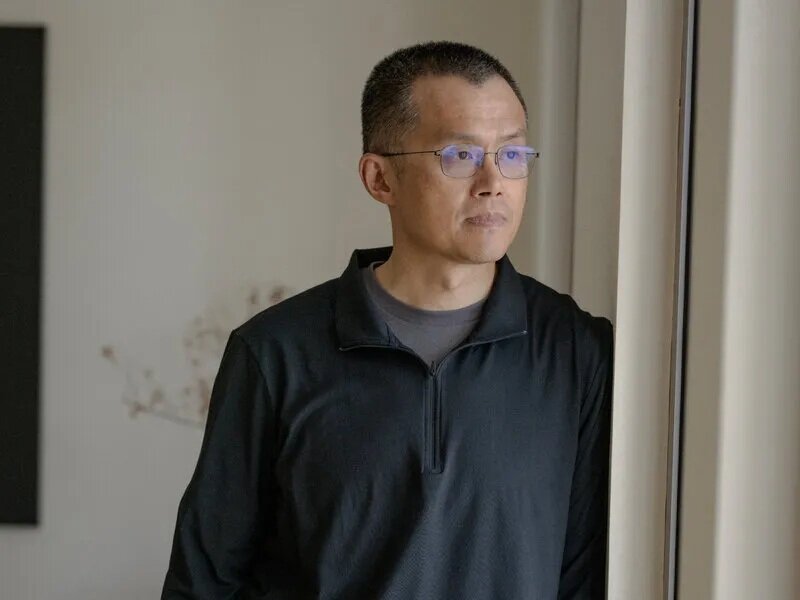
On a morning in June, crypto mogul CZ arrived at the St. Regis Hotel in Abu Dhabi in a white Nissan SUV. CZ is the richest man in the crypto industry, with an estimated net worth of $114 billion. He lives in a villa near the St. Regis Hotel in Abu Dhabi—a nine-bedroom home with four bodyguards, a chef, and a yacht named "Da Moon"—but he also likes to portray himself as an "ordinary person," a phrase he frequently uses to describe himself.
Outside the St. Regis, CZ sat in the driver's seat of the Nissan, with his iPhone mounted on the windshield, looking like the world's wealthiest Uber driver.
But CZ is not an ordinary person.
Not long ago, the United States filed criminal charges against him for his management of Binance. U.S. court documents described Binance as a haven for Russian money launderers, Iran sanctions evaders, and "ISIS" terrorists. CZ pleaded guilty but preserved his wealth. After serving four months, he returned to Abu Dhabi, still Binance's largest shareholder and the industry's most influential figure.
Now 49, CZ acts like a head of state, shuttling across Asia on private jets, advising governments on crypto regulation. His visits to Islamabad or Manila are often followed by news of new regulatory breakthroughs for Binance. At home, one of his two dogs is a Taigan—an elegant Central Asian breed often compared to a gazelle—a gift from the President of Kyrgyzstan, with whom CZ went skiing in February. The president has a keen interest in cryptocurrency.
"He actually wanted to give me a tent, a full-size tent," CZ said. "I said no tent, but then he insisted on giving me this dog."
Among CZ's most influential allies are the family that rules the United Arab Emirates, who want to leverage CZ's power to build a tech powerhouse in the desert, and the Trump family.
Last year, Binance established a business relationship with World Liberty Financial, a crypto startup founded by President Trump and his three sons. Last year, World Liberty generated $799 million in revenue for Trump—his most profitable single asset, more lucrative than his real estate portfolio or social media business.
In October last year, Trump pardoned CZ. Known in the industry as "CZ," he typically avoids journalists, but this year he has given multiple interviews, hoping to tell the story of his career at Binance in a more favorable light.
Tall and lean with short hair, CZ doesn't carry the fraternity-style swagger of many of his crypto industry peers. He comes across as polite and focused, though his range of interests is almost comically narrow. This year, he self-published a memoir, "Freedom of Money," in which he recounts getting a private after-hours tour of the Louvre—an experience that left him cold. He wrote that the guide's explanations had the effect of "playing piano to a cow." For years, CZ's true calling has been what scholars call "jurisdictional arbitrage"—continually moving from one country to another, seeking legal frameworks flexible enough to accommodate his risk appetite and growth ambitions. In Abu Dhabi, he may have found an ideal operating base.
Driving into Abu Dhabi city, CZ chatted casually along the way, occasionally pausing to ask his bodyguard for directions, passing a series of grand mansions en route to the Presidential Palace, whose striking white dome resembles the Taj Mahal.
CZ grew excited.
During a visit to Abu Dhabi last year, Trump called Sheikh Mohamed bin Zayed Al Nahyan "a very strong person" and "one of the few people who are truly visionary." Zach Witkoff, son of a senior Trump advisor, was even more blunt at a crypto conference in Dubai last May:
"We really need to learn from His Highness and the UAE's approach. They are an amazing example of how to lead a country through innovation while maintaining family values."
CZ already lives in the future these people aspire to—ensconced in an elite circle where monarchs and billionaires coexist harmoniously. He left Qasr Al Watan after attending a private meeting at the nearby Mandarin Oriental Emirates Palace Hotel. Attendees included business figures such as hedge fund founder Ray Dalio and Japanese billionaire Masayoshi Son.
CZ was sitting in the audience when he noticed someone bending down to speak with him—it was Sheikh Mohamed himself, who wanted to know how CZ had been and whether he could offer any help.
"This is the king," CZ said. "He's right there next to you."
CZ's Life in Abu Dhabi, Early Years, Binance's Rise, and Compliance Controversies

One day earlier this year, CZ was working from bed—due to chronic pain, he often conducts business lying on his back—when suddenly the windows began to shake. He said he got up and walked to the balcony, where he saw a trail of smoke in the sky.
CZ lives on Saadiyat Island in Abu Dhabi, an enclave in the Persian Gulf across the sea from Iran. At the time, Iran had just fired a missile at the UAE—the beginning of a geopolitical crisis that would destabilize the region—but CZ wasn't particularly worried. He went back to bed and continued working.
"More people die in traffic accidents than from missiles," he said. "This place is very well protected."
Before settling in the UAE, CZ was born in China and moved to Canada with his family at age 12. After attending McGill University, he held various tech industry jobs, moving between New York, China, and Japan. In July 2013, during a poker game in Shanghai, a colleague suggested he look into "this new thing called Bitcoin"—a borderless technology that perfectly matched CZ's borderless lifestyle.
After months of research, CZ made an aggressive bet. He sold the family home—a three-bedroom apartment in Shanghai where he and his wife were raising two children—and put all $900,000 from the sale into Bitcoin. It was a high-risk move, but CZ wasn't worried. He figured that even if Bitcoin crashed, he could easily find a well-paying job in traditional finance.
In the 2010s, the crypto industry grew rapidly, with hundreds of new tokens emerging. But the platforms trading these tokens operated chaotically and were vulnerable to hacking. In July 2017, CZ founded Binance. Within months, it became the world's largest cryptocurrency exchange.
Binance's success was built on two key insights—
The first insight: Crypto investors as a group are nearly addicted to risk. They would never be satisfied with simply exchanging dollars or yen for equivalent cryptocurrency. For years, Binance operated a margin trading business: traders could borrow money to make high-risk, high-reward bets on Bitcoin and other popular tokens.
The second insight was simpler but had far more profound implications: Many crypto investors didn't want to reveal their identities, and Binance didn't ask them to.
For its first four years, Binance allowed customers to open accounts without even providing the most basic KYC—the "Know Your Customer" information that traditional businesses require to prevent financial crime. Binance wasn't the only exchange offering such high-risk services, but CZ's execution surpassed all competitors.
"There used to be a lot of MySpaces in the exchange world, and he built the Facebook," said Austin Campbell, founder of a crypto consulting firm.
What ultimately emerged, however, was an extraordinarily profitable unregulated market: a platform where unreviewed investment products were open to unreviewed traders. As the market boomed, Binance collected fees on every transaction, and according to "Freedom of Money," the company quickly reached $1 billion in profits.
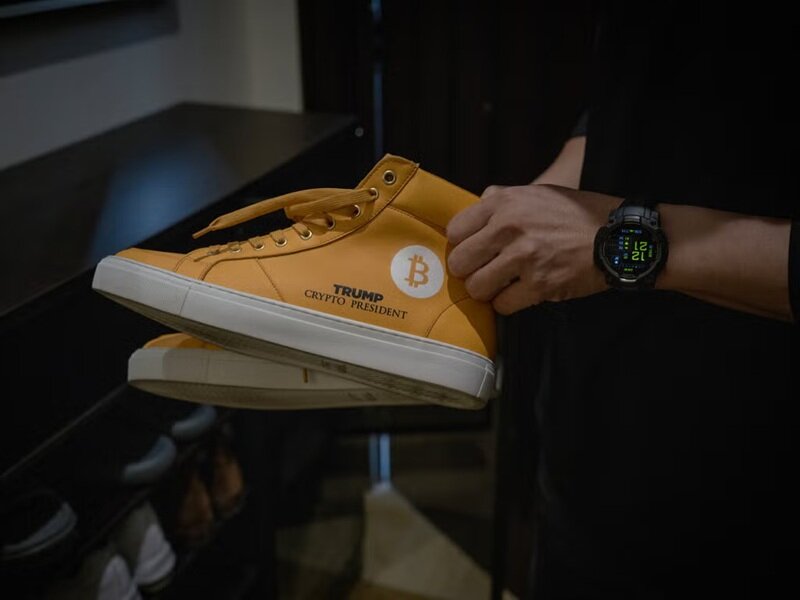
CZ also became a crypto industry celebrity, but even as he joined the ranks of a small group of super-wealthy entrepreneurs with astonishing political influence, he was never widely understood outside the industry. When recalling his most controversial moments, CZ describes himself as a bystander—a crypto geek overwhelmed by success, a naive outsider who somehow became a Bond villain.
On a day in late June, CZ sat in his kitchen for an interview and said that during Binance's early explosive growth years, he never really thought about breaking the law. At the time, the company's lax controls allowed wave after wave of bad actors to launder money. "It was just because I lacked experience in that area," he said. "I'm a tech person."
But this image doesn't match the evidence U.S. prosecutors gathered during their investigation of Binance. In court, prosecutors cited a reprimand CZ gave to a subordinate: "It's better to ask for forgiveness than permission." According to legal documents, CZ privately discussed how to conceal the fact that Binance served American users, even though Binance was not licensed to operate in the United States. In Abu Dhabi, CZ describes himself as a "rule-follower."
Yet it is abundantly clear that during a critical period—when a new generation of investors' habits were being formed and the rules themselves were quite loose—he made strategic choices to push legal boundaries to the limit.
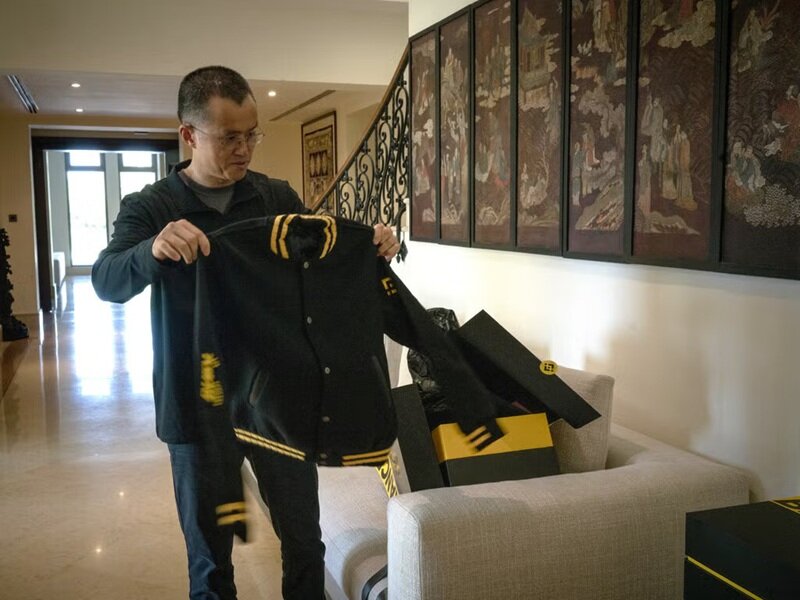
Binance's Move to the UAE, CZ's Rivalry with FTX Founder Sam Bankman-Fried, and FTX's Collapse
In 2021, after years of moving around Asia, CZ came to the UAE. He had briefly stayed in Japan without success; Singapore also failed to become a base because it was difficult to obtain a work visa there. Then CZ's friend Gabriel Abed made a suggestion: go check out Dubai. Abed was a businessman who had served as Barbados' ambassador to the UAE, and CZ quickly saw how the Emiratis treated the wealthy and powerful.
On a Saturday morning in October, CZ arrived in Dubai. Hours later, a government official, Omar Sultan Al Olama, came to visit and offered CZ what is known as a "golden visa"—granting holders 10 years of residency free from bureaucratic hassles. A doctor was then called to perform the blood test required of all visa holders. What normally takes weeks to complete, CZ had approved in less than 12 hours. The friendly reception left a deep impression on CZ.
"By my fourth day in Dubai, I had looked at two properties," he told me. "I bought the second one."
By the end of that year, Binance had signed a memorandum of understanding with the local government to jointly develop crypto operating rules, and dispatched three employees to help build the regulatory framework. A draft was completed in January 2022 and signed into law just weeks later.
"When you're the captain of a ship heading due north, the UAE wants you to join their fleet," Abed said. "They rallied around CZ from day one."
Not everyone receives such generous treatment in the UAE, but for CZ, it was the beginning of a comfortable new life.
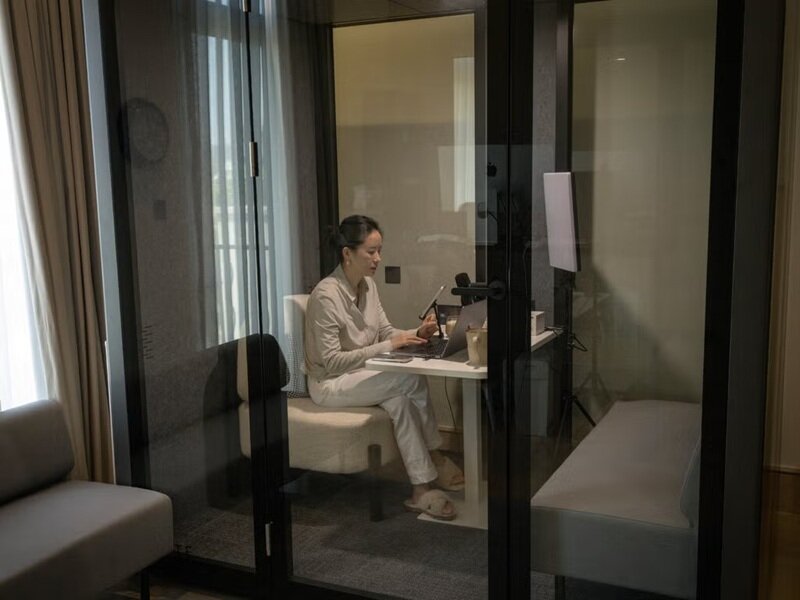
CZ's older children attend university in the United States, while he and He Yi are raising a young family together in the UAE. He Yi is CZ's partner and became one of two co-CEOs who took over after CZ was forced to step back from company operations.
CZ gradually entered an elite world of billionaire social networks. He befriended a group of UAE leaders interested in technology—whom he calls "crypto sheikhs." Eventually, he made the acquaintance of Sheikh Tahnoon bin Zayed Al Nahyan, brother of Sheikh Mohamed. A jiu-jitsu enthusiast, Sheikh Tahnoon frequently hosts powerful political and business figures at his palace.
In royal dinner circles, CZ is treated as a VIP. "We'd think, 'How should we arrange the seating?'" he said. "Just sit anywhere, it doesn't matter."
During these early interactions, the sheikhs constantly pitched the UAE to CZ, asking how they could help him. Soon, CZ began promoting the country's advantages to a broader circle of billionaires. He encouraged AI mogul and OpenAI founder Sam Altman to establish a corporate entity in the UAE and warned him that other countries would be unfriendly to him. "You'll run into a lot of regulatory problems," CZ once told Altman over coffee.
CZ is no stranger to the dangers of emerging industries.
When he came to the UAE, he was locked in fierce competition with a young entrepreneur—Sam Bankman-Fried, founder of rival exchange FTX. SBF's parents were Stanford Law School professors, and in many ways he was the opposite of CZ: SBF was more of a complete establishment insider, whose personal connections and proximity to American political elites paved his path to the top of the industry.
"He had some moves I didn't have," CZ wrote in his memoir. SBF would poach Binance employees, offering them three to five times their original salaries. CZ also heard that SBF was spreading negative stories about him in Washington.
In November 2022, a CoinDesk report raised questions about FTX's financial stability. CZ was in Dubai at the time, about to have drinks with Abed, when he decided to weigh in on Twitter with a brief, merciless statement: selling his $500 million worth of FTT.
The post quickly triggered market panic. Anxious investors rushed to withdraw funds from FTX, but FTX simply didn't have enough money. SBF had misappropriated $8 billion from customers. He had no choice but to seek a bailout, and at that time, only one person in the entire crypto industry had the resources to save him. CZ announced the acquisition of FTX two days after his post, but withdrew from the deal a day later, pushing FTX further into crisis.
The whole affair looked like a masterful corporate war—one observer called it "blood sport."
Within six weeks, SBF was arrested at his apartment in the Bahamas and extradited to the United States. Ultimately, he was sentenced to 25 years in prison for fraud.
CZ says he never intended to destroy FTX.
CZ explained that he had originally hoped to gradually sell off his FTT holdings over several months. "I had no intention of crashing them," CZ said. "We lost $500 million."
SBF saw it differently. "CZ played me," SBF said at the time. "And played it beautifully."
CZ Chooses the UAE as a Safe Haven, Faces U.S. Justice Investigation, Plea Deal, and 4-Month Prison Sentence

After several years in Dubai, CZ moved to Abu Dhabi. The country levies no personal income tax and is considered very safe—especially as crypto investors in Europe and the United States began becoming kidnapping targets. But for CZ, who had just watched his archrival be pursued across borders, the UAE had another important advantage: no extradition treaty with the United States.
CZ recalled that around late 2022 or early 2023, a member of the UAE royal family asked him at dinner whether he wanted Emirati citizenship. He submitted some paperwork and waited. Months later, a government envoy came to his home carrying a box containing passports for CZ and his family.
"The UAE will never extradite its own citizens," CZ told me. "That's very important."
CZ indeed had reason to be wary. The noose was tightening around Binance. U.S. prosecutors were gathering evidence that Binance's lax protocols had enabled scammers, hackers, and sanctions evaders to move money. According to private chat records obtained, Binance employees discussed the exchange's questionable customers with startling candor.
CZ hired a team of lawyers to negotiate with the U.S. Department of Justice. His new passport gave him considerable leverage. After several years in Dubai, he