




Old Maps Accelerate Obsolescence: Mastercard's $1.8 Billion and the Second Half of Stablecoin Payments


- Core Viewpoint: Mastercard's acquisition of stablecoin payment company BVNK for up to $1.8 billion is not primarily driven by short-term financial returns. Its core strategic intent is to secure a key position and control the critical connecting bridges during the migration from traditional payment networks to stablecoin payment networks, in order to counter the fundamental impact stablecoins have on the existing payment system's profit and power structure.
- Key Elements:
- BVNK's core value lies in its "bridge" capability. It packages and embeds on-chain stablecoin settlement capabilities into the existing payment workflows of enterprises (e.g., payment service providers), connecting the fiat world with the on-chain system.
- Stablecoin payments threaten the business models of traditional card networks, whose profits rely on complex, multi-node cross-border payment networks. Stablecoins could bypass these critical nodes, reshaping the flow of funds.
- The payment industry is collectively making strategic moves. Previous actions like Stripe acquiring Bridge and Visa expanding its partnership with Bridge all aim to connect on-chain assets with merchant networks to prevent being bypassed.
- The demand for high-frequency, automated micropayments between machines in the AI era may be better suited to programmable, 24/7 stablecoin rails, representing a massive incremental market.
- Beyond traditional giants' "track-switching" acquisitions, there exists another development path: starting from natively compliant on-chain platforms (e.g., licensed institutions in Hong Kong) and integrating traditional financial scenarios in reverse.
- The acquisition indicates the industry's competitive focus has shifted from "issuing stablecoins" to "organizing stablecoin payment networks," with the core being the ability to connect accounts, liquidity, use cases, and compliance.
In March 2026, Mastercard announced its acquisition of stablecoin payment company BVNK for up to $1.8 billion, with the transaction expected to be completed by the end of the year.
Looking solely at the financials, this deal is not cheap. BVNK processed $30 billion in stablecoin payment volume in 2025, but its annual revenue was only $40 million. From this perspective, the valuation is clearly difficult to justify using traditional revenue multiples.
Mastercard is obviously not chasing BVNK's current meager profits.
What it's buying is BVNK's position in the new generation of payment networks. As stablecoins begin to evolve from being trading tools within the Crypto market to gradually entering real-world cross-border payments, corporate settlements, and global fund transfer systems, what is truly scarce is no longer just "who can issue a new stablecoin," but rather who can truly connect fiat accounts, payment institutions, merchant needs, and on-chain settlement rails.
Whoever controls this bridge connection will have a greater chance of controlling the "Strait of Hormuz" of this global payment system in advance, during the migration from the old payment network to the new one.
1. Why BVNK, and Why Now?
To understand the significance of this acquisition, we must first see clearly what BVNK actually does.
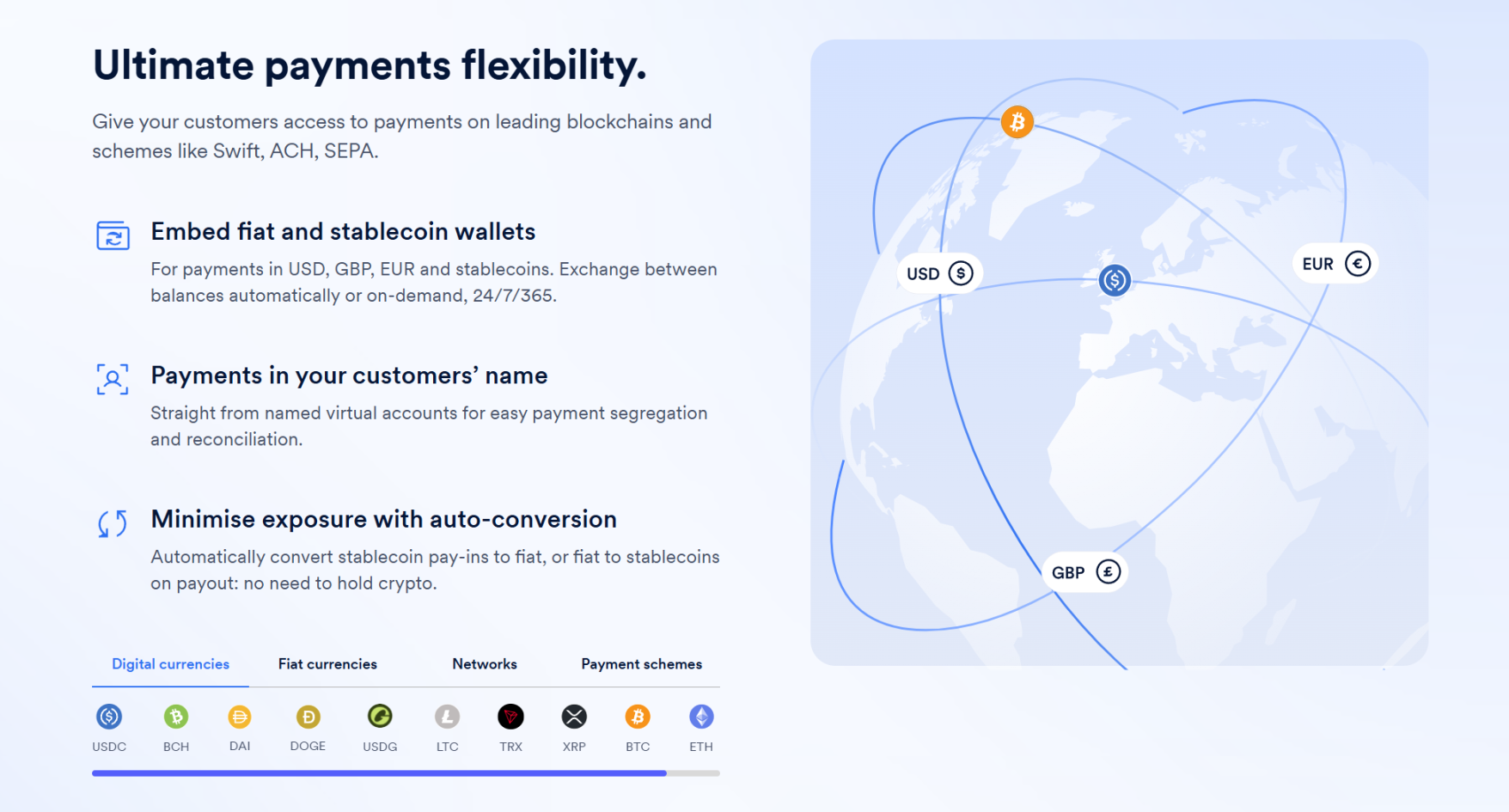
Strictly speaking, BVNK is not a typical Crypto company. Its core asset lies not in issuing stablecoins, nor in providing some crypto product to retail users, but in embedding on-chain settlement capabilities into real-world commercial payment networks.
In other words, it is more like a bridge, connecting the fiat payment world on one end and the on-chain stablecoin system on the other.
This also determines that its customer profile consists of fintech companies, payment service providers (PSPs), and cross-border payment enterprises like Worldpay, Deel, and Flywire. These entities themselves have substantial real-world global payment and collection needs, requiring faster and lower-cost fund transfers, but they often lack the capability to directly interface with the underlying on-chain stablecoin infrastructure—whether it's wallet systems, on-chain routing, stablecoin receiving and sending, exchange processes, compliance risk control, or system integration. These are not areas most companies are willing to build and maintain themselves.
What BVNK does is precisely encapsulate this layer of complexity, providing a complete set of solutions centered around stablecoin payments and collections, and embedding these capabilities into enterprises' existing payment processes. In other words, it sells the interface capability that allows enterprises to use stablecoin rails.
Source: BVNK
And this is precisely what Mastercard wants most.
Many people discussing stablecoin payments tend to focus on surface-level advantages like "faster" and "cheaper." But for Mastercard, Visa, banks, and cross-border payment networks, the real challenge posed by stablecoins is not just "the emergence of a faster, cheaper payment method," but the possibility of the payment network itself beginning to migrate.
In the past, a large portion of global cross-border payments traveled through correspondent banking networks, essentially a global fund transfer network composed of layers of bank account relationships, clearing channels, and local financial institutions. The advantage of this system lies in its maturity and wide coverage, but the problems are its long paths, numerous nodes, slow settlement, and high costs, especially since almost every layer in the cross-border chain extracts its own profits.
For traditional banks and payment institutions, this "slow and expensive" nature is precisely the source of profit. As long as the chain is sufficiently complex, cross-border payments naturally generate handling fees, foreign exchange spreads, position occupancy costs, clearing service fees, and a series of additional revenues surrounding corporate treasury management.
In other words, the traditional cross-border payment system never earned money just from "transferring funds"; it earned from the entire set of fund organization rights formed around the act of transfer. This is the truly sensitive point of this competition. Once stablecoins begin to enter real commercial payment scenarios, the core value links in this old system will face a reshuffle:
The positions once firmly held by banks, card networks, and traditional payment networks need to reconsider who will connect merchants and funds, who will organize cross-border clearing, and who will control the payment entry and liquidity exit?
From this perspective, the impact of stablecoins on card networks is actually fatal. After all, Mastercard's business model is indeed built on its control over the connection between global merchants and the card issuance system, and its position as a key node in cross-regional, cross-currency, cross-institutional payment flows that is not easily bypassed.
Therefore, Mastercard's purchase of BVNK is essentially buying a "bridge" connecting the old world and the new rails—it's not after immediate profits, but rather about controlling that most critical "Strait of Hormuz" in advance, before stablecoin payments gradually become mainstream, to completely eliminate the possibility of "bypassing the card network."
This is also why Mastercard itself admitted on its investor call that building similar blockchain financial capabilities in-house would require "a considerable amount of time."
In other words, buying is faster than building.
Source: BVNK Blog
Ultimately, if this deal is viewed solely through the traditional M&A lens of revenue multiples, profit margins, and maturity, BVNK can hardly support such a price. But if understood as a preemptive move for a future payment landscape, everything falls into place.
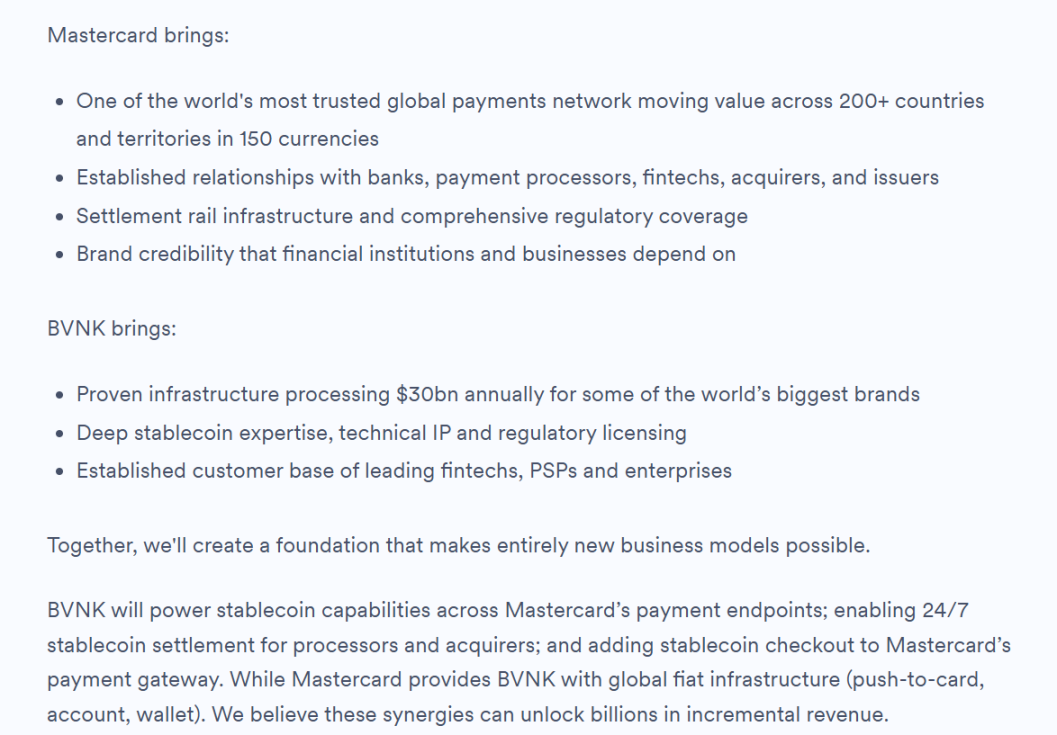
BVNK also explicitly wrote in its latest official blog that future synergies between the two parties include BVNK providing stablecoin capabilities to Mastercard's payment endpoints, enabling 24/7 stablecoin settlement for processors and acquirers, and integrating stablecoin checkout capabilities into Mastercard's payment gateway. It bluntly stated that these synergies are expected to bring billions of dollars in new revenue.
2. The Battle for "Clearing and Network Control" Among Payment Giants
Interestingly, Mastercard is not the first to participate in this land grab; in fact, it might be the last to act.
Long before this acquisition was finalized, in early October 2025, Coinbase had already initiated acquisition talks with BVNK, with the transaction range locked between $1.5 billion and $2.5 billion. Based on multiple sources, Coinbase once held the upper hand in this bidding war and even signed an exclusivity agreement with BVNK.
However, the two parties ultimately declared the negotiations broken down that same month, leaving room for Mastercard's subsequent successful entry.

Source: Fortune
An interesting comparison is that in October 2024, global payment giant Stripe acquired stablecoin API service provider Bridge for $1.1 billion, setting the record for the largest acquisition in the cryptocurrency field at that time. A year and a half later today, Mastercard paid $700 million more than Stripe, simultaneously refreshing this record.
Meanwhile, earlier this month, Visa also expanded its cooperation with Bridge, planning to promote stablecoin-linked cards to over 100 countries.
Both are card network giants, both acquiring stablecoin payment service providers. Looking at them on the same map reveals that from Stripe's to Mastercard's acquisitions, to Visa and PayPal's PYUSD launched years earlier, this is no longer an isolated bet by a single company, but a synchronized preemptive positioning by the entire payment industry:
Stablecoins impact not just the payment experience, but the deeper profit and power structures within the traditional financial system. Therefore, global payment giants have no choice but to actively attempt to connect on-chain accounts, stablecoin assets, and merchant collection endpoints, bypassing or preventing others from bypassing the issuing banks and card networks in the traditional payment chain.
This is also why companies like Bridge and BVNK have suddenly become scarce. Their true value lies precisely at a critical intersection, connecting on-chain accounts and stablecoin assets on one side, and merchants, enterprises, payment service providers, and fiat settlement networks on the other.
In other words, the industry has long moved past the初级阶段 of "who issues stablecoins" and entered the second half of "who can truly organize stablecoins into a functioning network."
Furthermore, the value of this "stablecoin network" is likely to be further amplified in the AI era.
A long-underestimated trend is that the entities initiating payments in the future may not always be humans; they could increasingly come from Agents, robots, and automated systems. What traditional card networks excel at is organizing payments around human consumption, acquiring, issuing, and bank card account systems. However, in the context of increasingly prevalent AI Agents, the demand for small-amount, high-frequency, automated settlements between machines may not naturally fit the architecture of card networks designed for the consumer finance era.
In contrast, on-chain payments and stablecoin rails are better suited for such new demands because stablecoins inherently enable 24/7 operation, programmability, support for high-frequency micropayments, global unified settlement, and no need for complex intermediary authorization. In other words, stablecoins are competing not just for the existing cross-border payment market share today, but potentially for a much larger incremental payment market in the future.
Traditional giants are also doubling down on this emerging field. For instance, Visa Crypto Labs has already launched its first experimental product, Visa CLI, allowing AI agents to securely pay required fees while writing code, enabling programmable card payments without API keys.

Source: 𝕏
Ultimately, stablecoin payments are not a local patch for the old system but an attempt to redraw the map of the next generation of global payment networks.
Following this logic, what is more worth observing in the future may not be those business roles that most resemble "stablecoin issuers," but rather participants simultaneously positioned at the intersection of trading, compliance, institutional liquidity, and payment network extension—those with a greater chance of growing into platform-type nodes in the stablecoin era. They may not be the hottest in the short term but are often closer to the core of long-term competition.
Behind this judgment, a larger reality is taking shape.
3. The Same Map, Two Solutions, and New Ideas Beyond Solutions
Objectively speaking, Mastercard's acquisition of BVNK also adds a layer of understanding for the entire market: The value of stablecoins lies not only in the issuance end but also in the connection end; not only in compliance identity but also in the organizational capability of liquidity and payment networks.
This is also the fundamental reason why giants like Stripe and Mastercard continue their acquisitions. What they truly want to buy is not just a certain stablecoin technical capability, but the possibility of building a network upward around this capability. After all, only when on-chain accounts, stablecoin liquidity, merchant scenarios, fiat clearing, and regulatory adaptation are truly integrated will stablecoin payments evolve from a "new tool" into a "new network."
But one thing is worth noting: The path of giants like Mastercard and Stripe is essentially a track change starting from traditional finance. They acquire on-chain capabilities through purchases and then leverage their existing distribution networks to drive stablecoin scaling. Although this path is clear, it requires breaking free from heavy historical baggage and redefining their relationship with the on-chain world.
This also means that besides starting from the old world and actively migrating towards stablecoins, there actually exists another solution, with the same direction but a different starting point.
Yes, those are the compliant platforms that have grown from the native on-chain soil from the beginning, reversely "diffusing from stablecoins to TradFi." They don't need to "change tracks" because they are already on the track.
Taking Hong Kong, one of the regions with the fastest progress in global crypto regulation, as an example, over the past years, several licensed compliant platforms like OSL and HashKey have emerged. Compared to traditional payment platforms that treat stablecoins as a new business to integrate, these native compliant platforms grown from the digital asset and on-chain liquidity systems are naturally closer to several truly important links in the stablecoin era: trading, custody, liquidity, compliant access, and the ability to extend to payment scenarios.
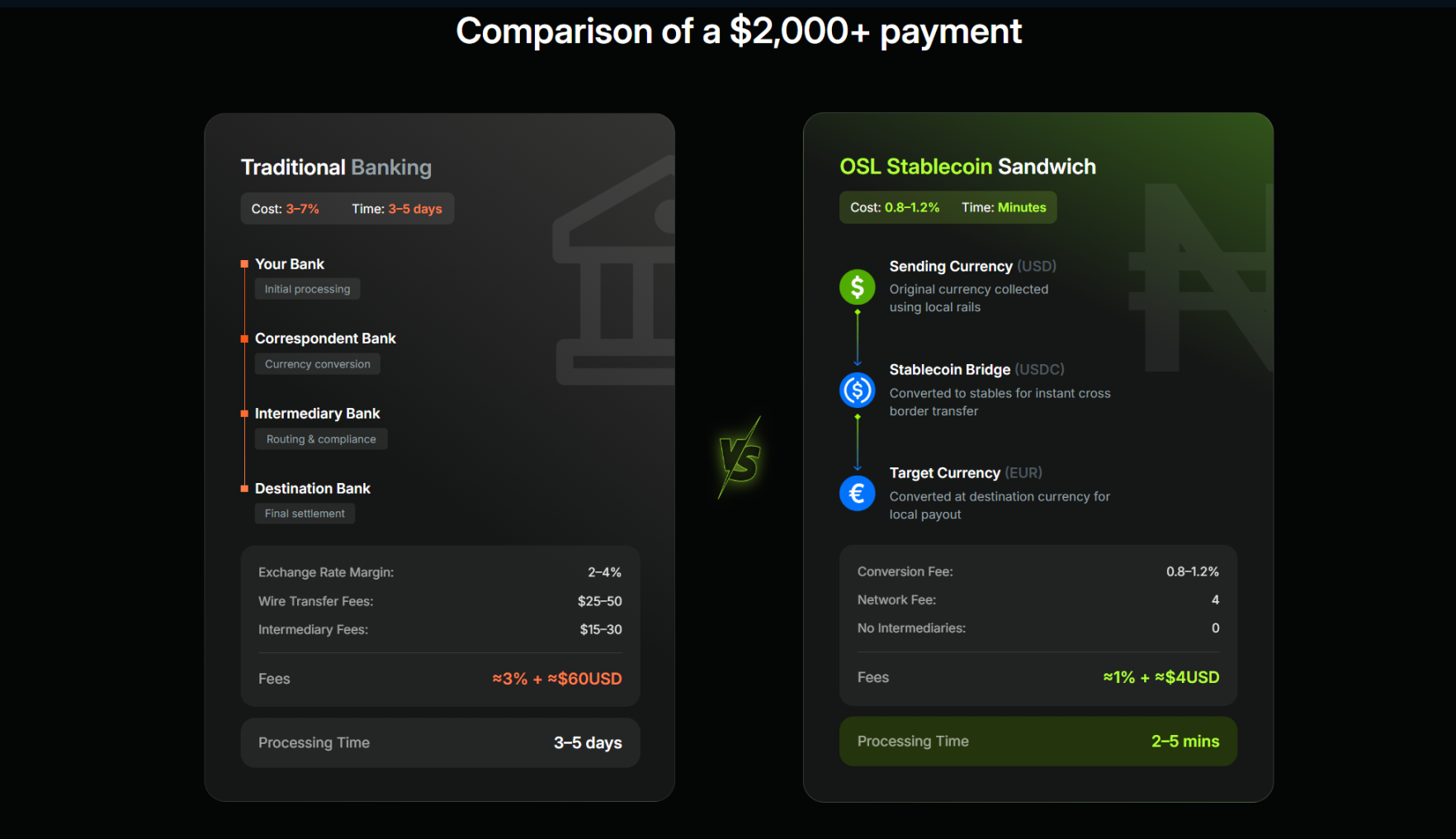
With the continuous advancement of Hong Kong's stablecoin regulatory节奏, licensed platforms have already begun to put this potential capability into practice. Taking OSL as an example, last year it clearly shifted towards stablecoin payment and settlement infrastructure; in January of this year, it completed the acquisition of global Web3 payment service provider Banxa, and in February, it launched USDGO, an enterprise-grade US dollar stablecoin compliant with US federal regulation and distributable in Hong Kong, focusing on cross-border e-commerce, bulk trade, and interactive entertainment scenarios.
This is a typical "TradFi + Digital Finance" combined implementation route. Enterprises using USDGO for cross-border settlement, coupled with the one-stop stablecoin payment/collection and settlement capabilities of its OSL BizPay,打通 the free exchange and circulation between fiat and stablecoins, and its multi-market推进 of licensing and compliance networks, the entire chain has the opportunity to complete fiat on-ramp, on-chain stablecoin settlement, account management and fund consolidation, treasury optimization, and fiat off-ramp without relying on the traditional SWIFT system, while simultaneously meeting compliance, regulatory, and audit traceability requirements.
This forms a very interesting contrast with Stripe's acquisition of Bridge and Mastercard's acquisition of BVNK: Both are heading towards the same destination of "on-chain accounts + stablecoins + global payment network." One path starts from the existing ecosystem, actively changing tracks; the other path is that the track already exists, waiting to naturally放大 as more流量, scenarios, and regulatory conditions mature.
Both solutions have their own logic and their respective time windows.
Source: OSL
Precisely because of this, the即将揭晓 of the results of Hong Kong's first round of stablecoin issuer license approvals, almost同步 with Mastercard's acquisition of BVNK, appears格外耐人寻味.
Because the long-term value of stablecoins for the global financial system ultimately depends on how many real, functioning networks there are, allowing funds to flow faster, cheaper, and more credibly within them, and truly being used by enterprises and individuals.
Therefore, what is truly worth observing in the next phase is perhaps which players can further turn "entry points" into "流量," "流量" into "networks," and "networks" into new global payment infrastructure.
In Conclusion
Ultimately, Mastercard spent $1.8 billion not on a business, but on a position.
Placing this judgment into a larger coordinate system makes it even clearer: The global payment network is irreversibly moving towards stablecoins. Although the pace varies and the paths differ, what is ultimately being competed over is actually the same thing:
Who can truly connect on-chain accounts, liquidity, payment scenarios, and compliance frameworks into a single network.
And this is precisely the most值得持续追问 question for the next phase. After all, when stablecoins are no longer just dollar substitutes on-chain but begin to渗透 the traditional financial system in reverse.
The real change may have just begun.