Top Forecaster Warns: Fed May Hike 50 Basis Points in December, Policy Path Faces New Uncertainties in Early Next Year


Original source: Jinshi Data
Economist Jason Schenker, who was the first to predict the Federal Reserve's most recent rate hike, now raises another possibility: if inflation pressures persist, the Fed could raise rates by 50 basis points in December, rather than the conventional 25 basis points.
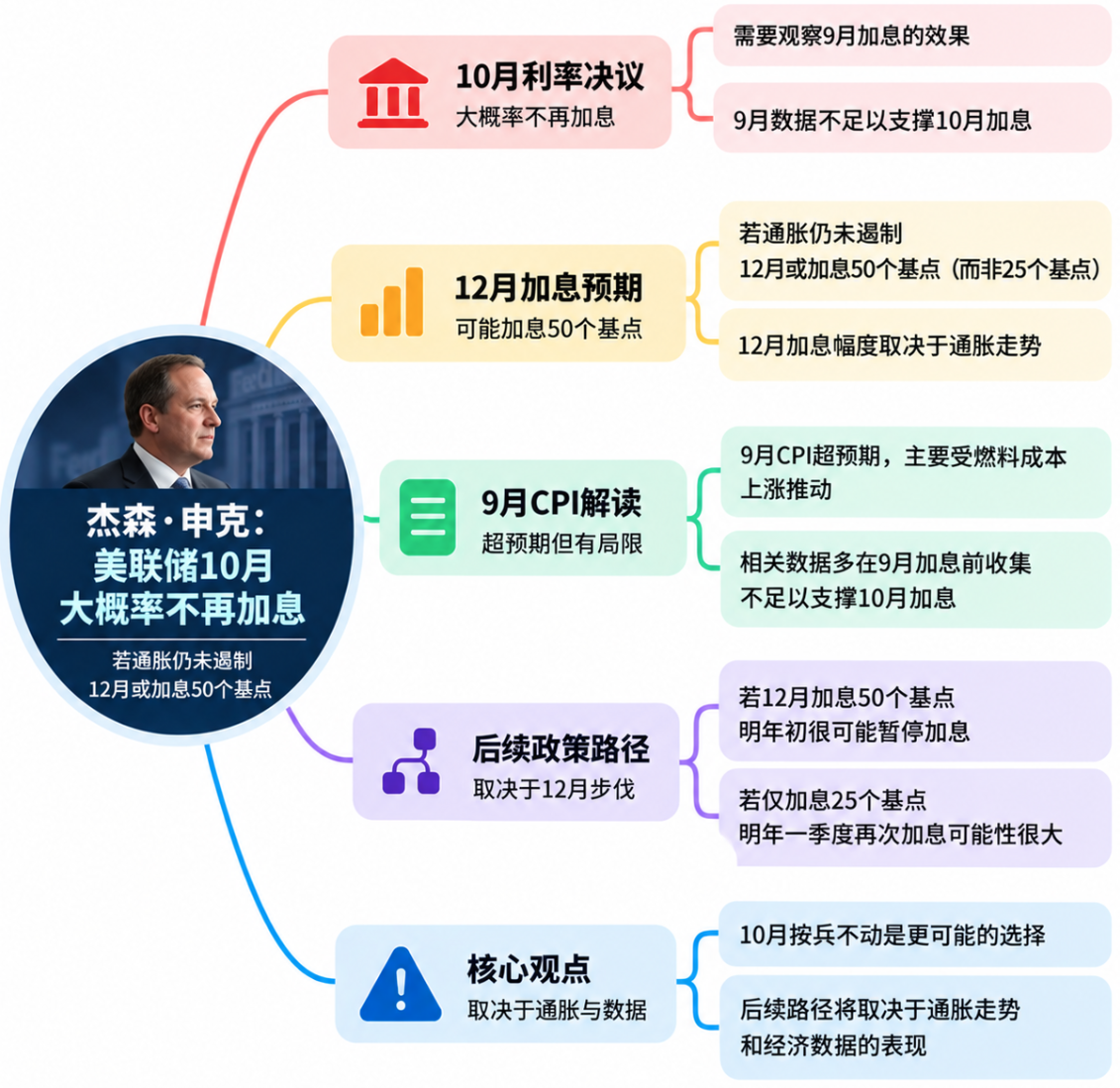
Schenker, president of Prestige Economics, expects that the Fed will most likely not hike again at this month's meeting. He believes policymakers need to first observe the effects of the September rate hike before deciding whether to take more aggressive action at year-end.
"By December, if inflation has still not been more forcefully and substantially contained following the September hike, the Fed may choose to raise rates by 50 basis points rather than 25 basis points, in order to suppress inflation more aggressively," Schenker said.
Last month, under the push of Fed Chairman Kevin Warsh, the Federal Reserve shifted into rate-hiking mode. This was the Fed's first rate hike since 2023, aimed at curbing rising inflation.
Schenker predicted in June that the Fed would raise rates, making him the earliest economist in a Bloomberg survey to reach that conclusion. His firm, Prestige Economics, has also consistently been one of the best-performing foreign exchange forecasting institutions in Bloomberg's rankings.
October Pause Likely, as Key Lies in Rate Hike Effects Not Yet Showing
Currently, traders and economists are mainly focused on when the Fed will hike again: whether it will raise rates by another 25 basis points this month, or wait until the December meeting. At present, the swap market has fully priced in expectations of a 25 basis point Fed rate hike in December.
Previously, futures market bets on a Fed rate hike in October briefly exceeded 50%. But after Wednesday's September Consumer Price Index (CPI) came in above economists' expectations, those bets pulled back. The upside inflation surprise was mainly driven by a sharp rise in fuel costs.
Schenker believes the latest data is not yet sufficient to support another Fed rate hike in October. The reason is that much of the economic data released on Wednesday was collected before the September rate hike, and cannot yet fully reflect the impact of that hike on economic activity and inflation.
"I think there are not yet enough data points to give them the kind of confidence they may need," he said.
Between the October meeting and the December meeting, Fed officials will also receive two employment reports and a new CPI reading. This additional information will help policymakers judge whether the September rate hike was sufficient to ease inflation pressures, and whether further policy tightening is needed.
Size of December Rate Hike Will Influence Policy Choices in Early Next Year
Schenker said that while it is only a six-week wait, by then the Fed will have more economic data in hand. If officials find that a 25 basis point rate increase has not produced a clear effect, then a 50 basis point hike could become an option.
He expects that if the Fed raises rates by 50 basis points at once in December, it will likely pause further hikes in early next year. Conversely, if it raises rates by only 25 basis points in December, then the probability of another rate hike in the first quarter of next year would be "very high."
This means that what the market needs to watch next is not only whether the Fed will raise rates in December, but also whether inflation data can prompt policymakers to change the size of the rate hike. Schenker's judgment remains a forecast, and the ultimate policy path depends on inflation, employment, and other economic data released in the coming weeks.