




The person taking over Apple has to do something he's never done before=


- Core Viewpoint: Apple CEO Tim Cook steps down, succeeded by hardware engineering head John Ternus. This is not a simple signal of a "hardware return" but rather marks a strategic shift in Apple's focus towards software, AI, and services. Meanwhile, Ternus's past hardware leadership record shows success in innovating mature product categories but repeated setbacks in defining new computing paradigms.
- Key Elements:
- Ternus led core hardware like the iPhone, Mac, and AirPods, and successfully drove the Apple Silicon transition, pushing Mac revenue to a peak of $40.2 billion in fiscal year 2022.
- Projects he led, such as the Touch Bar, butterfly keyboard, and Vision Pro, all fell short of expectations. Vision Pro production was cut after shipping less than 90,000 units in 2025.
- During the Cook era, Apple's service revenue share significantly increased from 8.5% to 26.3%, and service gross margin (75%) far exceeded product gross margin (36.8%), reshaping the company's profit structure.
- Upon taking office, Ternus will hand over hardware engineering management responsibilities. His new duties will focus on software, AI, services, and overall strategy—areas he has not previously led.
- After stepping down as CEO, Cook transitions to Executive Chairman, retaining strategic influence, which means the company will not undergo a radical "wipe the slate clean" style of course correction.
On April 20, 2026, Apple announced that Tim Cook will step down on September 1, with his successor being John Ternus, Senior Vice President of Hardware Engineering. He is the engineer behind the Vision Pro and has been responsible for almost all of Apple's heavyweight hardware over the past fifteen years.
This marks Apple's first leadership change in 15 years. The widely interpreted external signal is a "hardware comeback." However, the internal structure of hardware is far more complex than this label suggests. On the same day Apple announced the leadership change, it also released another personnel appointment: Johny Srouji, head of chip engineering, will succeed John Ternus as Chief Hardware Officer.
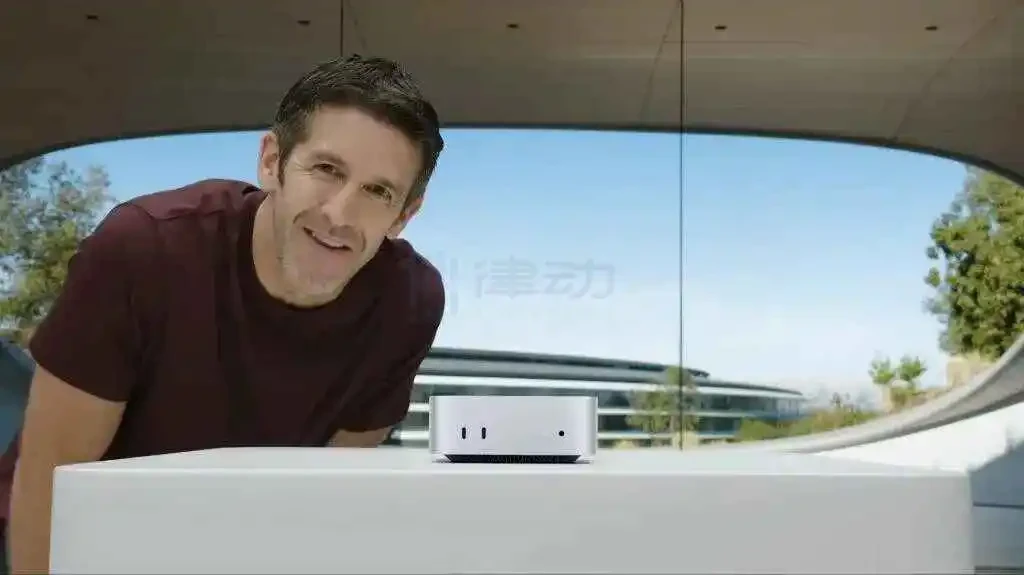
Ternus has worked at Apple for over 25 years, leading the engineering design of the iPhone, Mac, iPad, Apple Watch, AirPods, and Vision Pro. The outside world interprets his succession as a signal of a "hardware comeback." Yet, at the very moment Ternus became CEO, he handed over the day-to-day management of hardware engineering. What he is set to lead are software, AI, services, and Apple's overall strategic direction. These four areas are ones he has never led during his 25 years at Apple.
The Hardware Kingdom's Terrain is Uneven
Looking back at Ternus's 25-year career at Apple, the public's first association with his recent performance is likely "Vision Pro failure." But his missteps began earlier than that.
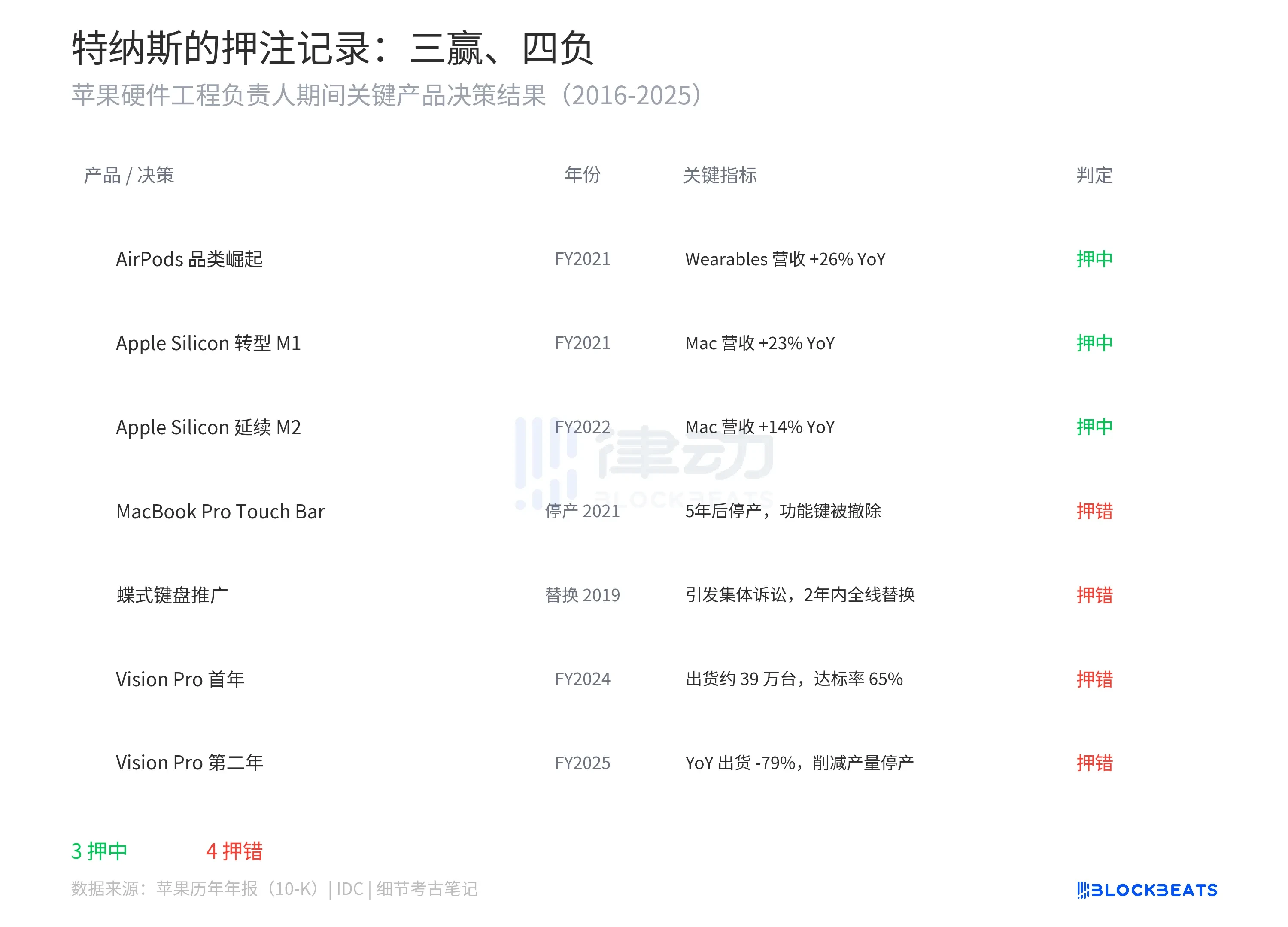
Ternus was a key supporter of the MacBook Pro Touch Bar. This touch-sensitive strip function row, introduced in 2016, was quietly abandoned by Apple in 2021. He was also deeply involved in promoting the butterfly keyboard. This keyboard design, famous for being ultra-thin and notorious for its failures, led to consumer class-action lawsuits and was eventually replaced across Apple's entire product line. The cost of these two failures was borne by users and Apple's reputation.
Vision Pro was the third. According to IDC data, Apple shipped approximately 390,000 units in 2024, falling short of analysts' earlier predictions of around 600,000 units, achieving only about 65% of the target. Shipments further dropped to less than 90,000 units in 2025, after which Apple cut production, and its contract manufacturer, Compal, halted the related production lines. A product with a starting price of $3,499, defined by Apple as the "gateway to the spatial computing era," completed its entire journey from launch to fade-out in just two years.
The successful bets are equally worth examining separately.
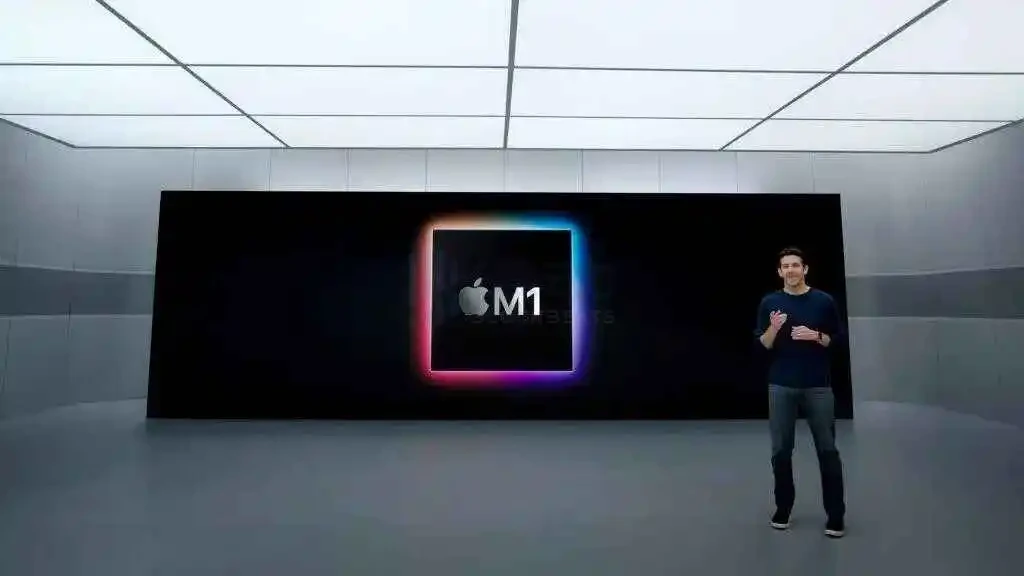
The first is the Apple Silicon transition. With the launch of the M1 chip in November 2020, Apple initiated the massive engineering project of migrating entirely from Intel architecture to its own processors, with Ternus as a core driver. According to Apple's annual reports, Mac revenue experienced a rare surge for two consecutive years after the M1 launch. According to Apple's annual reports, FY2021 saw a 23% year-over-year increase, and FY2022 continued with 14% growth, reaching a historical peak of $40.2 billion in fiscal year 2022.
It unlocked the possibility for Apple's vertically integrated chip design and truly freed the Mac from Intel's product cadence. The second is AirPods. During his tenure as Vice President, he transformed the wearables category from the periphery of Apple's product line into a pillar generating over $30 billion in annual revenue. This is the third major consumer electronics category Apple has truly established, following the iPhone and Mac.
There is a pattern in this report card: his successful bets involved placing a decisive technology into a mature product category (M1 for Mac, AirPods for wireless audio). His unsuccessful bets involved attempting to define an entirely new computing paradigm with hardware. The Touch Bar aimed to redefine keyboard interaction and failed. Vision Pro aimed to define spatial computing and failed.
On the other hand, Apple presents hardware as a unified story, but the narrative within hardware is far more complex than "the iPhone sells well." According to Apple's annual reports, during the fiscal years 2020 to 2025, when Ternus fully oversaw hardware engineering, the four main product categories followed distinctly different trajectories. The iPhone maintained dominance, with revenue steadily rising from $137.8 billion to $209.6 billion over six years, but its growth rate was slowing.
The Mac experienced a genuine surge due to the M1, followed by a sharp decline in FY2023 of nearly 27%, then a slow recovery, yet to return to its peak. Wearables rose from $30.6 billion to a peak of $41.2 billion, then fell back to $35.7 billion, having passed its growth inflection point. The iPad is the quietest line, fluctuating between $26.7 billion and $31.9 billion over six years without any structural breakout.
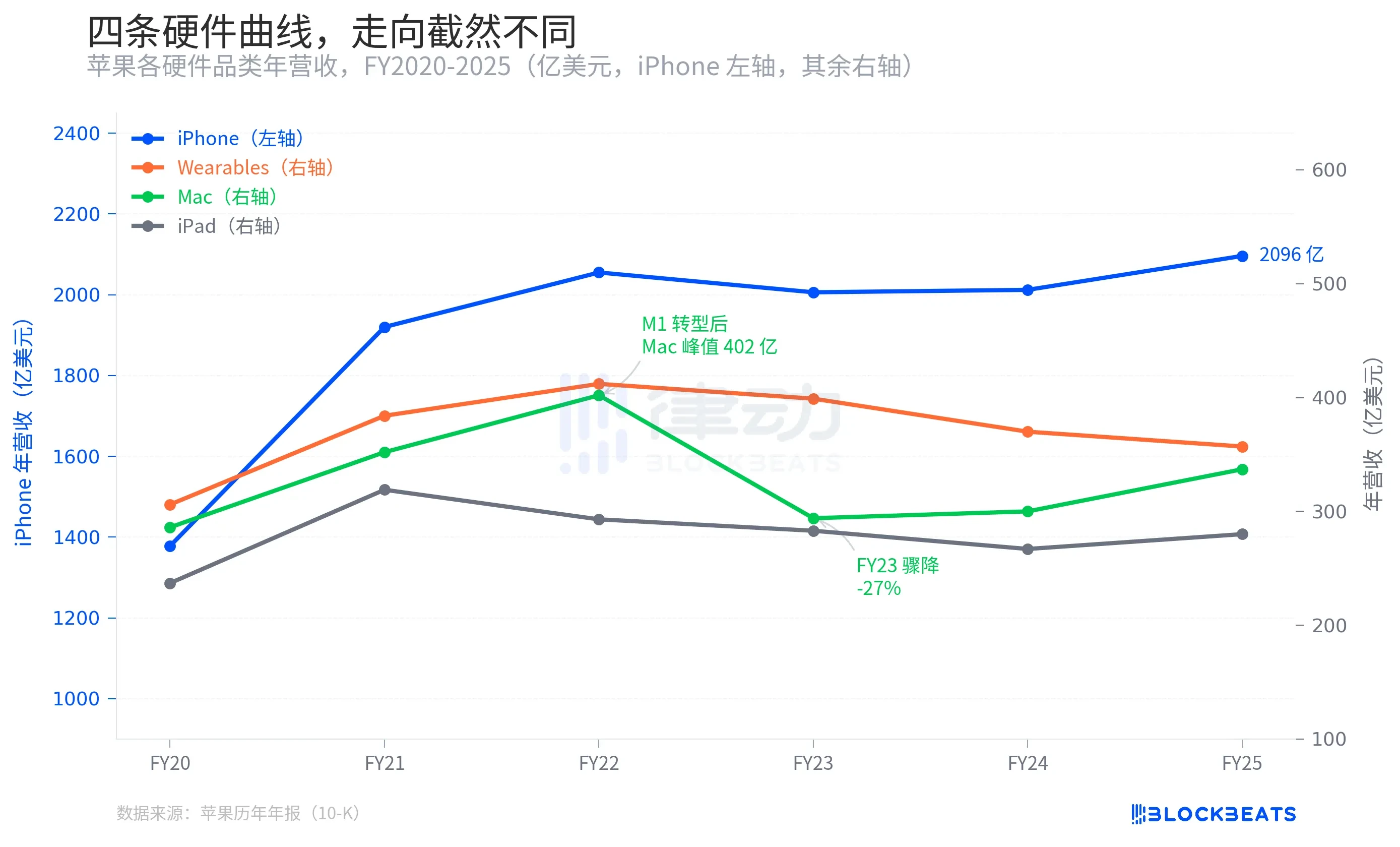
The iPhone held steady, relying on inertia. The only truly structural breakout was the two years driven by the M1. Now, he is handing over hardware engineering to Srouji to manage the entirety of Apple.
The Bill Cook Leaves Behind
The Apple that Ternus inherits has a financial structure completely different from fifteen years ago.
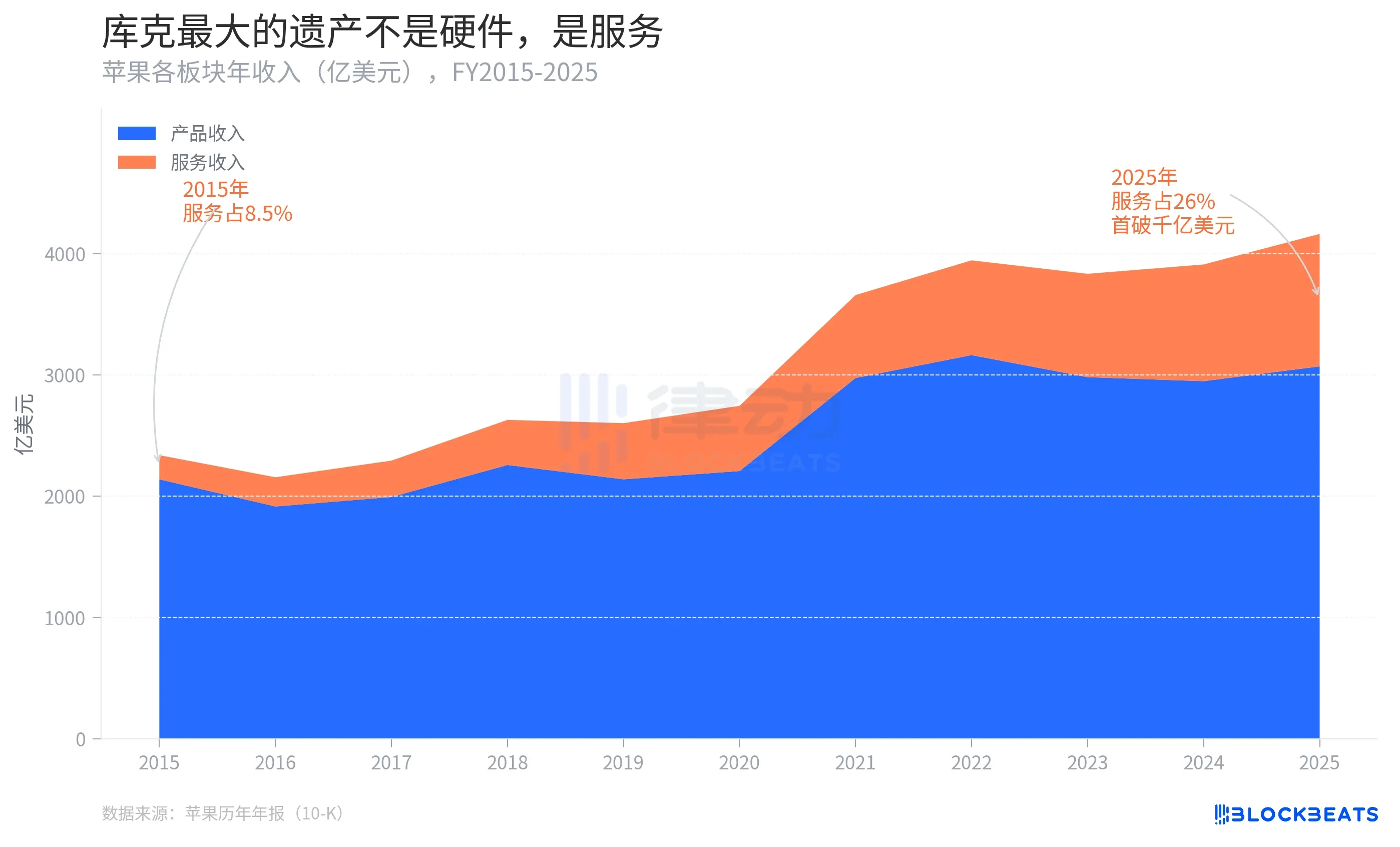
According to Apple's annual reports (10-K), service revenue grew from $19.9 billion in 2015 to $109.2 billion in fiscal year 2025, with a compound annual growth rate exceeding 18%, increasing its share of total revenue from 8.5% to 26.3%. During the same period, product revenue increased from $213.9 billion to $307.0 billion, but its share shrank from 91.5% to less than 74%. Over 15 years, Cook fundamentally reshaped the profit logic of a hardware company, relying on services.
This transformation has a clear numerical footnote. According to Apple's annual reports, in 2017, the gross margin of Apple's services segment was about 55%, while the product segment was about 34.2%, a gap of 20.8 percentage points. By fiscal year 2025, the services gross margin rose to 75%, while the product gross margin remained largely stagnant at 36.8%, widening the gap to 38.2 percentage points. For every dollar Apple shifts from products to services, the contribution to gross profit increases by approximately 38 cents.
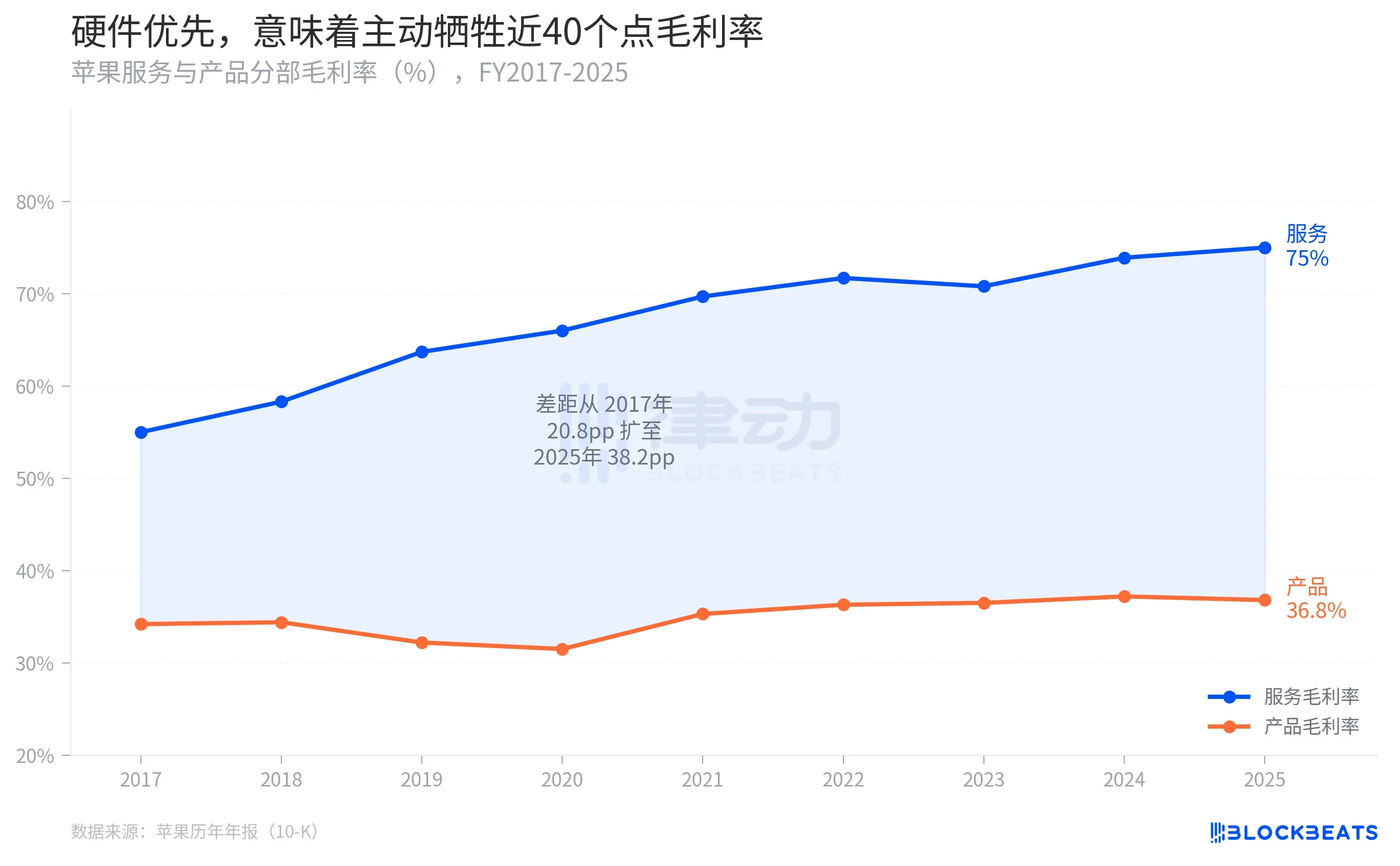
This scissors gap will not narrow simply because the CEO changes. If Ternus reallocates resources back towards hardware, the product gross margin, at nearly 37%, is not inherently low, but the room for improvement almost entirely depends on product premium pricing, not structural migration. This is an arithmetic problem, not a multiple-choice question.
Another detail overlooked by most reports is that Cook, upon stepping down as CEO, will become Apple's Executive Chairman. This is not a ceremonial role. An Executive Chairman typically retains substantive influence over strategic direction, participates in major decisions, and externally represents the company's interests at political and industry levels. The current non-executive Chairman, Arthur Levinson, will simultaneously transition to Lead Independent Director.
This handover is not the model of Jobs's 2011 resignation and immediate departure. Cook will remain on the board.
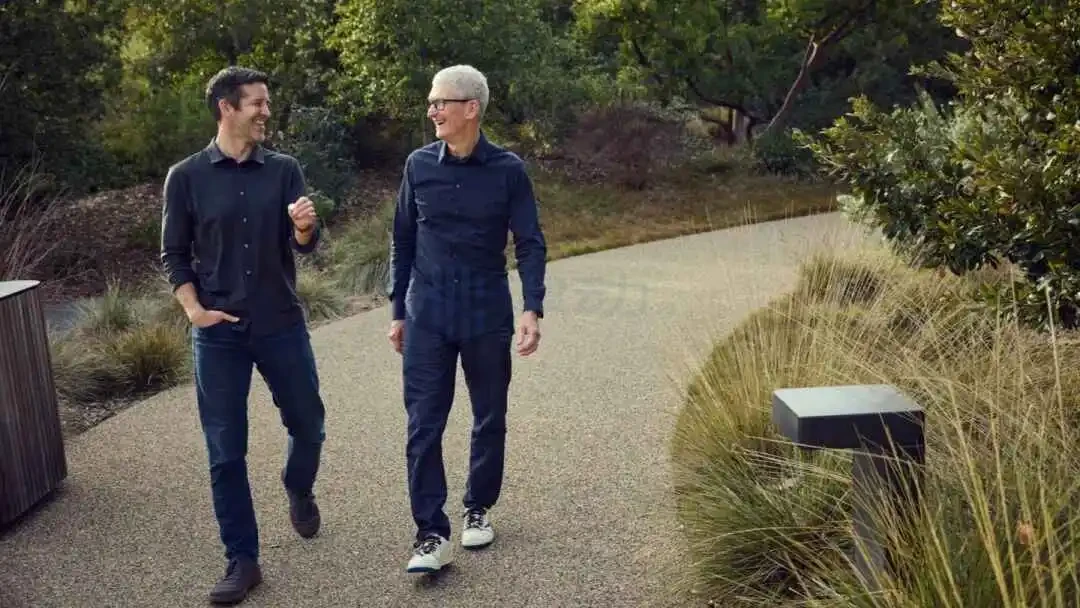
Ternus's style is described as calm, focused, approachable, building influence through product achievements rather than personal image, quite similar to Cook. This similarity is a stabilizing factor during the transition, but it also means: the kind of "clean slate, start over" strategic shift that the market might have anticipated is not in the script for this handover.
The Apple that Ternus inherits last answered the question "What is the next computing platform?" with a $3,499 head-mounted display. It was discontinued after shipping less than 90,000 units.