




From Selling Shoes to Selling Compute: Will AI Compute Follow the DAT Model's Fate?


- Core Viewpoint: Using Allbirds' pivot to an AI compute company as an example, the article points out a new wave of publicly listed companies "transforming into AI compute sellers." This trend is driven by a significant and persistent structural gap in AI compute supply. However, this model differs crucially from last year's cryptocurrency DAT model in terms of business substance and sustainability.
- Key Elements:
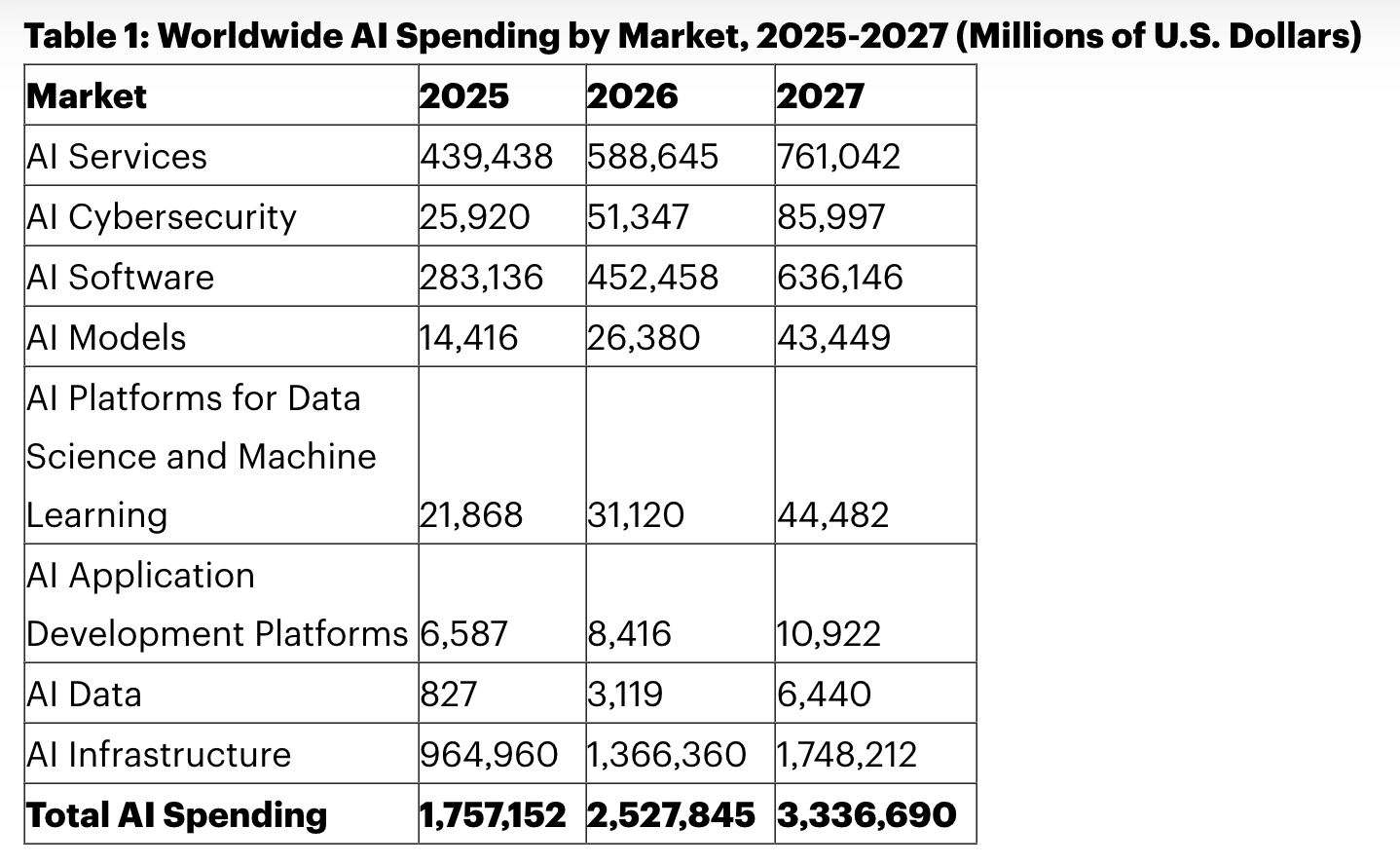
- Market Supply and Demand Driving Transformation: AI compute is in short supply. Gartner forecasts global AI infrastructure spending to reach $1.37 trillion by 2026. Major cloud providers indicate the market is supply-constrained, with the gap expected to last until Q3 2026.
- Precedents for Transformation Exist: Examples include mining company CoreWeave's successful pivot to an AI cloud service provider, with 2025 revenue reaching $5.13 billion. Medical device company Axe Compute also saw its stock price surge after transforming into a GPU compute company.
- Core Differences from the DAT Model: The AI compute business generates real revenue (e.g., Anthropic's annualized revenue exceeding $30 billion), has high operational barriers (requiring a complete infrastructure chain), and can produce sustained cash flow. Its foundation is operational physical assets, not financial assets.
- Symbolic Significance of Allbirds' Transformation: Its $50 million fundraising is a drop in the bucket for purchasing compute. The core value lies in retaining its Nasdaq-listed "shell company" status, potentially making it a target for large AI companies seeking a backdoor listing.
- Market Skepticism Exists: Industry analysts warn of "AI-washing," questioning Allbirds' competitiveness. They note the initial fundraising amount is minuscule compared to actual investment needs, suggesting the transformation may aim to boost the stock price.
Original|Odaily (@OdailyChina)
Author|Wenser (@wenser 2010 )

Recently, the once-popular "internet-famous shoe" brand Allbirds announced it would sell its footwear business and raise $50 million to transform into an AI computing infrastructure company named NewBird AI. Upon the news, its stock price surged, once spiking to $24.31, and has since retreated to $16.99, still maintaining a staggering single-day gain of 582.33%.
Upon closer thought, $50 million is a drop in the bucket in today's AI computing power race where orders often run into tens of billions of dollars. Yet, this move reminds me of the frenzy last Q3 when a wave of DAT (Digital Asset Treasury) companies saw their stock prices skyrocket.
As the era where a simple announcement of transforming into a DAT could send a listed company's stock soaring multiple times has passed, we are now entering a new era of "listed companies transforming into AI computing power sellers." The reason is none other than the two words: "supply and demand."
Behind the Internet-Famous Shoe's Pivot: The AI Computing Power Gap Has Become a Major Issue
Recent hot topics like the Claude model's perceived "dumbing down" and tightening KYC policies have sparked widespread discussion. The underlying reality, however, is the structural gap in AI computing power.
A report by US market research firm Gartner points out that global AI spending will reach $2.52 trillion in 2026, a year-on-year increase of 44%. Of this, AI infrastructure alone (including servers, accelerators, storage, and data center platforms) is expected to consume approximately $1.37 trillion, accounting for over half of the total expenditure.
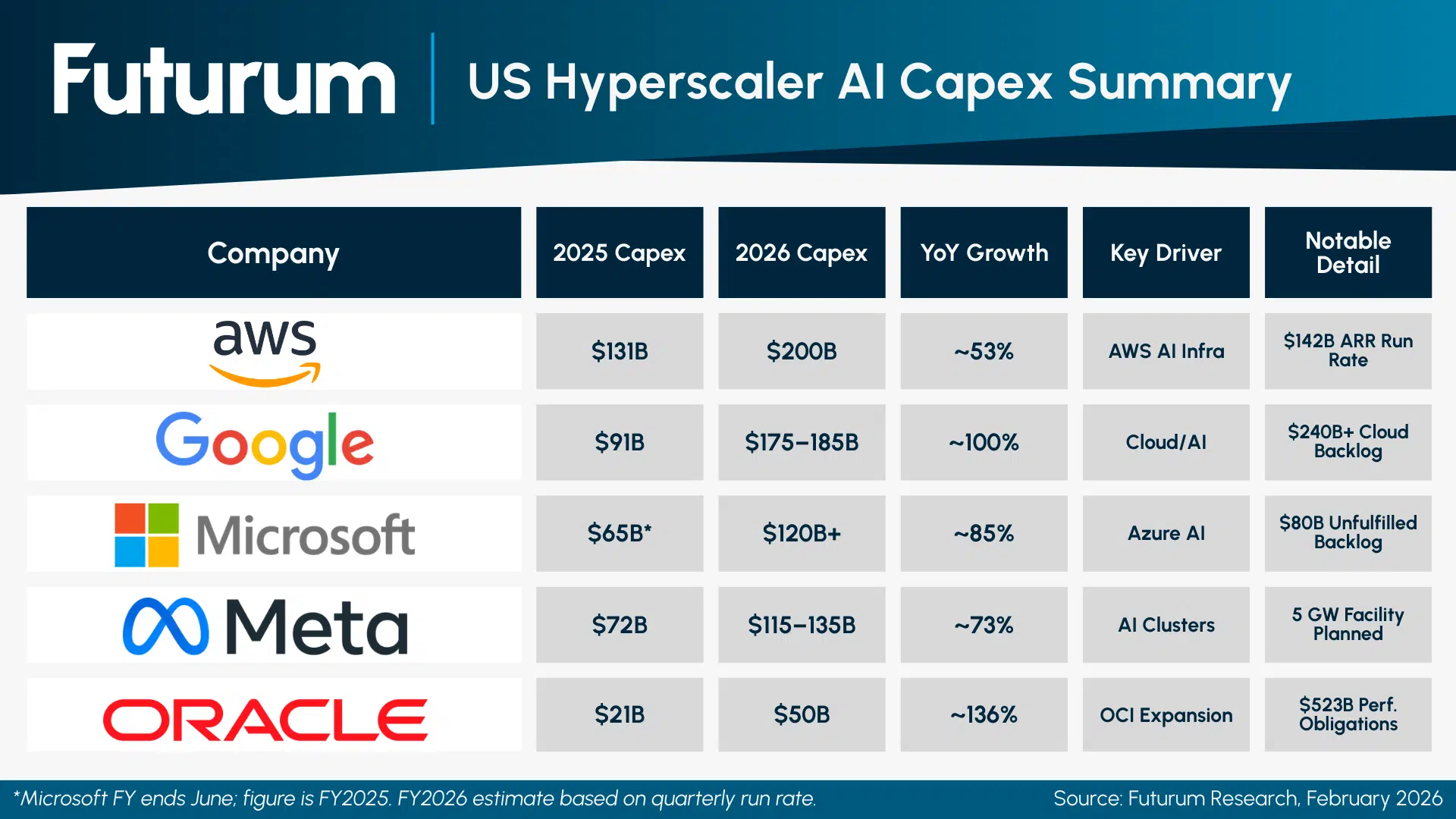
Regarding AI giants, five companies—Microsoft, Alphabet (Google's parent company), Amazon, Meta, and Oracle—have planned combined infrastructure capital expenditures of approximately $660 billion to $690 billion for 2026, roughly double that of 2025. The vast majority of these funds will be allocated to AI computing power, data centers, and networks. All major cloud providers have stated that their markets are in a state of supply shortage.
Considering the approximately 36-52 week delivery cycle for GPU data centers, the situation of constrained computing power and data supply is expected to persist at least until Q3 2026.
It is worth noting that the current structural computing power gap stems not only from the demand of AI large model companies for training various models but also from the rapidly expanding demand for daily inference model deployment from billions of users worldwide. The combined computing resource gap from both B2B and B2C businesses has led to the current supply shortage in the computing power market. No wonder NVIDIA founder Jensen Huang confidently stated at this year's CES: "(NVIDIA's) AI chip and infrastructure market size could reach $1 trillion by 2027."
Beyond the computing power gap, in step with the trend of major mining companies pivoting to AI computing power and data centers, AI is competing with the cryptocurrency industry for critical resources like electricity. According to the recently released "2026 AI Index Report" by Stanford University, the overall electricity demand of current AI systems is approaching half the scale of Bitcoin mining and is close to the total electricity consumption of Switzerland or Austria.
Undoubtedly, with AI being the sole narrative driving US stocks and global tech companies today, "having business related to AI" has become a necessity for many listed companies.
When the AI Computing Power Business Becomes the Next DAT Model: A Robustness Test for the AI Narrative
What Allbirds has sparked might be another wave of frenzy similar to the emergence of DAT companies last year.
This judgment stems from the fact that the cryptocurrency industry's DAT treasury model and listed companies' AI transformation have already overlapped, with mature precedents existing.
From July to September last year, with the emergence of Ethereum DAT companies like Bitmine and Sharplink, a slew of BTC DAT, ETH DAT, SOL DAT, BNB DAT, and various altcoin DAT listed companies became the "star stocks" of that period—many stock symbols saw their prices double or even increase tenfold within just a few days, creating capital market miracles.
On the other hand, transformation cases in the AI track are equally impressive.
Last year, Axe Compute (Odaily Note: formerly Predictive Oncology Inc.), which holds Aethir (ATH) as its DAT reserve asset, staged a major AI computing power transformation drama for a listed company. Previously, the company's main business was medical devices, and it had also explored providing tumor drug response prediction platforms, 3D cell culture models, and other services to support cancer drug development. In September last year, the company pioneered a strategic transformation into an ATH token DAT, with its stock price surging nearly 200%. Subsequently, after completing over $340 million in financing, it officially announced its transformation into a GPU computing power infrastructure company, changing its stock ticker to AGPU.
CoreWeave (CRWV), which has since secured order collaborations with chip giants like NVIDIA and AI giants like Anthropic, is also a player on the "AI fast track." As an established mining company, CoreWeave's transformation over the past three years of rapid AI development has been quite thorough: initially, it signed a $22.4 billion infrastructure contract with OpenAI; last year, it signed an AI agreement worth $1.17 billion with Vast Data, which is backed by NVIDIA; recently, it reached a data center leasing agreement with Anthropic. According to financial reports, CoreWeave's revenue in 2025 was $5.13 billion, a year-on-year increase of 168%. Its planned capital expenditure for 2026 exceeds $30 billion. As of writing, its market capitalization is approximately $62.4 billion. For more information, we recommend reading "Analyzing CoreWeave: From Crypto Miner to AI Cloud Service Provider". As for other mining companies' AI transformations, they are too numerous to count. For details, see "The Great Migration of Mining Companies: Some Already Hold $12.8 Billion in AI Orders".
Of course, compared to mining companies' orders worth tens of billions of dollars, Allbirds' current fundraising amount seems insignificant. Furthermore, from a practical purchasing power perspective, with high-performance GPUs costing $25,000 to $40,000 each, $50 million can barely purchase less than 2,000 GPUs. However, some analysts believe its positioning might be as an acquisition target for a large "alternative cloud" company seeking a backdoor listing.
In other words, Allbirds' "internet-famous shoe" label has been torn off, while the "AI concept stock" label has become a hot commodity. Its real value doesn't lie in how many GPUs $50 million can buy, but in retaining a Nasdaq-listed shell—which holds certain appeal for AI infrastructure companies wanting to quickly enter the public market.
Finally, although from a capital operation perspective, the AI computing power business model is largely similar to last year's DAT treasury model, there are still some differences when viewed from the following aspects:
First, there is the real business revenue of the AI industry compared to the cryptocurrency industry. According to Anthropic's previous statement, its annualized revenue has exceeded $30 billion, a figure that was only $9 billion in 2025. Additionally, as of February, OpenAI's annualized revenue has surpassed $25 billion. Although valuations often reach hundreds of billions of dollars, real business revenue provides a more stable data foundation compared to the highly volatile market capitalization of cryptocurrencies. Various large model companies are the best buyers in the AI computing power business because the computing power shortage is an objective reality.
Second, there is the high operational barrier to entry in the AI computing power industry. Unlike the "hoarding" strategy of DAT treasury companies, the AI computing power business is not simply about purchasing GPUs. It requires building an entire operational chain including data centers, electricity, cooling, networks, operations and maintenance teams, and customer acquisition. Therefore, its entry barriers, sustainability period, and team requirements are higher, making it relatively more difficult to "fake." Ultimately, the underlying asset of a DAT is a financial asset; whereas the underlying asset of an AI computing power company is an operational physical asset.
Third, there is the sustained cash flow of the AI computing power industry. For DAT treasury companies, whether holding BTC, ETH, SOL, BNB, or other altcoins, their main income is highly dependent on price fluctuations (staking income is merely nominal), lacking recurring business revenue. In contrast, AI computing power businesses can generate sustained cash flow through long-term leasing contracts, representing real cash inflows.
Of course, from the perspectives of financing structure, backdoor listings, and speculative sentiment, the two remain highly similar. Regarding attracting regulatory scrutiny and pressure, listed companies seeking to transform into AI computing power companies will inevitably face various restrictions and ongoing attention.
As industry insiders expressed following Allbirds' stock surge:
- Matt Domo, CEO of FifthVantage, believes Allbirds' AI transformation更像 a means to boost its weak stock price. Investors should be wary of "AI washing," where companies exaggerate or even fabricate their AI capabilities for marketing. Furthermore, it's not unprecedented for companies to attempt aggressive pivots to catch hot trends, as seen with many trying to ride the blockchain wave in late 2017 to early 2018.
- Jason Schloetzer, Associate Professor at Georgetown University's McDonough School of Business, pointed out that this initial $50 million financing is "negligible compared to the actual investment required to become a service provider in this field." However, from a more optimistic view, the influx of new players into the AI field may also reflect the market's "sustained enthusiasm" for growth.
- Jay Goldberg, Analyst at Seaport Research, believes it's hard to imagine a company like Allbirds, which is "entering the field midstream," can offer competitive products or services in this domain.
As the AI era train roars forward, there will always be those trying their utmost to cling to the door for a desperate gamble. Whether they can stay on board or be swept under the wheels by the gale will be left for time to reveal.