




Bitcoin for Strait Transit Fees: Is Iran Just Bluffing?


- Core Viewpoint: Iran's proposal to levy Bitcoin transit fees on oil tankers passing through the Strait of Hormuz, while potentially just a psychological tactic in geopolitical gamesmanship, carries significant symbolic weight. It marks the formal entry of Bitcoin, as a tool for financial autonomous settlement in "extreme scenarios," into confrontations between sovereign states.
- Key Elements:
- Iranian officials stated plans to impose a $1-per-barrel transit fee on tankers, accepting Bitcoin payments, aiming to ensure transactions cannot be tracked or confiscated due to sanctions.
- This move triggers Bitcoin's original narrative as a "peer-to-peer electronic cash." In extreme scenarios where the traditional banking system (SWIFT) and centralized stablecoins (like USDT, USDC) fail due to sanctions, its settlement autonomy becomes the core value proposition.
- The market reacted swiftly to this news, with Bitcoin's price briefly surging to $73,000, demonstrating the immediate impact of geopolitical events on the crypto market.
- Practical feasibility is questionable: The strait was closed the day after the announcement. Furthermore, if Iran were to receive Bitcoin on a large scale, converting it into fiat currency for actual trade via compliant exchanges under existing sanctions would be extremely difficult.
- Analysts (such as Arthur Hayes) believe this move is more likely a form of "trolling" or psychological warfare against the Western financial system, intended to signal that "U.S. sanctions are ineffective." Its propaganda and deterrent value likely outweighs practical implementation.
Original | Odaily (@OdailyChina)
Author | Golem (@web3_golem)
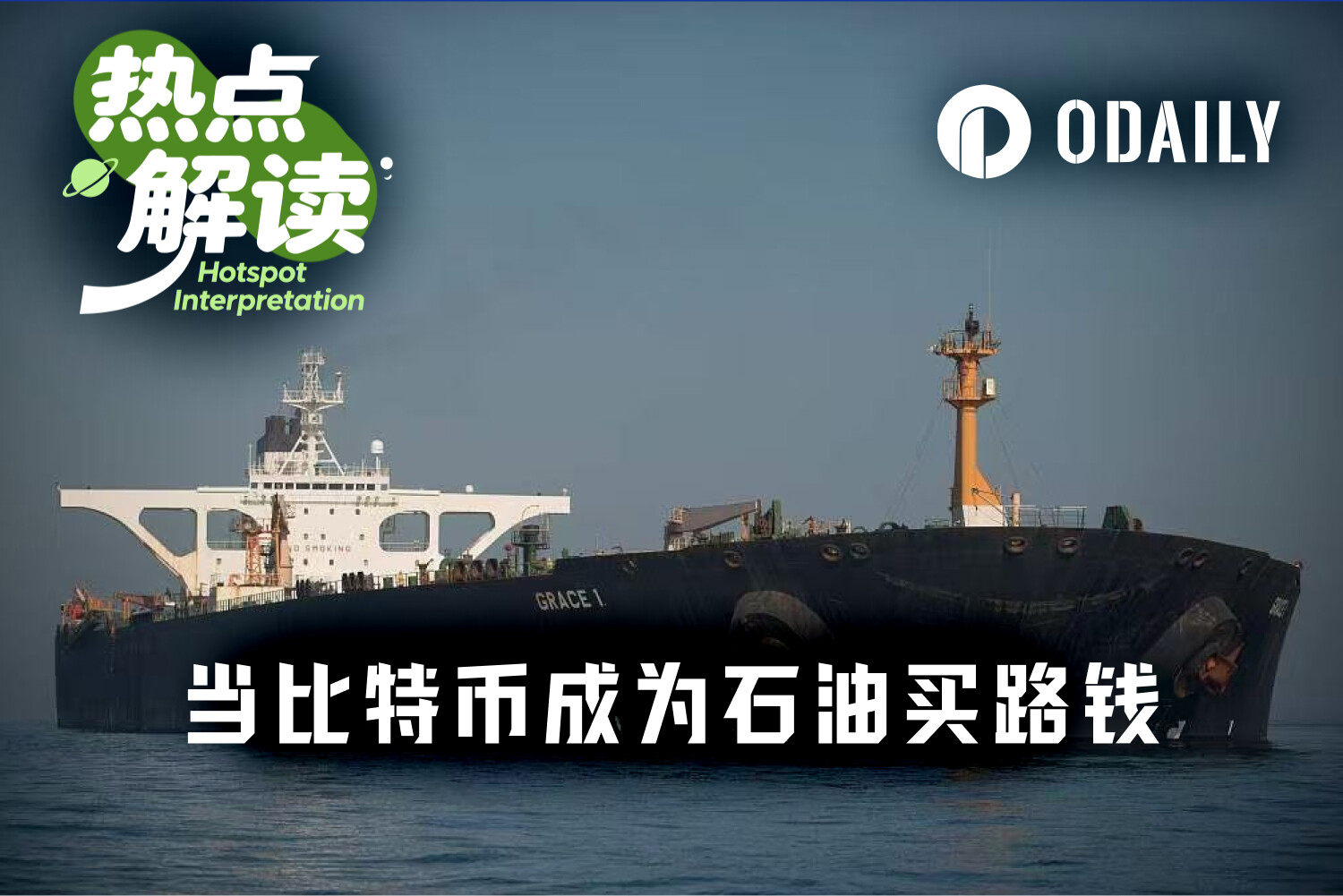
Some news immediately sparks the imagination, like this piece from April 8th — Iran plans to impose a toll on oil tankers passing through the Strait of Hormuz during a two-week ceasefire, at $1 per barrel, payable in Bitcoin.
The crypto market reacted swiftly. When Iran announced its readiness to accept Bitcoin for tanker tolls, the BTC price briefly surged to $73,000, likely influenced by the news. Although Bitcoin's price has since retreated to around $70,000 today, for Bitcoin believers, the symbolic significance far outweighs the benefit of a few percentage points of gain — Satoshi Nakamoto's vision of Bitcoin as "electronic cash" has been triggered in an extreme scenario.
An Extreme Tool Finally Meets an Extreme Scenario
After Iran announced this news to the world, I imagined an utterly absurd yet profoundly real moment.
In the narrow, blue throat of the Persian Gulf, which controls over 20% of the world's crude oil supply, a long queue of oil tankers waits to pass. Overhead, helicopters armed with machine guns circle back and forth, while nearby, Iranian warships stand ready to blast any unruly vessel. At this very moment, the captain of a supertanker carrying 2 million barrels of crude oil stands on the deck, facing the salty sea breeze, eyes glued to a screen. He cannot hear the waves of the Persian Gulf; instead, he anxiously awaits a massive Bitcoin transaction to be "packaged into a block" by miners — a process taking roughly 10 minutes. Only when these Bitcoins successfully reach the Islamic Revolutionary Guard Corps' address can his ship pass safely.
When the lifeblood of modern industrial civilization — oil — requires simultaneous "clearance" from both the physical strait and the digital Bitcoin network, a sense of dislocated epic grandeur triggers a cerebral climax.
In recent years, one of the most debated topics has been: what is Bitcoin actually useful for? Regardless of the debate's outcome, the oldest narrative, the first one mentioned in the Bitcoin whitepaper — "peer-to-peer electronic cash" — has been largely dismissed. Bitcoin is not only highly volatile but also exceptionally slow to settle. It's not just miles behind traditional banking settlement systems; even when considering the costs and efficiency of cross-border payments, the market's first choice is stablecoins. Bitcoin seemed to have been completely written off for payment use cases.
But in extreme scenarios, both traditional banking systems and stablecoins become useless. What constitutes an extreme scenario? It's when a country is kicked out of SWIFT, its foreign reserves in overseas banks become mere numbers to look at but not touch, and even using stablecoins risks being frozen by their issuers. Iran is currently facing such an extreme scenario. No matter how fast bank or stablecoin settlements are, the funds ultimately cannot reach Iran's pockets. (Odaily Note: Tether froze 42 Iranian addresses in 2025, and in March 2026, Circle and Tether jointly froze approximately $2.49 million in stablecoin assets related to the Iranian exchange Wallex.)
If you were Iran, facing a "global policeman" that can freeze all your foreign assets and sever all your banking connections at any moment, efficiency and volatility no longer matter; the right to self-settlement is everything. Hamid Hosseini, spokesperson for the Iranian Oil, Gas and Petrochemical Products Exporters Union, was blunt when explaining the rationale for choosing Bitcoin as a settlement tool to the Financial Times: using Bitcoin is to ensure it cannot be tracked or confiscated due to sanctions.
Hosseini is only half right. Bitcoin transactions can also be tracked on-chain, and the US has indeed tracked and confiscated Bitcoin in multiple international cases in the past. However, these actions are reactive and time-consuming. Furthermore, due to the decentralized nature of the Bitcoin network, at the very least, the US government cannot track and block the transaction the moment it occurs between Iran and the tanker. For Iran, achieving that is enough.
This also proves that perhaps Bitcoin was never designed for "peaceful times". When the world begins to fragment and credit collapses, this consensus system based on mathematics and code becomes the last "financial sanctuary" for marginalized groups. The "dragon-slaying technique" penned by Satoshi Nakamoto over a decade ago has found its use amidst the smoke of the Persian Gulf.
Collecting Bitcoin at the Gulf: Just Hot Air?
But let's not pop the champagne for Bitcoin just yet. Returning to reality, this "option" of collecting Bitcoin for Gulf passage might not materialize. On the morning of April 9th, the day after Hosseini announced the Bitcoin toll for passing tankers, the Strait of Hormuz was closed again. This makes one wonder: was Hosseini just blowing hot air from the start?
Arthur Hayes expressed similar doubts. He posted on X that he would only believe Iran's claim of collecting tolls in Bitcoin upon seeing actual Bitcoin transaction records on-chain. Otherwise, it's more likely a taunt aimed at the Western financial system.
Even taking a huge step back, if the Strait of Hormuz were open today and the Iranian Revolutionary Guard collected a basket of Bitcoin, they wouldn't just hold onto it. To purchase food, medicine, and weapons, Iran would eventually need to sell these Bitcoins for fiat currency. But under the current OFAC sanctions against Iran, which global exchange or institution would dare help Iran sell this Bitcoin? The US might not catch you immediately, but retribution could come later.
Therefore, considering reality, Hosseini's statement is most likely a psychological tactic, not necessarily a genuine intent to collect Bitcoin, but rather a strong message to the US. The signal Iran wants to send is that US sanctions are ineffective. In extreme scenarios, without relying on dollar settlements, SWIFT, or stablecoins, Iran can still maneuver freely within the international financial system.
Ultimately, in geopolitics, the importance of a statement often lies not in its feasibility, but in the signal it sends to the opponent, the psychological pressure it creates, and the shift in博弈 expectations it induces. Even if the plan never materializes, it has already fulfilled its propaganda mission. For instance, just before the US-Iran two-week ceasefire was announced, Trump's boast about wiping out Iranian civilization in one night served a similar purpose. Without such a forceful threat from Trump, it's hard to say if the US and Iran would have reached a ceasefire.
So, in this geopolitical game, Bitcoin can play the role of an assassin or merely a smokescreen. As crypto advocates, we shouldn't be too disappointed. The correct attitude is neither to overindulge in fantasies nor to excessively dismiss its significance.
Because one thing is certain: Bitcoin has been forcibly dragged into the "geopolitical arena." When a sovereign state wields Bitcoin as a weapon and a threat, it proves it has not been forgotten.
That alone is comforting. The world is growing colder, but Bitcoin's mining machines are running hot.