




CertiK Releases Skynet Prediction Market Report: Trading Volume Surges 400%, Security and Regulatory Risks Behind the Boom


- Core Viewpoint: The CertiK report indicates that global prediction market trading volume surged fourfold between 2024-2025, bringing it into the mainstream spotlight. However, the industry still faces severe challenges in security, compliance, and sustainability. Its future development will depend on the ability to build a trustworthy security infrastructure.
- Key Elements:
- Market trading volume jumped from approximately $15.8 billion to $63.5 billion, forming a tripartite landscape dominated by Kalshi, Polymarket, and Opinion, which collectively hold over 95% market share.
- The industry faces multiple security risks, including wash trading (estimated to account for up to 60% of volume), vulnerabilities in Web2 access layers, and systemic risks such as administrator privilege abuse.
- The global regulatory environment is highly fragmented, with varying policies across U.S. states, potential bans within the EU, while regions like Hong Kong are actively establishing clear regulatory frameworks.
- A structural shift in liquidity is occurring, with BNB Chain's activity surpassing that of Polygon, absorbing the largest share of weekly capital inflows.
- The report concludes that successful future platforms will need to meet three conditions: cross-jurisdictional liquidity, institutional-grade security infrastructure, and a sustainable business model.
On February 10, during the Consensus Hong Kong conference, CertiK, the world's largest Web3 security company, released the "Skynet Prediction Markets Report," providing a systematic analysis of the growth drivers, technical architecture, security risks, and regulatory environment of the current prediction markets. The report indicates that global prediction markets have officially entered the mainstream spotlight, with trading volume surging from approximately $15.8 billion to $63.5 billion between 2024 and 2025, a fourfold increase.
The report points out that while trading volume is expanding rapidly, the industry still faces significant challenges in infrastructure security, regulatory compliance consistency, and long-term sustainability.
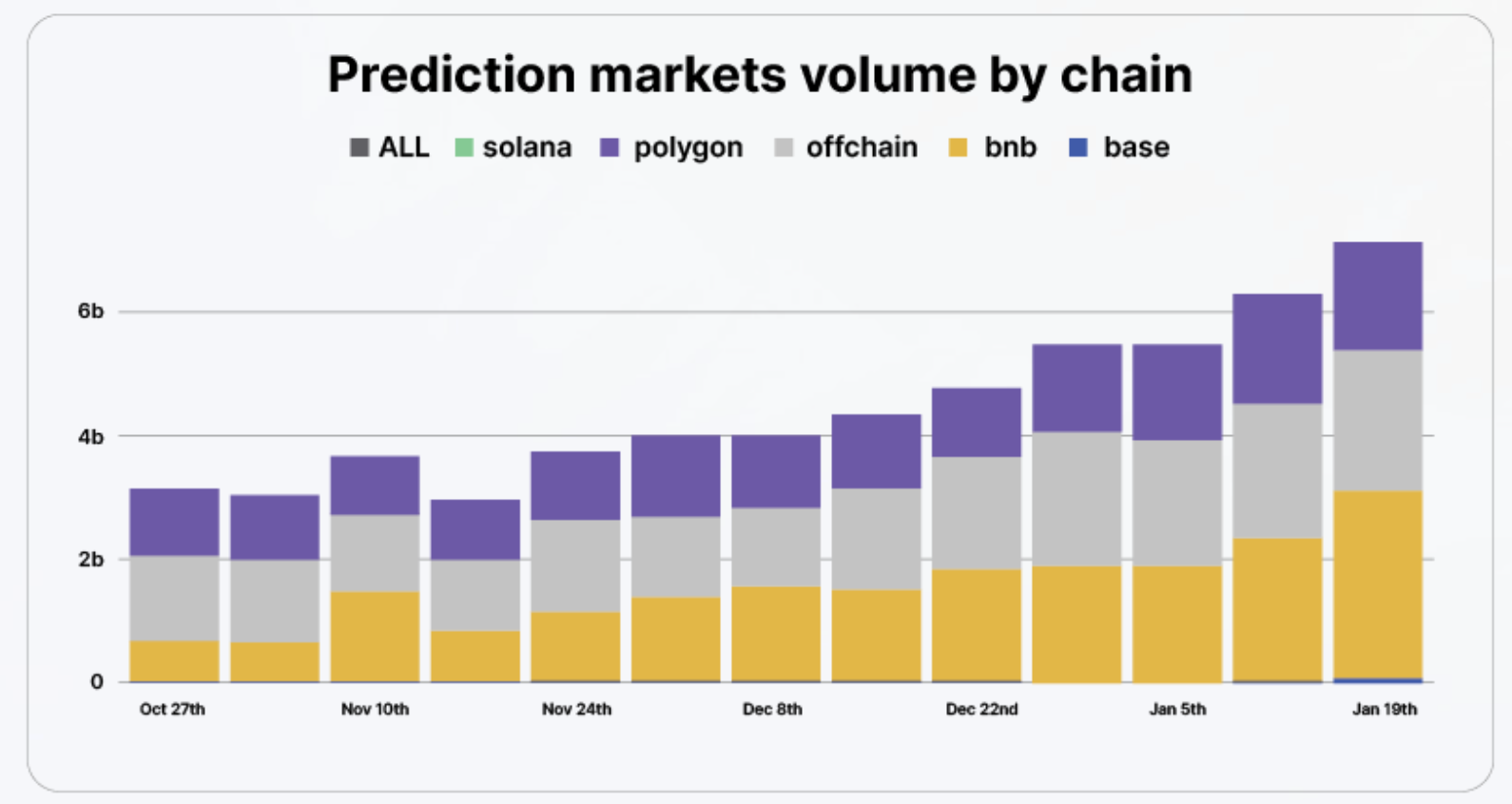
Weekly Prediction Market Trading Volume by Public Chain (Source: Dune)
Market Landscape: A Tripartite Standoff and Structural Rotation
The report states that the prediction market has currently formed a three-way division among Kalshi, Polymarket, and Opinion, collectively accounting for over 95% of global prediction market trading volume. However, they show clear divergence in their compliance paths, user demographics, and ecosystem foundations.
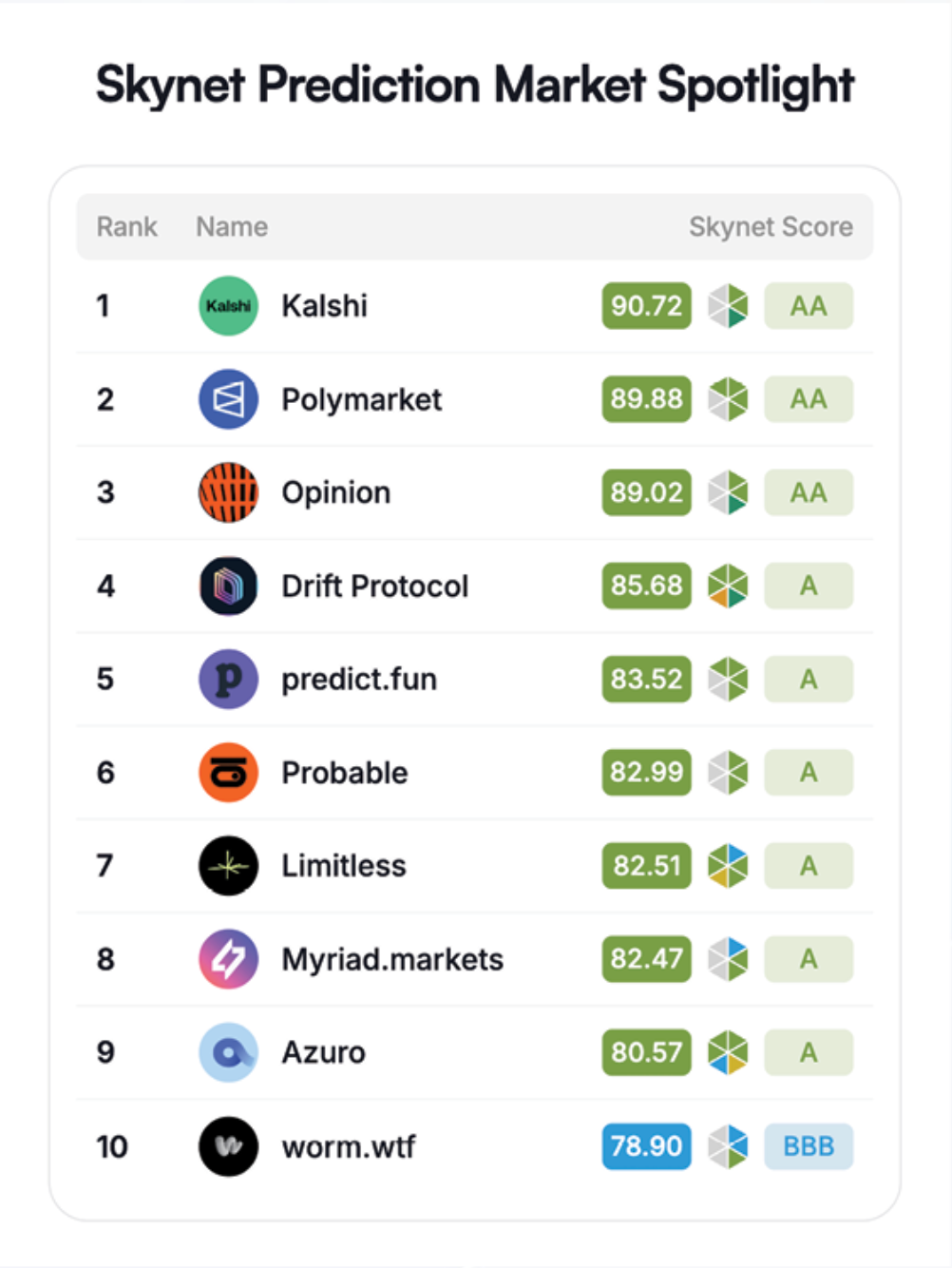
Top-Ranked Prediction Market Platforms by Skynet Score
This assessment is based on the Skynet Top Board evaluation system by CertiK. Unlike market rankings primarily based on market cap or trading volume, this list focuses more on the overall risk structure and long-term stability of projects within specific sectors. It comprehensively evaluates multi-dimensional signals such as code security, fundamental health, operational resilience, community trust, governance capability, and market stability, helping the market distinguish projects that are not only active in the short term but also possess long-term development resilience.
- Kalshi (Skynet Score: 92.72): Leveraging the US election and NFL events, it has firmly secured the US market within a compliant framework and integrated with Robinhood to reach 24 million retail users.
- Polymarket (Skynet Score: 89.88): Despite facing geo-blocking in the US, it remains the preferred choice for global crypto-native users, and its probability data has become a key reference source for mainstream media.
- Opinion (Skynet Score: 89.02): As the fastest-growing platform, it has captured approximately 30% of the market share within just a few months, leveraging the BNB Chain ecosystem incentives.
It is noteworthy that a "structural rotation" of liquidity is occurring: BNB Chain's activity has significantly surpassed the traditional leader Polygon in early 2026, absorbing the largest share of weekly capital flow.
Shadows Beneath the Prosperity: Wash Trading and Infrastructure Fragility
However, rapid growth has simultaneously amplified security risks. While trading volumes repeatedly hit new highs, CertiK's research reveals the risks facing the industry:
- Rampant Wash Trading: During the peak of airdrop incentives, the estimated proportion of fake trading volume on some platforms reached as high as 60%. While this has not yet compromised the accuracy of prediction probabilities, it severely distorts liquidity metrics.
- Hybrid Risks of Web2.5: The December 2025 breach of Polymarket's identity verification provider demonstrates that even if smart contracts themselves are secure, the Web2 access layer (such as email login) is becoming the weakest link in prediction markets.
- Admin Key Risks: Even within decentralized frameworks, many platforms retain admin privileges to pause markets or upgrade contracts. If such privileges are abused or compromised, it could not only harm user fund security and market fairness but also weaken the overall security perimeter of the system, creating systemic risk.
Regulatory Landscape: Global Fragmentation and "Going It Alone"
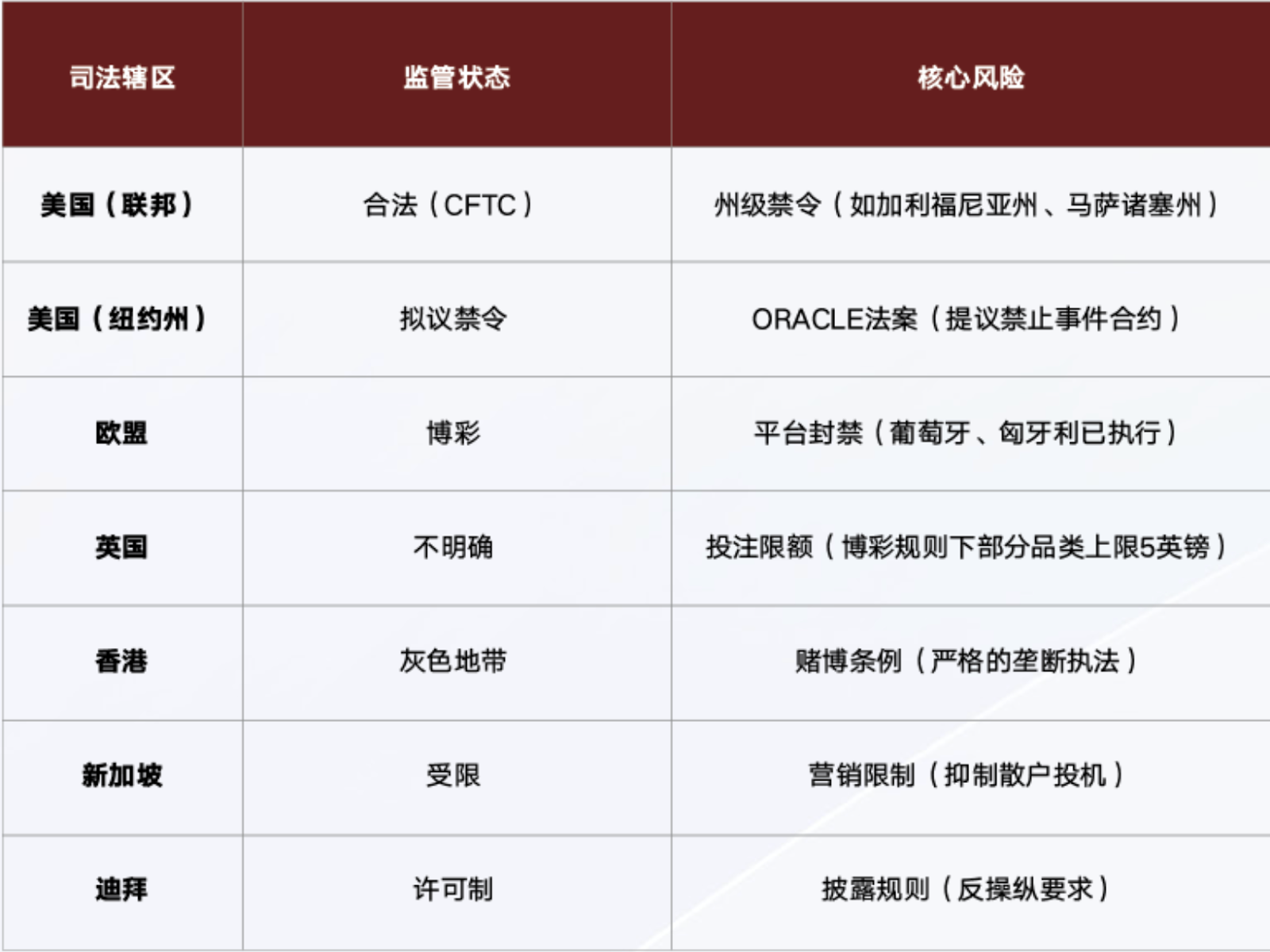
Regulatory Status by Region
The highly fragmented regulatory environment is identified as another long-term challenge for prediction markets. The report outlines policy differences across various jurisdictions:
In the United States, while Kalshi's lawsuit victory against the CFTC established federal-level legality, state-level restrictions in places like New York and California could lead to a "fragmented" compliance landscape. In the European Union, Portugal and Hungary have banned some platforms as unauthorized gambling activities; although the EU's MiCA regulation is in effect, its gambling exemption clause provides legal grounds for regulators to ban prediction markets.
In contrast to the tug-of-war in US and EU markets, Hong Kong (China), Dubai, and Singapore are actively establishing clear regulatory frameworks for prediction markets. The report predicts that Hong Kong is expected to clarify relevant rules in the near future, bringing prediction markets under the umbrella of compliant financial products.
Future Outlook: How Will Security Technology Define the "Second Half"?
CertiK concludes in the report that future prediction market platforms capable of long-term survival must simultaneously meet three conditions: maintaining liquidity across multiple jurisdictions, building secure infrastructure robust enough to attract institutional capital, and moving away from heavy reliance on incentive-driven trading volume to form a sustainable business model.
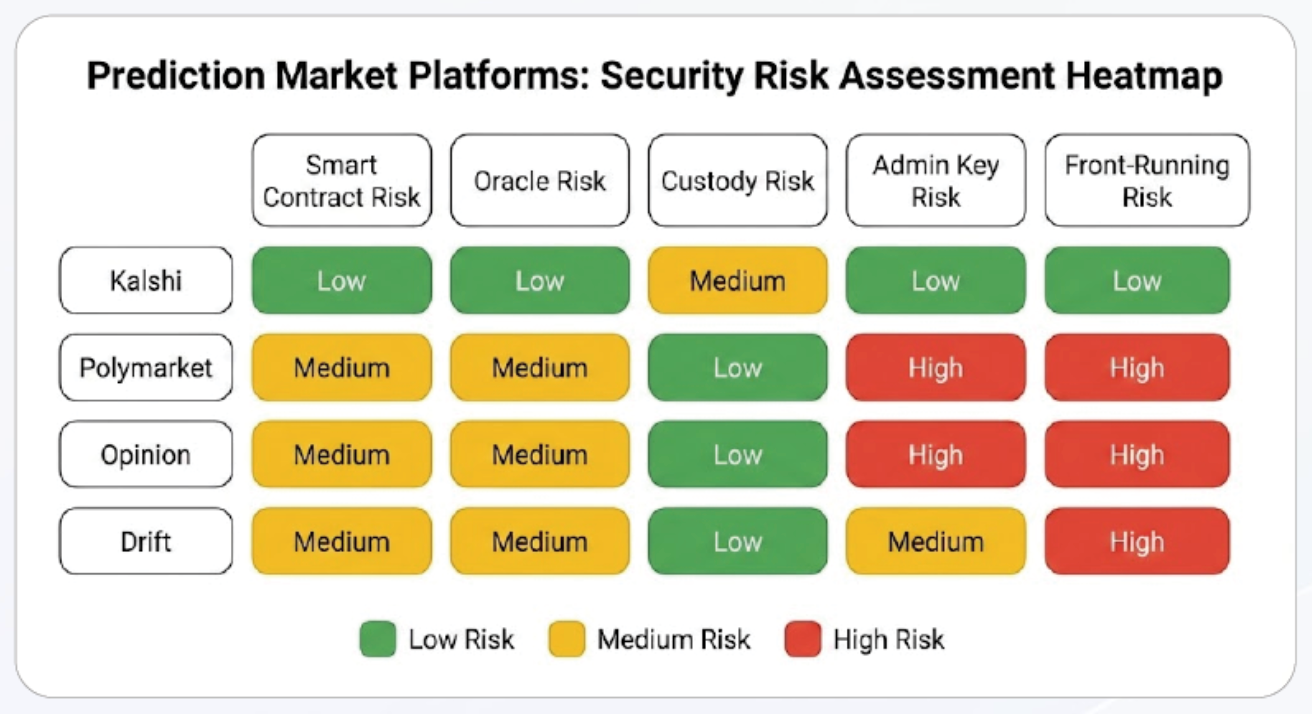
Security Risk Assessment Heatmap
As prediction markets evolve from retail speculation platforms into "uncertainty pricing infrastructure," their security and credibility are becoming key factors determining the industry's direction. The security challenges facing the industry have expanded from singular smart contract risks to systemic issues encompassing oracle mechanisms, admin privilege management, and hybrid Web2-Web3 architectures.
Addressing these risks, CertiK has launched targeted solutions including smart contract audits, Skynet real-time monitoring, oracle security reviews, and Web2.5 penetration testing, designed to assess and mitigate potential security vulnerabilities at the contract, privilege, and infrastructure levels. The report concludes that against the backdrop of increasing institutional capital and regulatory scrutiny, security capabilities are gradually becoming a foundational requirement for prediction market platforms to gain long-term trust and achieve sustainable development.
Report Link: https://indd.adobe.com/view/8d056d84-8393-4e9a-945a-5b0fec527adf