




When Openclaw Founder Advises Young People to Stay Away from Crypto


- Core Viewpoint: The article points out that the crypto industry is currently facing the significant challenge of talent, capital, and market attention shifting towards the AI field. This reflects a slowdown in crypto industry innovation and a weakening wealth effect, while AI, due to its potential for technological revolution and its nature as a productivity-enhancing tool, exerts a powerful siphoning effect on crypto practitioners.
- Key Elements:
- Talent Migration: Several well-known figures in the crypto space (such as Cobo's Shenyu, former zkSync executives, and Multicoin Capital co-founder Kyle Samani) have recently publicly shifted their focus to or engaged in the AI field. Their statements and actions have impacted industry confidence.
- Capital Migration: Marked by top-tier crypto-native VC Paradigm's plan to raise an AI/robotics fund, crypto VCs, due to a decrease in quality early-stage projects and a decline in investment deals within the industry, are turning to AI as a new direction for capital allocation.
- Attention Migration: The crypto community's focus on AI has shifted from "hype-chasing" to "in-depth usage and learning." The popularity of offline AI events reflects practitioners' genuine anxiety about falling behind in the AI era.
- Intrinsic Drivers: The crypto industry has many "super-individuals" who pursue efficiency tools; its geek culture venerates technological revolution; the current crypto market lacks native innovation and wealth effects, while AI continuously provides new cognitive stimulation.
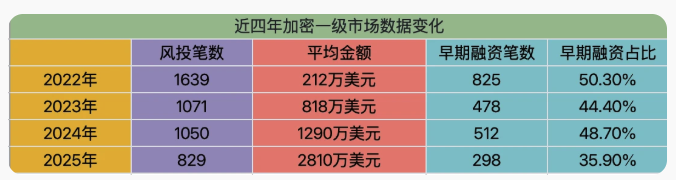
- Industry Status: The crypto infrastructure narrative is becoming increasingly competitive and inward-looking, with a scarcity of early-stage projects capable of "paradigm-level leaps." The number of venture capital deals and the proportion of early-stage financing have declined consecutively.
- Deeper Impact: AI compresses the time required to solve problems, potentially prompting people to focus more on constructing personal meaning and independent value systems beyond mere efficiency.
Original | Odaily (@OdailyChina)
Author|Golem (@web3_golem)
On February 27th, when a user on platform X asked OpenClaw founder Peter Steinberger for "the best advice for a 20-year-old," Peter Steinberger bluntly stated, "Don't waste your time on cryptocurrency." As the founder of one of the hottest AI products currently, Peter Steinberger has not hidden his disdain for cryptocurrency. He has warned cryptocurrency practitioners not to harass him, and even users mentioning Bitcoin in OpenClaw's Discord have been banned.
This caustic remark sparked collective meme-making and self-deprecation within the crypto community. However, unlike the market downturn where crypto practitioners chanted "crypto is dead," when "don't waste your time on cryptocurrency" was offered as advice to young people by a top-tier AI entrepreneur, it stung the crypto industry.
It laid our anxiety bare—crypto is no longer the optimal choice for young people in the current era.
Looking back to 2011, the advice from crypto OG and 8btc founder Chang Jia, suggesting a college student invest all 6,000 RMB in Bitcoin, was considered one of the most powerful examples of the crypto industry's long-termism and suitability for young people to join. But Chang Jia himself did not remain in the crypto industry. In 2023, 8btc stopped publishing cryptocurrency-related news, shifting to content about AI, the metaverse, and other fields. In 2024, after Chang Jia turned to entrepreneurship in the AI field, he completely disappeared from the crypto circle.
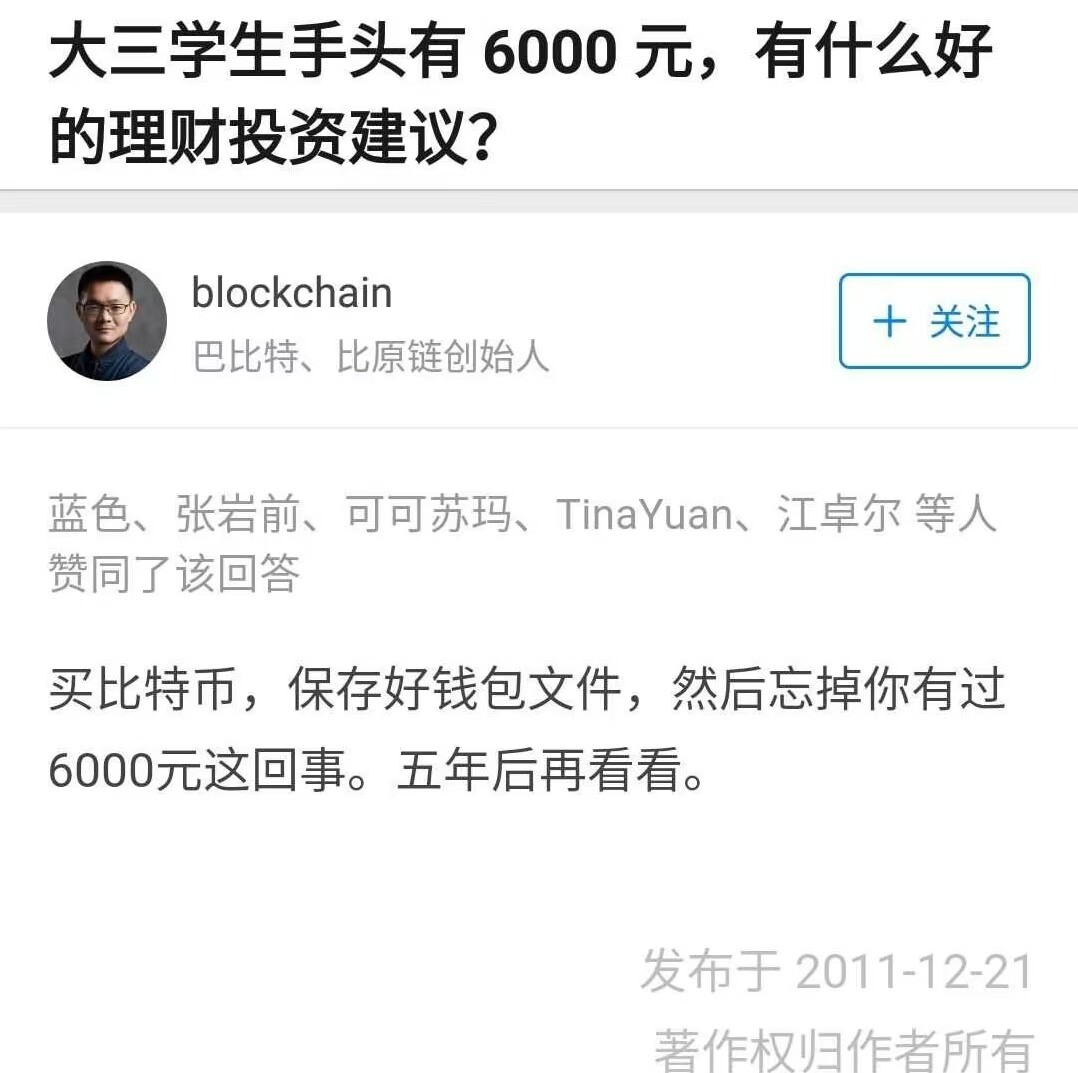
Chang Jia, who was ahead of the curve, once drew much criticism. Now, the crypto circle being siphoned by AI has become an indisputable fact. Talent is migrating, capital is being reallocated, and attention is shifting.
Talent Migration: OGs Are Becoming AI Bloggers
Another crypto OG, Discus Fish (Shenyu), co-founder and CEO of Cobo, is also one of the early representatives of the Bitcoin mining circle. As a multi-cycle survivor, Discus Fish often shares his personal understanding of market phases and investment insights on social media, which is quite popular in the crypto community.
However, recently, Discus Fish has transformed from a crypto OG into an AI blogger. In the past month, over 80% of the content on his social media accounts has been about OpenClaw, with very little related to crypto. Discus Fish himself has even joked about his successful transformation.

Discus Fish's exploration and focus on AI remain at a personal level; his company's business and personal career are still primarily crypto-focused. Therefore, we can temporarily interpret his obsession with AI as a good habit of actively improving oneself and keeping up with the cutting edge during "market downtime." But the migration of talent from crypto to AI is indeed happening.
Anthony Rose, an executive at zkSync, announced on February 4th that after four years at Matter Labs, he would be leaving and most likely shifting to AI. Nader Dabit, Developer Advocacy Lead at EigenLayer, also announced on February 5th that he was leaving EigenLayer to become Head of Growth at an AI company, stating he "joined the future."
The most attention-grabbing recent example of leaving the circle is Multicoin Capital co-founder Kyle Samani announcing his departure from crypto to focus on AI, robotics, and other fields. Kyle Samani is famous for his early bet on Solana, so his exit dealt a blow to the crypto community's confidence. Even more outrageous, on the day he left, Kyle Samani disparaged the crypto industry, saying, "Crypto just isn't as interesting as many people (including myself) once thought it would be."
Recommended Reading: 《Is There More to Kyle Samani's Exit?》
Capital Migration: Native Crypto VCs Begin Allocating to AI
Native crypto VCs are also unwilling to waste more time on the crypto industry.
On February 28th, according to the Wall Street Journal, crypto venture capital firm Paradigm is planning to raise a new fund focused on AI and robotics, with a target size of up to $1.5 billion. Paradigm is one of the purest crypto-native capitals. It rose to fame in 2019 by investing in and incubating Uniswap. Subsequent early investments in other crypto projects (such as Lido, Optimism, dYdX, Blur) were also successful, making this "research-driven" VC an institution on par with a16z crypto.
Precisely because of this, Paradigm's pivot this time is of symbolic significance.
If crypto were still in a period of rapid innovation, continuously generating projects capable of carrying billion-dollar-level investments, Paradigm would have no need to establish a heavily weighted fund specifically for AI. But the reality is that crypto industry infrastructure narratives (such as L1, L2, DEX, etc.) have become highly saturated, and the number of truly high-quality early-stage projects with "paradigm-shifting" potential is now few and far between.
The entire crypto VC space has few good projects to invest in. The data is more telling: over the past four years, the number of venture capital deals in the crypto industry has declined year by year. In 2022, there were 1,639 financing deals in the crypto primary market; by 2025, this number had dropped to 829, with the proportion of early-stage financing also falling from 50% to below 35%.
Source: What Will Be Left to Trade in the Crypto Market a Year Later?
When there's nothing left to invest in within the crypto industry, AI, as a booming sector, naturally becomes the best deployment ground for crypto capital. From foundational large models to AI Agents, from computing chips to the robotics industry, AI can not only absorb capital on a large scale but also continuously generate growth stories—it is the largest reservoir for global capital today.
For a VC managing over $12.7 billion in assets, the core proposition has never been "whether the faith is shaken," but rather "whether the return function still holds." When the number of projects the crypto industry can support declines, a single bet on crypto means increased portfolio risk and reduced return elasticity. In this situation, persisting with being "crypto-native" becomes irrational.
Therefore, Paradigm's proactive expansion into AI is also forced by the trends of the times. This is not a strategic issue for individual institutions but a signal of the industry's stage.
Attention Migration: When Crypto Players Become Obsessed with AI
In terms of market attention, Crypto is an industry that excels at riding trends. Whether it's political hotspots, technological frontiers, or social headlines, as long as something is hot, you can always find related hyped-up projects or memes in the crypto circle. In the past, every time the AI industry experienced a technological upgrade or product innovation, the crypto circle would see related "Crypto+AI" projects or meme coin speculation, attracting market attention.
When OpenClaw went viral, the crypto circle was also quick to find angles to ride the wave, such as speculating on meme coins with the same name, commanding OpenClaw to trade tokens autonomously, and predicting markets to make bets for profit. But later, crypto players also started becoming more pure, shifting from "how to crypto-fy OpenClaw" to "how to actually use OpenClaw."
Many crypto researchers have started continuously outputting OpenClaw installation and usage tutorials, publicly sharing their AI workflows, even detailing how to train personal AI Agents to help write code, conduct investment research, generate content, etc. Some crypto KOLs have even developed side hustles charging fees to install OpenClaw for beginners.
Offline AI exchange events organized by the crypto circle are also "packed." One of the most popular recent offline events is the "Web4 China Tour" promoted by crypto OG Kong Jianping. The event runs from February 25th to March 8th, held offline in five Chinese cities, with main topics being OpenClaw and Agents, featuring almost no crypto-related content.
This is no longer trend-hopping; it's a genuine migration of attention. Crypto players, who pride themselves on being progressive thinkers, are starting to fear falling behind in the AI era.

Crypto circle AI offline event venue packed to capacity
Why are crypto practitioners so obsessed with AI?
The crypto circle is inherently the industry with the highest concentration of "super individuals"—independent developers, traders, and content creators. These people naturally pursue improvements in tool efficiency to compensate for limitations in human efficiency. Therefore, when AI can significantly amplify individual productivity, crypto players are among the first to embrace it.
Furthermore, the core of crypto culture possesses a strong geek spirit and technological worship. Although the "technology narrative" has been diluted in recent years, most crypto players still believe that "underlying technology can change the world." Today, AI possesses a more revolutionary technological气质 than blockchain, naturally attracting the fervent pursuit of crypto players.
Of course, the more realistic reason is the crypto market's lull period. AI is continuously creating "new things," while Crypto has been busy repackaging old narratives. Without native crypto innovation or significant wealth effects, the entire crypto circle is barely sustained by the minimal externalities brought by prediction markets and RWA. At this time, the new discussion topics and cognitive stimulation provided by the AI industry, rather than seizing crypto's attention, are filling the spiritual void for crypto players as market momentum slows.
It's Time to Talk About Things Beyond Crypto and AI
Finally, returning to the beginning of this article, the reason the OpenClaw founder's statement caught the crypto circle's attention is not because it was dismissive, but because it vocalized a fact many in crypto are quietly verifying with their actions—the smartest people are reallocating their time.
We are now facing a period of declining wealth generation rates and exploding technological productivity.
On one hand, as the crypto cycle slows, alpha contracts, and wealth growth curves flatten, the marginal returns from the past year's crypto players' simple behavior of "scanning information—chasing trends—gambling for returns" are diminishing. On the other hand, AI is compressing the "time required to solve problems." Tasks like writing code and creating content, which previously required significant time investment, can now be completed by models in minutes, with problem-solving efficiency far surpassing that of individual humans.
When the "process volume of pursuing results" is highly concentrated by AI, we might instead gain more free time to do things not aimed at efficiency or making money—to seek "carbon-based meaning," to experience the world, to build cognitive systems independent of market fluctuations, and to construct our own value coordinates.
In the AI future, what truly creates gaps between people might be aesthetics, independent judgment, and the construction of personal meaning.