Odaily reported that Ethereum treasury company Sharplink posted on platform X, stating that since launching its ETH treasury strategy, the company's cumulative staking reward income from Ethereum has reached 23,490 ETH. Additionally, the company earned 499 ETH in staking rewards last week.


Odaily reported that Changxin Technology (688825.SH) announced that the company will conduct its initial public offering and listing on the STAR Market, with an issue price of 8.66 yuan per share. Investors are requested to subscribe online and offline at this price on July 16, 2026 (T day), without needing to pay subscription funds at the time of subscription. The offline subscription period is from 9:30 to 15:00, while the online subscription period is from 9:30 to 11:30 and 13:00 to 15:00. The initial number of shares issued is 6,688,088,608 shares, accounting for approximately 10.00% of the total share capital after issuance. Additionally, CICC has been granted an over-allotment option of up to 15.00% of the initial shares issued.
The price-to-earnings ratio corresponding to the issue price, based on the lower of the diluted earnings before and after extraordinary items for 2025, is 308.92 times (without exercising the over-allotment option). This is higher than the industry average P/E ratio of 76.32 times and the average P/E ratio of comparable companies of 134.62 times. The total expected proceeds from the offering are approximately 57.919 billion yuan (before exercising the over-allotment option), with net proceeds of approximately 57.638 billion yuan after deducting issuance expenses.


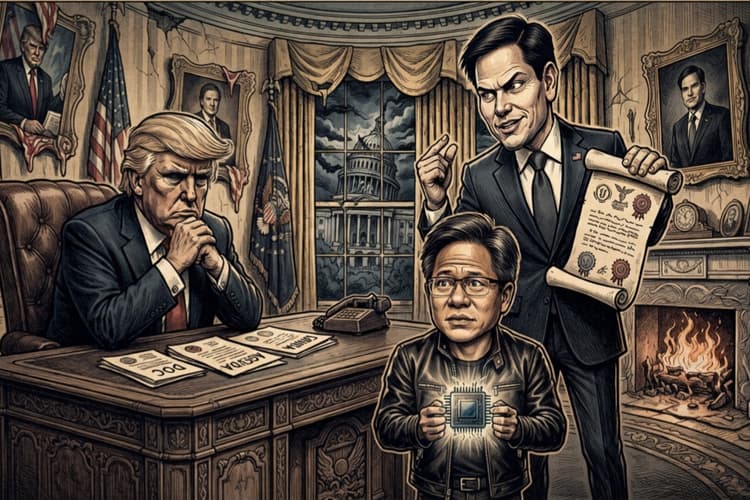
Odaily reports, as the value of the artificial intelligence industry rapidly increases, political and tech circles in the United States have begun discussing how to share the immense wealth generated by AI with the public. A series of proposals all point in the same direction: having the government or public institutions hold equity in AI companies.
Recently, Sam Altman discussed the possibility of granting the U.S. government or other public entities partial ownership in OpenAI. Meanwhile, the U.S. government already holds approximately 10% of Intel's shares, and it has indicated it may receive a certain percentage of revenue from NVIDIA's chip sales to China.
U.S. Senator Bernie Sanders proposed that major AI laboratories contribute half of their shares to a new sovereign wealth fund, allowing the public to share in the growth dividends of the AI industry.
Observers suggest that these plans essentially aim to redistribute some of the economic benefits from AI development back to society. However, critics point out that most current proposals boil down to one model: having the government hold equity in AI companies.
Supporters argue that AI could become the most significant productivity transformation in the coming decades, and involving the government in revenue distribution could alleviate wealth concentration. Opponents, however, worry that direct government ownership of stakes in tech companies could impact market competition, corporate governance, and innovation incentives.
As the valuation of the AI industry continues to rise, how to distribute the economic benefits generated by artificial intelligence is becoming a core topic of debate among U.S. policymakers and the tech industry. (The Information)
Odaily Planet Daily reported that Anthropic announced it will invest CAD 10 million (approximately USD 7.3 million) into Canadian AI research institutions to support next-generation AI research, safety technology, and the development of responsible AI applications. Anthropic stated that Canada has played a significant role in the modern history of AI development. Institutions such as the University of Toronto, Université de Montréal, and the University of Alberta have driven key breakthroughs in neural networks, deep learning, and reinforcement learning, laying the foundation for the current AI wave. This funding will support several top-tier AI research institutions in Canada, including:
Alberta Machine Intelligence Institute (Amii): Supporting research in reinforcement learning, AI trustworthiness, and safety, while promoting the application of AI within key Canadian industries;
Mila - Quebec AI Institute: For research in responsible AI, healthcare, sustainability, multi-agent systems, and robotics;
Vector Institute: Advancing research in AI safety, health sciences, and the societal applications of AI;
CHEO, Centre for Addiction and Mental Health (CAMH): Exploring the application of AI in pediatric healthcare, mental health, and clinical research;
Université Laval, University of Toronto, University of Saskatchewan: Supporting research in areas such as large language models, life sciences, food safety, quantum computing, and public services.
Additionally, Anthropic will include Amii, Mila, and Vector in its startup support program, providing Claude API credits to hundreds of Canadian AI startups, with each receiving at least USD 5,000 in support.
Monitoring from the PPP Prediction Market Tool shows that in the Polymarket "2026 World Cup Semi-Final: France vs. Spain" prediction event, a smart money account (address: 0x85f031d069de300055900c4055c1baeb6bde3f67) with total profits exceeding $1.685 million purchased $487,000 on France to beat Spain. The average opening price was 41.5¢, buying 1,199,996.2 shares. This market refers only to the match result within the first 90 minutes of regular time (including injury time). Additionally, the user holds $962,000 on France to win the World Cup, with unrealized profits currently at $550,000.
The France vs. Spain match will begin at 3:00 AM Beijing time on July 15. The two teams will meet for the third time in a major tournament semi-final within three years. As the winner of their previous two encounters, the Spanish team may hold a psychological advantage.
Join the PPP Signal Push Community to stay ahead and seize the opportunity.
Odaily Odaily reported that according to the CME "FedWatch": the probability of the Fed keeping interest rates unchanged in July is 83.4%, and the probability of a cumulative 25-basis-point rate hike is 16.6%. The probability of the Fed keeping interest rates unchanged in September is 40.3%, the probability of a cumulative 25-basis-point rate hike is 51.1%, and the probability of a cumulative 50-basis-point rate hike is 8.6%.
Odaily reported that as consumer price data came in lower than expected, traders have withdrawn their bets on a Federal Reserve rate hike, driving a sharp rise in U.S. Treasury prices. The two-year Treasury yield, highly sensitive to the near-term outlook for Fed monetary policy, fell by as much as 14 basis points to 4.14%, marking its largest single-day decline since February. Meanwhile, interest rate swaps show that the probability of the Fed raising rates in July has fallen from over 40% to approximately 20%.
Dan Carter, senior portfolio manager at Fort Washington Investment Advisors, stated: "This is a broad-based miss on the data. The possibility of a near-term rate hike is now off the table. The market had been worried about inflation coming in too high, so this data should be positive for the bond market and help steepen the yield curve. Our baseline expectation is that the Fed will hold rates steady, and this data confirms that view." (Jin Shi)
Odaily reports that Federal Reserve Chair Waller is optimistic about the overall economic situation. He believes the labor market is generally stable, with almost no layoffs and nominal wage growth. However, the Fed Chair takes a more cautious stance on the boom in the artificial intelligence sector. While AI is driving increased corporate investment, it also introduces uncertainty into the economy.
Waller stated, "We are still unclear about the extent to which the economy can benefit from the development of AI." "The new opportunities emerging in the economic sphere also present new challenges for policymakers. The Federal Reserve is closely monitoring the impact of these changes on inflation and the labor market." (Jin Shi)
Odaily News: "Fed Whisperer" Nick Timiraos: June CPI data showed broad moderation. Core goods prices fell for the second consecutive month, with a decline of 0.09%. Housing prices rose by only 0.12%. Core services prices excluding housing fell by 0.2%, the lowest level since the pandemic.
Odaily reported that chip manufacturer Tower Semiconductor announced on July 14 local time that it will invest $3 billion to strengthen chip manufacturing in Japan, which includes a $1 billion subsidy from the Japanese government. The statement noted that the first phase will significantly increase production capacity for 300mm silicon photonics devices, with full production expected by the fourth quarter of 2027. This phase includes retrofitting the former Fab 6 facility to equip it with 300mm silicon photonics device production capacity and advanced packaging capabilities. The second phase will begin simultaneously with the first phase and includes the construction of a new 300mm lithography manufacturing plant next to the Fab 7 facility.
Odaily报道,Coinglass数据显示,过去1小时全网爆仓金额达6083万美元,其中多单爆仓402万美元,空单爆仓5680万美元。此外,BTC爆仓金额为2889万美元,ETH爆仓金额为2072万美元。
Odaily Odaily Federal Reserve Chairman Warsh stated that the Fed's primary goal is to get monetary policy right—or as right as possible. If we choose the right policy, the inflation surge of the past five years will become history. My colleagues and I recognize that high inflation has been an undue burden on American families and businesses. Over a longer time horizon, underlying inflation is largely determined by monetary policy. We are jointly and firmly committed to restoring price stability, which was the core topic of our June meeting.
The most prominent feature of the current economy is business investment. Its rapid pace—which appears to be accelerating—largely reflects the construction of data centers and the enormous demand for AI-related equipment and software to fill these centers. (Jin Shi)
According to Odaily, U.S. consumer prices fell in June for the first time in six years, and a key measure of underlying inflation was largely flat, which somewhat eases the pressure on the Federal Reserve to raise interest rates. Data from the U.S. Bureau of Labor Statistics released on Tuesday showed that the Consumer Price Index (CPI) fell 0.4% from May and rose 3.5% from a year earlier. The core index, which excludes food and energy, was unchanged from May and rose 2.6% from a year earlier.
The report indicates that as the worst of the energy price shock triggered by the Iran war begins to fade, the decline in gasoline prices in June has provided some relief for consumers. With the Fed's meeting at the end of this month approaching, Fed officials may welcome this data; however, the resurgence of U.S.-Iran hostilities has led to another rise in oil prices, which could prolong the inflationary impact caused by the conflict. As investors reduce their bets on a Fed rate hike in July, U.S. stock index futures rose and Treasury yields fell. Data show that core inflation was restrained, mainly due to declines in prices for goods such as clothing and used cars. Motor vehicle insurance premiums also fell sharply.
Odaily reported that Federal Reserve Chair Warsh stated that the opportunities presented by AI pose challenges for policymakers, and the Fed is monitoring the impact of AI on inflation and the labor market. (Jin Shi)